
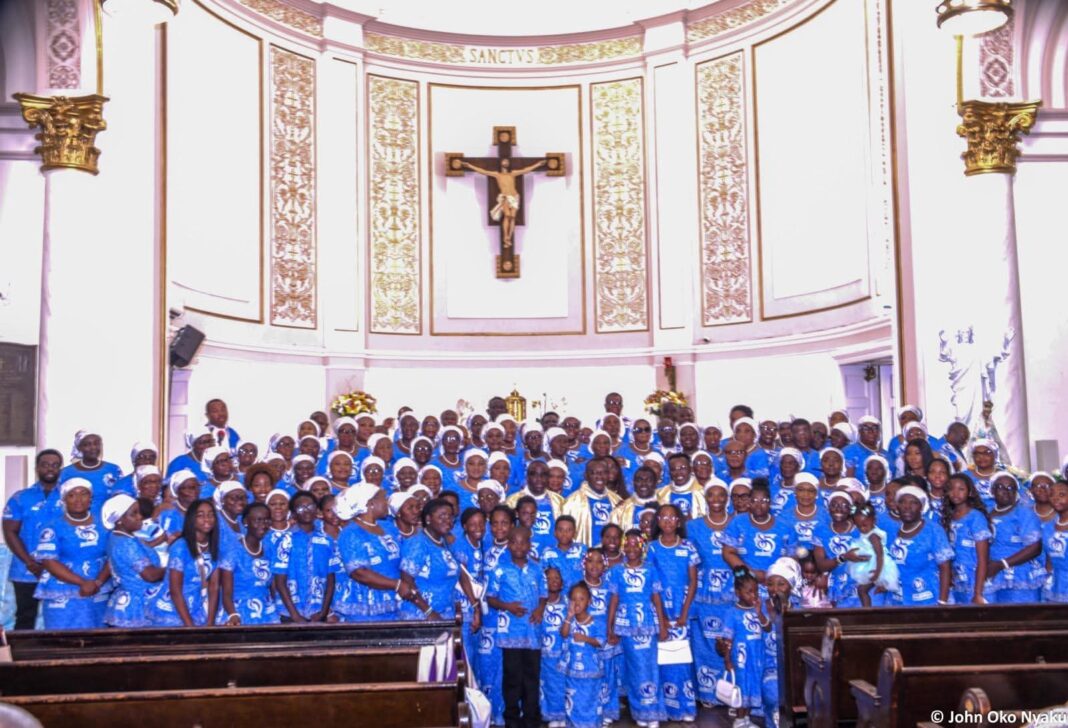

THE ORIGIN OF A PARISH: GROWING FROM A SMALL CHRISTIAN COMMUNITY
In the Catholic tradition, a parish does not emerge overnight. It normally begins as a small Christian community—sometimes just one or two families—who gather to pray, share the faith, and build fellowship. Over time, this group grows into a station, later develops into a rectorate, and eventually matures into a full parish with stable numbers and financial capacity.
Because many communities begin with just a few related families, even fully established parishes often have members who share strong family ties. This means that when a priest unintentionally offends the Church President, it can feel as though he has offended almost every group in the community—the catechist, choir master, church secretary, Christian Mothers Association, and others. On the other hand, when the priest is warmly welcomed, the unity and support he receives can be exceptionally strong.
SMALL CHRISTIAN COMMUNITIES AND THE ROLE OF LAY LEADERS
During the early stages—when the community is still an outstation and the priest cannot always visit—responsibility rests heavily on lay leaders such as the Church President and the Catechist. These leaders ensure the continuity of worship, maintain the chapel, organise activities, and mobilize the faithful.
However, in some places, the absence of close clerical supervision has led a few lay leaders to misuse funds such as Sunday collections, weekday offerings, welfare contributions, and even harvest proceeds, sometimes turning them into personal “susu” ventures among themselves or the wider village community.
Still, many lay leaders have faithfully served the Church with great dedication. Despite challenges, they mobilize resources, build chapels and mission houses, and prepare their stations to receive a resident priest in the future. These men and women deserve to be honoured for their selflessness.
CREATING A PARISH AND APPOINTING A PARISH PRIEST
A parish is formally established only after the Diocesan Bishop, together with his consultors, carefully assesses the readiness of the community. The Bishop considers several factors:
– the number of parishioners,
– financial sustainability,
– the community’s capacity to support the priest’s welfare,
– availability of a suitable chapel and presbytery,
– and the maturity of the faithful to collaborate with a resident pastor.
Sometimes an outstation may be larger or more vibrant than its parish centre, or a community that seems ideal for a parish may not yet be erected as one. These outcomes are often rooted in pastoral, administrative, or logistical considerations.
Once the Bishop decides, he appoints a priest, designating him as Parish Priest, Rector, or Chaplain, depending on the category of the community.
THE SHIFT OF AUTHORITY FROM LAY LEADERS TO THE PASTOR
The transfer of leadership occurs the moment the appointed priest takes canonical possession of the parish. This happens at his official reception and inaugural Mass, presided over by the Bishop or his delegate.
During the rite of installation, the priest takes an oath of fidelity and professes the Creed, pledging to teach sound doctrine, guide the faithful in moral living, and administer the sacraments diligently. From that moment, he becomes fully responsible and accountable for the pastoral and administrative life of the parish.
HOW PASTORS ARE CHOSEN, POSTED, OR TRANSFERRED
Canon Law ensures that a priest is not appointed or transferred arbitrarily. There must be a genuine pastoral need and an existing vacancy. Candidates are carefully evaluated based on:
– depth of faith and moral integrity,
– leadership ability,
– understanding of pastoral and cultural realities,
– communication and language skills,
– and overall suitability for the community.
The Bishop does not randomly assign priests. The choice is deliberate. In mission territories, the receiving Bishop must also confirm the suitability of the priest proposed.
Yet, appointment alone is not enough. A priest should be properly oriented and helped to understand the pastoral climate, the specific reason for his posting, the expected duration, and the goals he is being sent to achieve. These may include strengthening administration, improving catechesis, establishing new outstations, mobilizing funds for specific diocesan needs, or other pastoral priorities. Periodic evaluation is essential.
By: Rev. Fr. Albert Kyei Danso
Chaplain, Holy Family Ghanaian Catholic Community Church, Italy
TO BE CONTINUED: WATCH OUT FOR PART WHICH WILL FOCUS ON THE SUB-TOPIC “THE PARISH PRIEST AS A SHEPHERD OF THE PARISH”