

The Catholic Education Unit of the Ghana Catholic Bishops’ Conference has dedicated the 2026 Education Week celebration to combating examination malpractice and the role of stakeholders in curbing it.
The Week was launched last Sunday, January 25, 2026, in Catholic Churches with Schools within their jurisdictions.
With the climax to be held on Sunday, February 1, 2026, the Catholic Education Week Celebration is an annual event for Catholic Basic and Secondary Schools across the country, which usually starts on the last Sunday in January and ends on the first week of February.
The Week, a national celebration of Catholic education, is an opportunity to recognize the importance, value, and contributions of Catholic education to the Church and the world.

During the week-long celebrations, Local Managers (Priests) are expected to support the event and encourage parishioners to support their Schools.
The theme for the 2026 week-long celebrations of Catholic Education Week in all Catholic Churches with Schools is: This year’s Catholic Education Week is being celebrated under the theme: “Catholic Education: Combating Examination Malpractice, the Role of Stakeholders.” This theme calls on us to reflect critically on a growing challenge within our educational system and to examine the responsibility each of us bears in addressing it.
The Education Week is an annual event commemorated in Catholic Schools with a series of week-long activities nationally put together by the national office of the Catholic Education Unit at the National Catholic Secretariat. School Heads, in consultation with Local Managers, could adjust the activities to suit their situations.
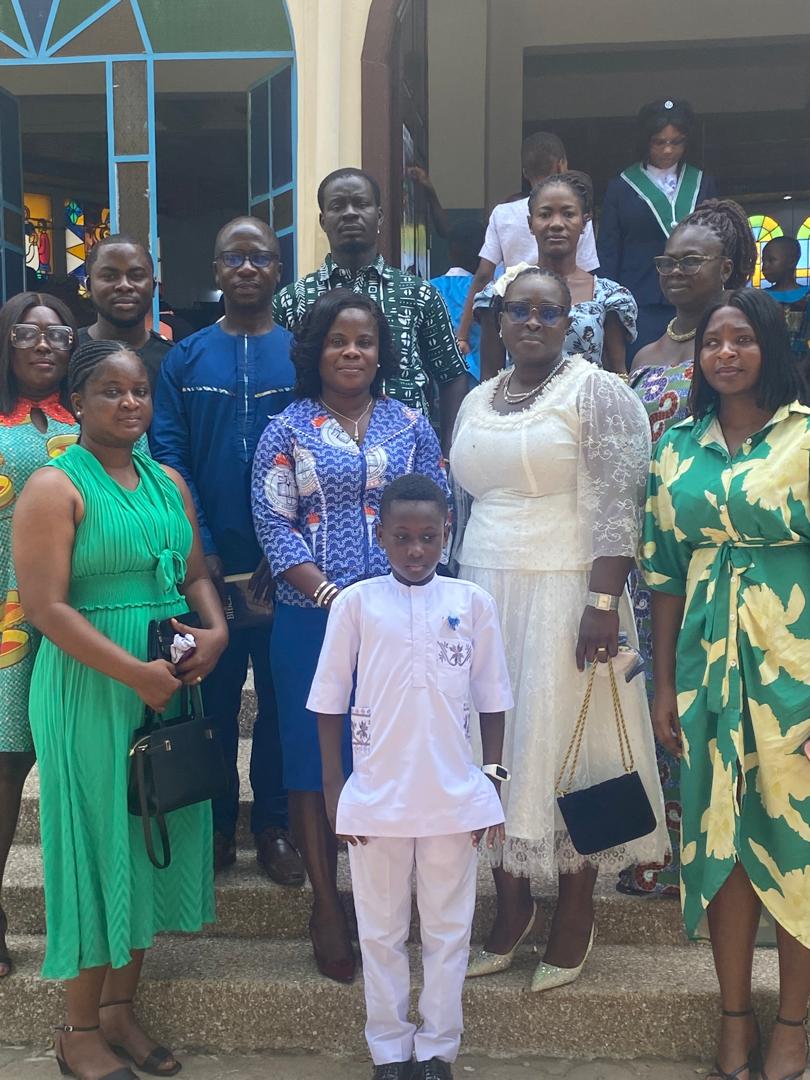
Launching the Week at the Our Lady of Assumption (OLA) Catholic Church at New Achimota in Accra, Madam Gloria Neequaye, headteacher of Our Lady of Assumption R/C Basic School ‘1’, highlighted the positive roles of examinations and the dangers involved in examination malpractices.
According to her, examinations play several vital roles in education, including providing feedback to both teachers and learners on the effectiveness of teaching and learning.
They help identify learners’ strengths and weaknesses, motivate learners to work harder, and develop critical thinking and problem-solving skills, she stated.
Madam Neequaye, who was supported by Madam Martha Kyeraa, Headteacher of Our Lady of Assumption R/C Basic School ‘2’, to launch the Week, said, “Examination results are also used for ranking, placement, certification, and selection for further education and employment.
For these reasons, she opined that examinations remain necessary in education.

According to her, despite the many benefits of examinations, “we are confronted with unethical and illegal practices that undermine their credibility…. which are collectively referred to as examination malpractice.”
Examination malpractice includes any dishonest or unethical act committed before, during, or after an examination by candidates, teachers, invigilators, parents, school authorities, or any other persons, to gain an unfair advantage.
Such acts include cheating, impersonation, collusion, leakage of examination papers, and the use of unauthorized materials or electronic devices. These practices constitute serious disciplinary offences and violate the rules governing examinations.
Madam Neequaye enumerated the several factors that contribute to the prevalence of examination malpractice, which include “the desperate desire to pass examinations at all costs, fear of failure, laziness and poor attitudes towards learning, ineffective teaching and learning methodologies, and the erosion of moral and ethical values in society.”

She was emphatic that it was public knowledge that examination malpractice was inimical to quality education, as it does not give the true reflection of learners’ educational achievements, but rather, provides falsehood and exaggeration of academic attainments, skills, and competencies.
“Examination malpractices tend to create a situation where round pegs are put in square holes, and as a result, the growth, development, safety, and security of the nation and society at large will be in jeopardy since there will be mass production of quack professionals and charlatans who will be parading themselves as the available human capital, she stressed.
Referring to the Bible, she said Prov 20:17 states that “Food gained by deceit is sweet to a man, but afterwards his mouth will be filled with gravel.”

Madam Neequaye therefore recommended the need for stricter invigilation of examinations right from preschool to the tertiary level. Faith-formation in schools should be taken more seriously to instill the fear of God, honesty, moral and ethical values in learners, and educational attainments and qualifications should not be reduced to only academic qualifications, as good character matters a lot.
She also proposed strict adherence to rules and regulations governing every exam. Training of teachers should be enhanced significantly to boost teacher professionalism, and the need for adequate preparation of candidates for any exam they are due for.
According to her, “Teachers and examination officials who are caught in examination malpractices should be taken through the necessary disciplinary procedures while learners caught cheating in an exam should be penalized or have their papers cancelled.”

She advised parents to desist from subjecting their children to intense pressure regarding the second-cycle institution they want them to attend or the study programme they want them to pursue, and suggested that learners should be encouraged to pursue study programmes that are of interest to them and be motivated to study harder.
“Under no circumstances should a learner be stigmatized as a failure following his/her inability to pass an exam. There should be strict enforcement of penalties as spelt out by examination bodies,” she indicated, advocating for the provision of guidance and counselling services to learners, teachers, and parents on career choices, study programmes, and examinations.
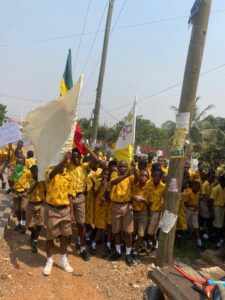
As part of the weekly programme outline for the OLA School ‘1’ and ‘2’, on Monday, January 26, the pupils jointly embarked on a route march with placards through some principal streets of Tantra Hills and after, undertook clean up exercise in the school.

On Tuesday, January 27, there was a talk on the theme: Maintaining Catholic Identity in our School by the Local Manager and Career/Traditional Day, while on Wednesday, January 28, 2026, there was an exhibition of talents, still life drawing, and a quiz.
On Wednesday, January 28, and Thursday, January 29, 2026, Masses were held for OLAS ‘2’ and OLAS ‘1’ respectively, an open forum and a talk on the Theme: “Combating Examination Malpractices, The Role of stakeholders” delivered by Mrs. Margaret Gardemor, a retired Educationist.
On Friday, January 30, 2026, the pupils and teachers participated in physical exercise/games/aerobics. A Thanksgiving Mass expected to be held on Sunday, February 1, 2026, to be attended by pupils, would climax the week-long celebration.
By Damian Avevor