
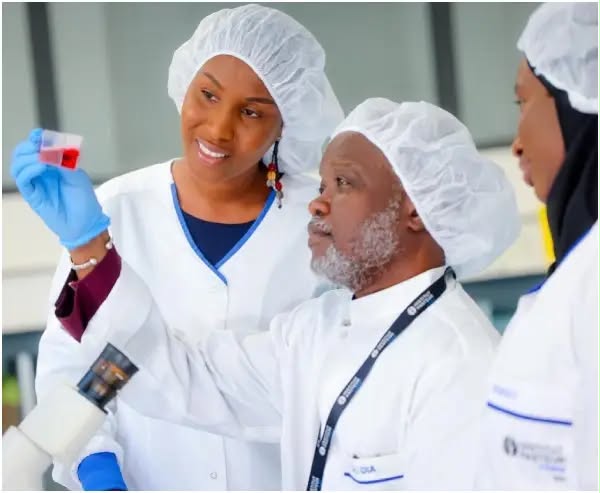

The COVID-19 pandemic exposed one of Africa’s most consequential vulnerabilities: a continent of more than a billion people could not rely on having timely access to the vaccines and essential medical products it needed during a global health emergency.
As wealthier countries secured substantial early supplies of COVID-19 vaccines, African nations faced difficult procurement conditions, supply shortages and delays, reinforcing concerns about the continent’s dependence on pharmaceutical products manufactured elsewhere.
Five years after the pandemic began, the question of who produces Africa’s medicines and vaccines, and who controls access to them during a crisis, remains central to the continent’s public-health and economic future.
Ghana, through the National Vaccine Institute (NVI) is now seeking to position itself as part of the solution through an expanding pharmaceutical manufacturing agenda.

The NVI, working with the Africa Centers for Disease Control and Prevention (Africa CDC), is striving to strengthen local production and connect manufacturers in Ghana and elsewhere in Africa to a larger continental market.
The effort was at the center of an opening ceremony of a regional meeting on the African Pooled Procurement Mechanism (APPM), held at the Alisa Hotel in Accra on November 10 and 11, 2026.
The gathering brought together government officials, pharmaceutical manufacturers, procurement specialists, regulators and representatives of ECOWAS member states to discuss how African countries can turn domestic manufacturing ambitions into practical supply arrangements.
For Ghana, the initiative comes amid a broader ambition by the John Mahama administration to transform the country’s pharmaceutical industry and reduce dependence on imported medicines.
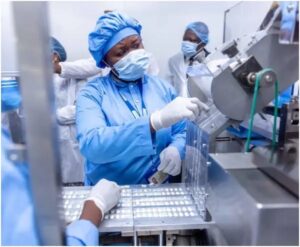
President Mahama has set a target for 70 per cent of medicines used in Ghana to be produced locally within five years. The reported current share is approximately 30 per cent, meaning the target requires a substantial expansion of domestic production capacity.
The National Vaccine Institute’s Chief Executive Officer, Dr Sodzi Sodzi-Tettey, described the country’s recent pharmaceutical policy developments as the beginning of what he called a golden era for the industry.
He pointed to the launch of Ghana’s Pharmaceutical Manufacturing Policy, government support for biological products, regulatory improvements, investment in clinical research and plans for specialised biomanufacturing training as important elements of the transformation.
Among the developments he highlighted was the production of Ghana’s first biological product, snake venom antiserum, in May 2025, with production of anti-tetanus serum and tetanus-diphtheria vaccine also underway and scheduled for completion in 2026.
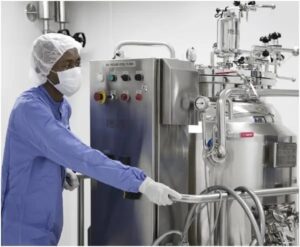
He also cited Ghana’s achievement of World Health Organization Maturity Level 3 status for its National Regulatory Authority, an important development in strengthening the country’s capacity to regulate medical products, disclosing that there was ongoing effort by the National Vaccine Institute to strengthen clinical trials in Ghana which will lay the foundation for end-to-end production.
“We just completed a nationwide assessment of 15 clinical trial sites in Ghana in partnership with WHO–Ghana,” he disclosed.
The nationwide assessment of the clinical trial sites is expected to strengthen the clinical research environment required for pharmaceutical and vaccine development.
He also cited “plans by the National Vaccine Institute to launch a Ghana Biomanufacturing Training Consortium aka ‘Ghana Bio Mat’ this year made up of academia and industry, to build the requisite knowledge, competency and skills needed for industrial manufacturing.”
Such infrastructure is important because vaccine manufacturing requires more than production facilities. It depends on scientific research, clinical evaluation, regulatory oversight, specialized personnel, quality assurance and reliable systems capable of supporting products throughout their development and distribution.
These initiatives reflect an understanding that health sovereignty cannot be achieved simply by announcing new factories. It requires an integrated system capable of developing, testing, regulating, manufacturing and distributing products to internationally recognized standards.
From national ambitions to continental cooperation
Ghana’s strategy is also being linked to a wider African effort to reduce the fragmentation of pharmaceutical procurement.
The African Pooled Procurement Mechanism, established by Africa CDC, is designed to aggregate demand from participating countries, strengthen purchasing power, improve access to affordable quality-assured health products and create more predictable markets for African manufacturers.
The mechanism is particularly significant for a continent where individual national markets can be too small or commercially uncertain to support large-scale pharmaceutical investment.
Dr Mariatou Tala Jallow, Director of the APPM at Africa CDC, said the initiative had moved beyond its initial conceptual stage and has progressed towards consolidation and expansion.
“We are pleased to welcome Ghana into the African Pooled Procurement Mechanism and to engage directly with its manufacturers,” she said.
“Our focus is on working with Member States and African manufacturers to connect demand with supply, strengthen access to affordable, quality-assured health products and create predictable market opportunities for African producers.”
Her remarks highlight an important connection between public-health security and industrial development: manufacturers need dependable markets, while governments need reliable suppliers capable of meeting quality and regulatory requirements.
The APPM is intended to help bridge that gap by coordinating purchasing opportunities across national borders.
Ghana signed a memorandum of understanding with Africa CDC to participate in the mechanism on August 21, 2026. Its participation creates an opportunity for eligible Ghanaian manufacturers to compete for procurement opportunities beyond the domestic market.
The challenge of financing pharmaceutical independence
Despite the momentum, Sodzi-Tettey warned that manufacturers across the region continue to face a major obstacle: uncertainty about future demand.
He said some companies had pursued development financing for almost two years, only for their financing arrangements to collapse at the last moment because lenders lacked confidence in their future revenue.
“The absence of a robust revenue line from multi year agreements gave the bank no comfort that these companies had sufficient financial health to pay back,” he explained.
The problem is particularly important in vaccine manufacturing, where production facilities, research, regulatory compliance and technology development can require substantial long-term investment.
Without credible purchasing commitments, manufacturers may struggle to convince banks and development finance institutions that their proposed investments will generate sufficient returns.
This is one of the reasons the APPM is attracting attention as a potential instrument for pharmaceutical industrialization, rather than merely a procurement arrangement.
By aggregating demand and developing more predictable purchasing frameworks, the mechanism could help provide manufacturers with the commercial certainty required to attract investment.
A continental opportunity
Sodzi-Tettey welcomed the progress made by the APPM, acknowledging the leadership of Dr Tala and her team in moving the mechanism towards actual tendering and supplier onboarding.
He said Ghanaian manufacturers were already winning new tenders to supply Uganda, South Sudan, the Democratic Republic of the Congo and Ethiopia.
However, he also highlighted a significant participation gap.
Of 108 companies registered under the APPM, only 19 were from West Africa, representing 17.6 per cent, while Ghana accounted for just three companies, or 2.8 per cent.
The figures underline the need for Ghanaian and West African manufacturers to become more actively involved if they are to benefit from the continental procurement opportunities being developed.
For Ghana, the broader ambition is to connect pharmaceutical manufacturing with national economic development, job creation, research capacity and the security of essential medical supplies.
The government’s proposed Ghana Pharmaceutical Hub is expected to bring together manufacturing facilities, shared laboratories, utilities, warehousing, cold-chain infrastructure, investment financing and workforce training.
The proposed development is structured around an initial phase in Kwanyarko in the Eastern Region, with a second phase in the Central Region envisaged for pharmaceutical inputs, active ingredients, plant-based medicines and packaging materials.
These plans remain part of a longer-term industrial development agenda, but they demonstrate the scale of infrastructure and coordination required to expand domestic production.
The COVID-19 pandemic demonstrated the risks of depending excessively on external suppliers when global demand suddenly exceeds available supply. Ghana’s current strategy is an attempt to address that vulnerability through stronger domestic capabilities and regional cooperation.
The ultimate test will be whether the policies, institutions and procurement mechanisms being developed can translate into sustained production, affordable medicines and dependable access for patients before another pandemic hits.
Source: Ghananewsglobal