

The Environmental Protection Authority (EPA) is stepping up efforts to restore and protect Ghana’s degraded water bodies through a coordinated national framework to address pollution, illegal mining and other activities threatening the country’s water resources.
The framework is intended to provide a science-driven approach to restoring polluted rivers and strengthening the sustainable management of water resources.
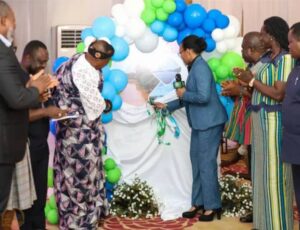
Speaking at the launch of the National Water Restoration and Rehabilitation Framework in Ho, the Minister for Environment, Science and Technology, Dr. Zanetor Agyeman-Rawlings, warned that the destruction of water resources goes beyond environmental degradation, describing access to clean water as a matter of national security.
She said pollution of water bodies directly threatens food security, public health, economic stability and the livelihoods of communities that depend on them.
“As a medical doctor, I am particularly concerned about the cumulative effects of prolonged exposure to these environmental pollutants. The absence of immediate symptoms does not mean that no harm has been done,” she said.
Dr. Agyeman-Rawlings raised concerns about the potential long-term effects of exposure to heavy metals and other contaminants, citing infant mortality, stillbirths and birth deformities among concerns reported in areas affected by water pollution.
She questioned the economic benefits of activities that generate revenue but leave government and communities to bear the additional costs of treating diseases, restoring degraded environments and replacing lost livelihoods.
The Minister stressed that the first principle of any restoration programme must be to prevent further destruction, warning against committing public resources to restoring rivers downstream while allowing pollution to continue upstream.
She therefore directed the EPA to work with the Water Resources Commission, relevant ministries, security agencies, Metropolitan, Municipal and District Assemblies (MMDAs) and traditional authorities to map and protect water bodies and their designated riparian buffer zones.
She also cautioned against the misuse of terms such as dredging, reclamation and restoration to justify activities that could result in further environmental degradation.
Dr. Agyeman-Rawlings emphasised that restoration interventions must be guided by scientific evidence, noting that the nature and extent of pollution must first be established before appropriate treatment methods are selected.
She identified water quality testing, sediment analysis, remote sensing and satellite imagery as some of the tools required to inform effective restoration efforts.
According to her, removing accumulated sediments through dredging does not necessarily eliminate dissolved contaminants or restore the ecological health of a water body.
She therefore called for dredging technologies to be piloted, independently assessed and proven effective before wider deployment.
The Minister further directed the EPA to establish baseline water quality data, assess pollution sources, identify priority water bodies and set measurable restoration targets.
She maintained that the success of the initiative must be measured by improvements in water quality, the recovery of aquatic life and the ability of water bodies to safely serve their intended purposes, rather than by the number of machines deployed or the amount of money spent.
Dr. Agyeman-Rawlings also called on traditional authorities, community members and other stakeholders to support efforts to end illegal mining and environmental destruction, urging them not to intervene on behalf of individuals arrested for activities that pollute water bodies.
She said environmental protection requires collective responsibility and called on local authorities to exercise their mandate to protect communities and natural resources.
The Volta Regional Minister, James Gunu, also called for stronger collaboration among government institutions, traditional authorities, civil society organisations and local communities to ensure effective implementation of the framework.
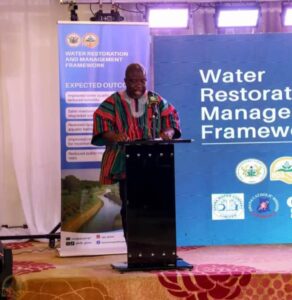
He said the Volta Region’s rivers, streams and wetlands are important natural assets that support livelihoods and socio-economic development, but face increasing pressure from pollution, poor waste management and inappropriate land-use practices.
He cautioned that the success of the framework would depend not only on its development and dissemination but also on effective implementation, adequate resources and sustained stakeholder commitment.
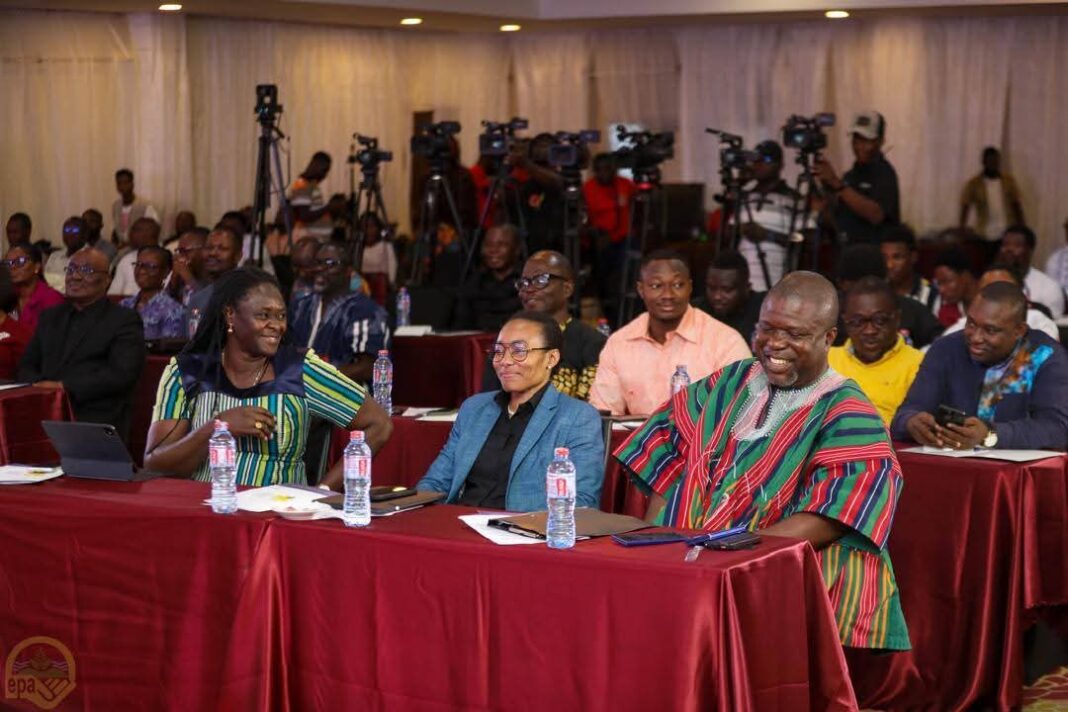
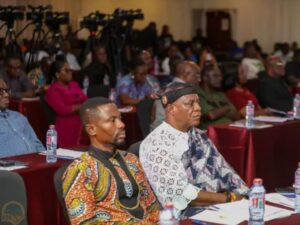
The stakeholder engagement in Ho brought together representatives of government ministries and agencies, traditional authorities, academia, research institutions, civil society organisations and development partners to discuss the framework and strengthen collective action towards restoring Ghana’s degraded water bodies.
By Robert Dela Mawuenyegah and Celestine Edem Gbologah // newswatchgh.com