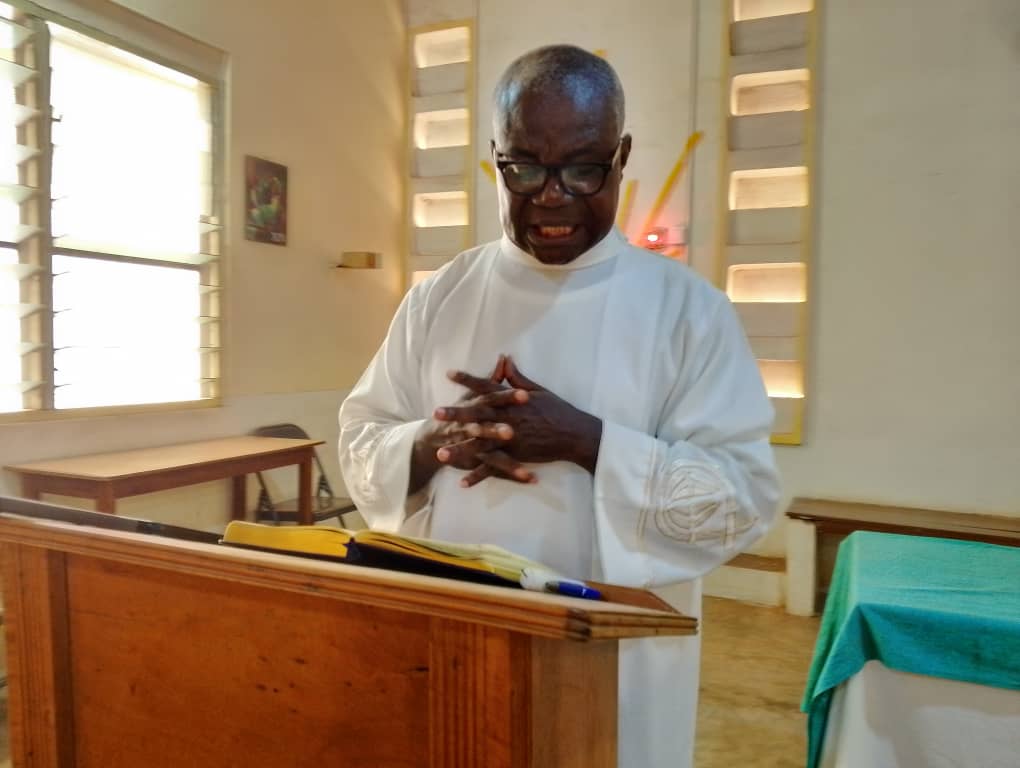

A Priest of the Divine Word Missionaries working in the Apostolic Vicariate of Donkorkrom, in the Kwahu Afram Plains, Eastern Region of Ghana, Very Rev. Fr. Bernard Appiah Adjei, SVD, has lectured his fellow Religious Men and Women on the importance of Self-Care in the life of a Consecrated Person.
He delivered this lecture during the February 2, 2026, celebration of the World Day of Consecrated Life, in the small Chapel of the St. Francis Xavier Cathedral, Donkorkrom.
Fr. Adjei, who is the Administrator of St. Francis Xavier Cathedral, Apostolic Vicariate of Donkorkrom, defined self-care for a Consecrated Person as “loving oneself, so that we can show off the glory of God to a world that needs to know Him”.
He maintained that the art of self-care for a Consecrated Person is far from being a selfish or self-indulgent practice of stewardship, but rather a necessary tool that “protects our health, sustains our ministry and fosters a deep, more sustainable relationship with God”.
Adding, he upheld that Self-care is grounded in the principle that one cannot pour from an empty cup; you can only give what you have, hence, caring for oneself is essential, so that religious men and women can effectively “give” of themselves in service to others.
According to Fr. Adjei, who doubles as the President of the African Religious Union of Ghana (ARUG), practicing self-care in the life of a Consecrated Person has some key benefits, one of which is sustaining service and preventing burnout, which breaks the individual completely and could lead to physical, spiritual and financial problems to the Bishop, the Congregation and to the Church at large.
He underscored that, to prevent burnout, Consecrated Persons need regular rest, balanced with prayer and relaxation. These, he said, increase effectiveness in their ministries. “A rested, healthy Consecrated Person is more focused, creative, joyful, which improves the quality of our pastoral work and community life,” he opined.
The ARUG President further buttressed the need for self-care in the lives of Consecrated men and women, most especially those who are multi-tasked, multi-oriented, and multi-gifted, stressing that proactive self-care reduces service-related, multi-dimensional hazards, both for the individuals and the institutions to which they belong.
Alluding to 1 Cor 6:19-20, which reflects on the body being the Temple of the Holy Spirit, who is God’s gift to every member of the Church, the speaker highlighted yet another benefit of self-care in the life of a Consecrated Person, which is maintaining physical and mental well-being.
He maintained that honouring the temple of God, which is the body, by eating well and at the appropriate time, getting a good sleep, and engaging in exercise, is a form of stewardship, and it improves physical health.
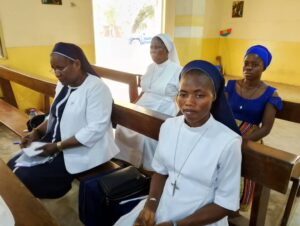
He further elucidated that self-care among Consecrated Persons enhances mental health and emotional balance. It provides the necessary space for stress management and helps Religious men and women to manage anxiety and depression, which are common in high-intensity, emotionally demanding ministries.
The SVD Priest encouraged all to engage more in hobbies, spend time with friends, or family, where applicable, to reduce loneliness and isolation.
Yet another benefit of Self-Care in the life of a Consecrated Person, according to the Cathedral Administrator, is that it enhances Spiritual and Vocational Renewal. “When we do self-care, it deepens our intimacy with God; we can integrate Prayer and work, allowing for a more profound connection with God,” he maintained, adding that self-care enhances compassion, and allows Consecrated persons to truly get in touch with their own pain and suffering, identifying with the sufferings of others, and that of Christ, to edify them.
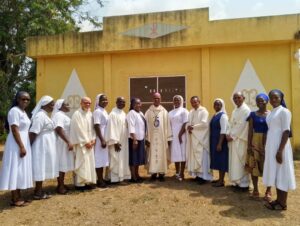
To enhance improved relationships and Community Life, Fr. Adjei encouraged all religious to consciously practice self-care, upholding that there is always better community engagement when individuals are rested and healthy, because they bring in more positive and present energy to their communities and ministries.
He warned his fellow Religious to guard against the temptation of seeking to be “all things to all people,” that is, accepting to be everywhere and at all times. The practice of self-care, he underpinned, would help them to be able to set certain boundaries or limits, and be able to say No, when necessary, which allows for more authentic presence and healthier relationships with one another and among the people they serve.
“When we do self-care, we do authentic witnessing, because we can take care of ourselves, souls, bodies, and the Spirit. We become authentic witnesses to what we are called to do,” he buttressed, accentuating that a joyful and healthy consecrated person is a more convincing witness to the Gospel than the one who is stressed or physically or spiritually depleted.
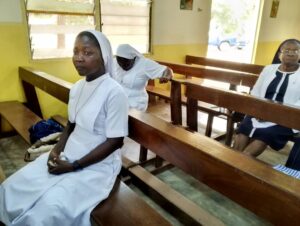
“I pray that as religious appointed to this peninsular, we may take care of ourselves, physically, spiritually, emotionally, so that we will be able to do the job we are called to do, as co-workers of the Bishop, so that the aim of the Bishop will be fulfilled, because if we are burnt out, the Bishop alone cannot do the work. So, let us take care of ourselves wherever we find ourselves, so that our calling will be a glory to God,” he implored.
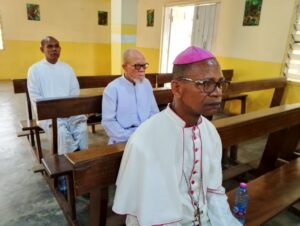
Present during the talk was the Most Rev. John Alphonse Asiedu, SVD, Bishop of Donkorkrom Apostolic Vicariate, together with other Consecrated men and women from across the five Congregations in the Vicariate.
By Sr. Sylvie Lum Cho, MSHR (DEPSOCOM-AVD)