
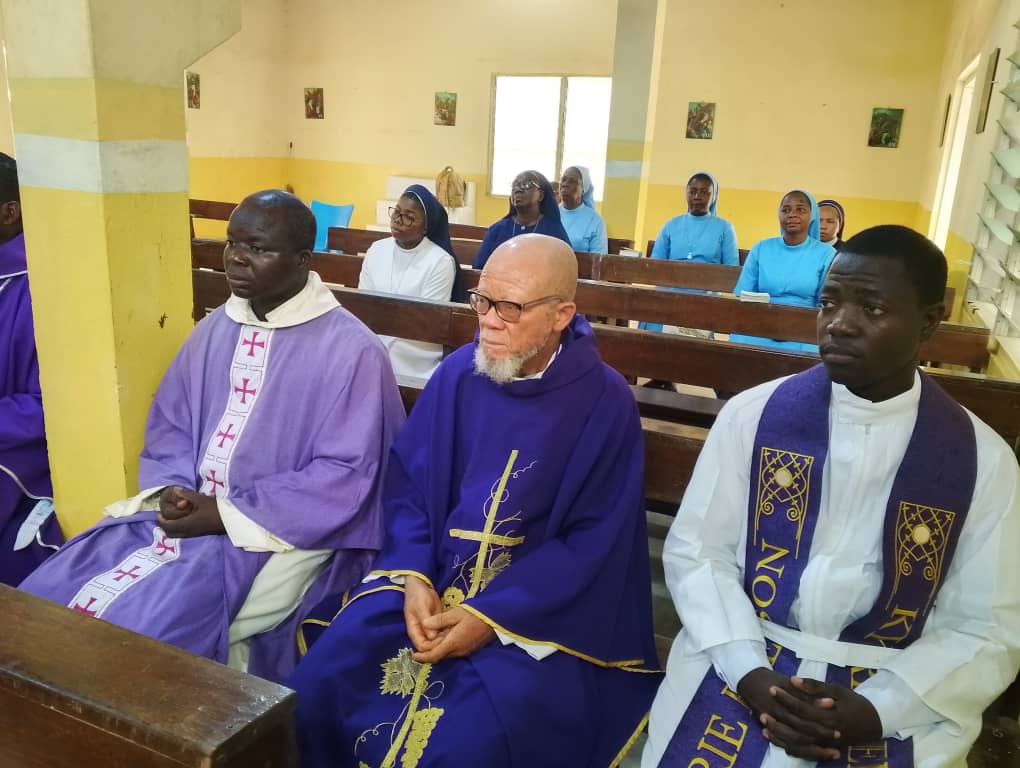

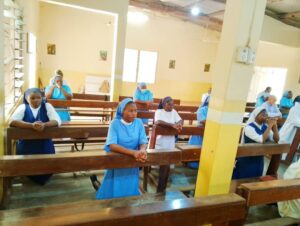
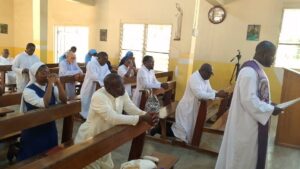
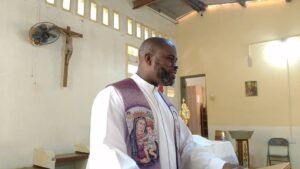
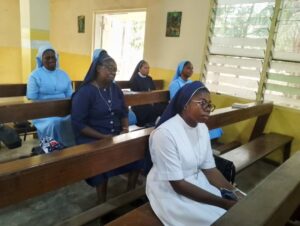
The Priests and Religious of the Apostolic Vicariate of Donkorkrom in Ghana’s Eastern Region were invited during their February 21, 2026 Lenten Recollection, to seek healing for their wounds from Christ, the “wounded healer” par excellence, so that they can in turn heal the wounded world in which they are called to serve.
This invitation was made in a Lenten Recollection Talk on the theme: “Wounded Healers” delivered by Rev. Fr. John Armah Koufi, Assisting Priest at St. Joseph the Worker Parish, Maame Krobo, at the St. Francis Xavier Cathedral Chapel, Donkorkrom. He based his sharing on Isaiah 53:5, I Peter 2:24-25 and Psalm 147:3.
According to him, the already existing concept of “Wounded Healer” was made popular in Christian Circles by Henri Nouwen, a Dutch Priest psychologist and scholar, in his reflections on mission activities and Christian leadership.
Fr. Koufi upheld that the concept of the “Wounded Healer” which pre-existed in Greek mythologies and the Jewish Talmud, portrayed the expected Messiah, sitting among wounded people while he himself cared for his wounds and at the same time, looked lovingly with redeeming eyes on the people with him.
Based on this premise, he called on the Priests and Religious, who are “wounded” and “broken” in one way or the other, ranging from physical, emotional, psychological and spiritual wounds, and who live in a wounded world, to look up to Jesus, the “Wounded Healer”, par excellence, so that he could lead them out of their brokenness, and they in turn heal the world.
“We, as religious and priests are better positioned to recover and heal from our wounds so that we can help heal our world,” he underpinned.
The Recollection Master further underscored that no matter the gravity of the wounds, whether self-inflicted or caused by the society, Priests and Religious must give themselves the chance to heal, so that they can heal others.
He brought it to the awareness of his listeners that all of the miracles and in fact, the entire life and ministry of Jesus were geared towards healing all who would ever get to know of Him, maintaining that His healing powers were not just meant for the audience present at the time, but also for all who are learning of them in recent times.
For them to be able to gain the needed healing, especially during this Season of Lent, Fr. Koufi opined that the Priests and Religious must live lives of gratitude, offering all, including their wounds, in gratitude, back to God, in Eucharistic Adoration, the Holy Mass, and other forms of Prayer. So doing, they grow deeper and more strongly rooted in their relationship with God, hence, precipitating the healing process.
They must also build resilience, which is strongly recommended for pastoral agents in a mission territory, as it helps them “to navigate the challenging terrain the Cross of Christ has presented us with,” he buttressed. Adding, the Priest maintained that building resilience as wounded healers involves embracing our vulnerability, which must be understood not as weakness, but as “a source of strength that enhances therapeutic effectiveness,” he upheld.
The speaker reiterated the need for continuous self-reflection and personal growth among Priests and Religious, which he tagged “the cornerstone of resilience”. They must consciously and constantly explore their emotions, thoughts, actions and experiences and put them in proper perspective. This intentional process, he maintained, enhances self-awareness and prevents the accumulation of unresolved issues that may hinder authenticity and efficacy.
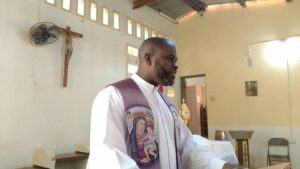
One other way to heal wounds, according to Fr. Koufi, was for Priests and Religious to maintain healthy boundaries. Maintaining healthy boundaries, he underscored, is imperative for the well-being of the wounded healer and the clients. The wounded healer must discern between empathetic engagement and over-identification with the struggles of the society.
He cancelled the popular and often misleading notion among some Priests and Religious that they have the solution to every problem they may encounter. To him, they could only do that which is within their reach, and surrender the rest to the loving mercy of God.
“Establishing healthy boundaries, protects us, as we remain supportive guides without compromising our emotional stability,” he reinforced.
Fr. Koufi, in concluding the Recollection Talk used the imagery of “cracked and broken pots” as employed by Blessed Fulton Sheen in one of his reflections. He further pointed to the profound image of God as potter and human beings as clay in his hands, which no matter how formless or undesirable they could appear, “the Great Potter” could make beautiful and pleasant artifacts of them.
“This is what God can do with us wounded, old, broken, cracked and leaking pots, if only we would allow Him,” he reiterated, adding that the Pastoral workers must be healed, so that they can help heal the wounded and broken world.
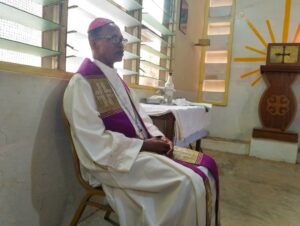
The Chief Shepherd, Most Rev. John Alphonse Asiedu, SVD, was present at the Lenten Recollection.
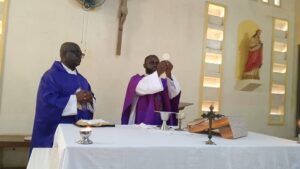
Other activities featured during the Recollection were: Adoration of the Blessed Sacrament and Rosary Prayers, individual Confessions, and the Holy Mass, which crowned the activities of the day.
There was lunch at the Alphonse Merten’s Centre Refectory, bringing the Recollection day to a close.
By Sr. Sylvie Lum Cho, MSHR (DEPSOCOM – Donkorkrom Apostolic Vicariate).