
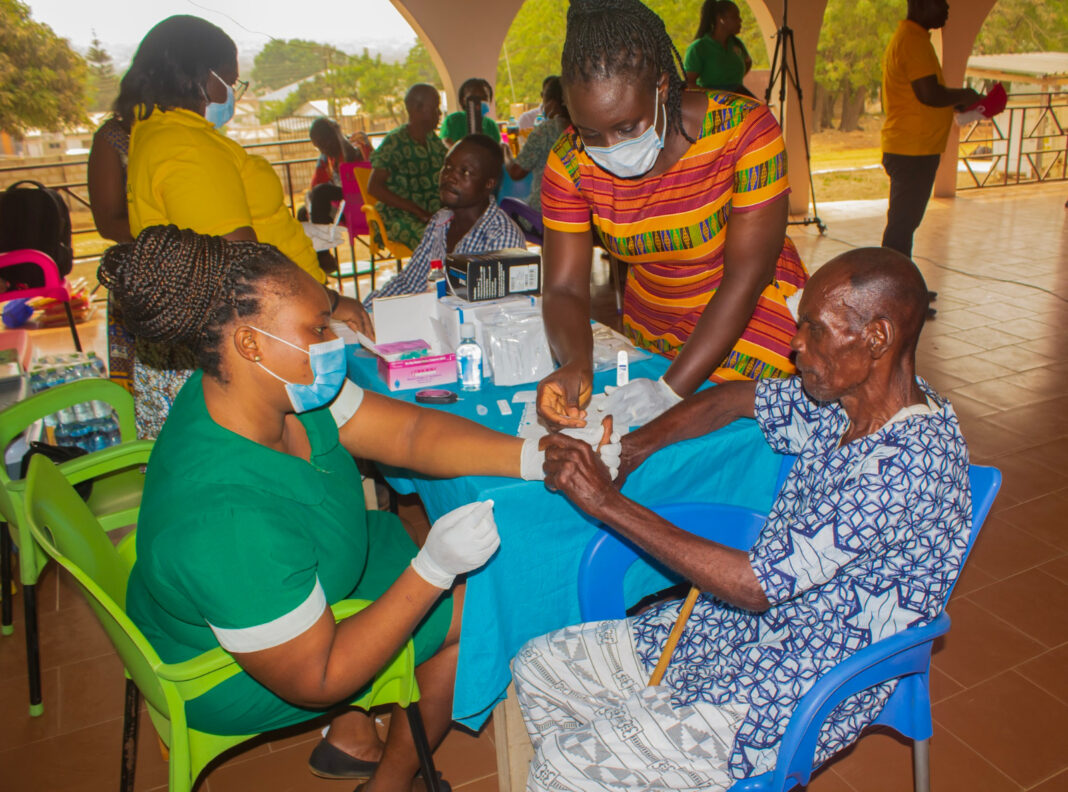

The recent death of a young man following a hit-and-run incident, after reportedly being turned away by multiple healthcare facilities due to lack of bed space, has deeply troubled the conscience of our nation. This tragic event is not only a matter of public concern but also a moment of moral and spiritual reflection, especially for Catholic health professionals who serve faithfully within Ghana’s healthcare system.
In moments such as these, the Church invites her children not only to mourn but also to examine their hearts and renew their commitment to the Gospel.
For Catholic health professionals, healthcare is not merely an occupation. It is a participation in the healing ministry of Christ Himself.
Seeing Christ in the Sick and the Vulnerable
Sacred Scripture reminds us that Our Lord Jesus Christ identifies Himself with the suffering. In the Gospel of Matthew, He declares:
“I was sick and you visited me… Amen, I say to you, whatever you did for one of these least brothers of mine, you did for me.” (Matthew 25:36, 40)
This teaching lies at the very heart of Catholic healthcare. Every injured patient, every unconscious victim, every vulnerable person brought to our facilities is not simply a clinical case, but a person endowed with inviolable dignity, created in the image of God.
The Catechism of the Catholic Church affirms that human life must be respected and protected with the utmost care from its beginning (CCC 2270). This respect extends fully to those in moments of medical emergency and grave vulnerability.
The question before Catholic health professionals, therefore, is not only what systems permit, but what Christ asks of us.
Professional Duty and Moral Responsibility
The realities of modern healthcare include genuine constraints—limited beds, insufficient equipment, and overwhelming demand. These challenges are real and must be acknowledged. Yet, even within these limitations, the fundamental duty of every health professional remains the preservation of life and the provision of compassionate care.
Emergency care does not begin with bed allocation. It begins with recognition, assessment, stabilization, and accompaniment.
Catholic health professionals are called to ensure that no person in urgent need is made to feel abandoned or invisible. Even when definitive treatment cannot immediately be provided, compassionate presence, initial intervention, and responsible referral remain powerful expressions of both professional integrity and Christian charity.
As Pope Francis reminds us, “The Church is called to be a field hospital after battle,” where wounds are treated with urgency, compassion, and mercy.
This vision applies in a particular way to Catholic health professionals, who serve at the frontlines of human suffering.
A Call to Renewed Witness in Healthcare
Catholic health professionals serve in every sector of Ghana’s healthcare system. This presence carries with it a profound responsibility—to be witnesses of Christ not only in word but in action.
Our faith must be visible in:
.Compassionate patient care
.Professional excellence
.Ethical integrity
.Courageous advocacy for the vulnerable
.Respect for the dignity of every human person
The Parable of the Good Samaritan (Luke 10:25–37) offers a powerful model. While others passed by, the Samaritan stopped, attended to the wounded man, and ensured he received care. Our Lord presents him as the example of authentic neighborly love.
Catholic health professionals are called to embody this same spirit in their daily practice.
The Role of the Catholic Health Professionals Guild
This moment also presents an opportunity for the Catholic Health Professionals Guild to deepen its mission of spiritual and professional formation.
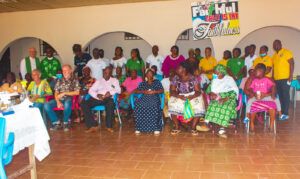
The Guild serves as an important community of fellowship, encouragement, and shared faith. It is also called to be a source of ongoing formation, helping members integrate their Catholic identity fully into their professional lives.
This can be achieved through:
.Promoting ethical reflection grounded in Catholic teaching
.Encouraging excellence and continuous professional development
.Supporting members in living out their faith in challenging environments
.Fostering a culture of compassionate and patient-centered care
.Faith formation must lead naturally to professional witness.
As St. James reminds us: “Faith of itself, if it does not have works, is dead.” (James 2:17)
A Moment of Grace and Renewal
While this tragic event has brought sorrow, it also offers an opportunity for renewal. It calls Catholic health professionals to reflect deeply on their vocation and recommit themselves to the healing mission entrusted to them.
The Church does not expect perfection from her members, but she does call them to fidelity—to act with love, to serve with integrity, and to uphold the dignity of every human life.
In every hospital ward, emergency unit, clinic, and health center, Catholic health professionals have the opportunity to bring not only clinical skill, but also the compassion of Christ.
In doing so, they fulfill both their professional duty and their sacred calling.
Conclusion
The healing ministry of Christ continues today through the hands and hearts of health professionals. Catholic health professionals, in particular, are called to ensure that those who suffer encounter not indifference, but compassion; not abandonment, but care; not rejection, but dignity.
May this moment strengthen our resolve to serve with renewed dedication, so that in caring for the sick, we may truly serve Christ Himself.