

Ghana has taken a decisive legal step to end its long-running maritime boundary dispute with neighboring Togo, formally triggering international arbitration after nearly eight years of inconclusive bilateral negotiations.
On February 20, 2026, the Government of Ghana notified Togo of its decision to submit the matter to arbitration under the United Nations Convention on the Law of the Sea (UNCLOS), signaling a shift from prolonged diplomacy to binding legal resolution.
For the immediate past Chief of the Naval Staff and respected maritime strategist, Vice Admiral Issah Adam Yakubu (Rtd), the move was inevitable.
“After nearly a decade of negotiations without a definitive agreement, arbitration is not only timely, it is necessary,” he said.
He added, “A maritime boundary cannot remain perpetually undefined. It creates uncertainty, economic paralysis, and the risk of avoidable tension.”
The roots of the maritime disagreement stretch back to colonial-era demarcations that clearly defined land borders but left offshore boundaries unresolved. For decades, the issue remained largely dormant.
Tensions escalated in late 2017 when Togolese authorities halted Ghanaian seismic survey vessels operating in waters Accra considered its own. The incident occurred just months after Ghana secured a landmark maritime ruling against Côte d’Ivoire, a decision that reinforced confidence in legal mechanisms for resolving such disputes.
In response, Ghana and Togo established a Joint Boundary Delimitation Committee in 2018. Several technical sessions and high-level engagements followed. While the two sides agreed on baseline coordinates and the coastal starting point for the maritime line, consensus on the actual offshore boundary remained elusive.
Yakubu believes the stalemate reflected the limits of politics in technical disputes.
“Technical teams made progress, but at the political level, compromises were difficult to sustain. In such circumstances, the law provides a neutral and structured solution,” he explained.
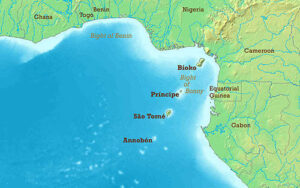
At the heart of the disagreement lies geography. Togo’s coastline spans approximately 56 kilometers, while Ghana’s stretches about 539 kilometers along the Gulf of Guinea. Togo’s concave coastal position creates what legal scholars describe as a “coastal concavity” challenge a situation where a strict median line may significantly constrain maritime access.
Yet beyond geometry lies economic reality. The disputed area forms part of the petroleum-rich Gulf of Guinea, with both fishing and hydrocarbon prospects at stake.
“The absence of a boundary has effectively frozen activities in the disputed area. When you cannot define jurisdiction, investors hesitate, fishermen are uncertain, and security agencies operate under tension. No responsible state can allow that uncertainty to persist indefinitely,” Yakubu observed.
He expressed confidence in the strength of international maritime jurisprudence.
“International jurisprudence in maritime delimitation has matured significantly. Tribunals rely on tested principles objectivity, equity, and proportionality. That gives both countries confidence that the outcome will be fair.”
Beyond economics, prolonged uncertainty at sea carries security risks. Past incidents involving halted exploration vessels and naval sensitivities have underscored how easily misunderstandings could escalate.
Yakubu cautioned against leaving such ambiguity unresolved, saying, “Maritime spaces are strategic. If boundaries are unclear, misunderstandings can escalate quickly. Arbitration prevents that by providing a definitive and binding line.”
The arbitration, to be constituted under UNCLOS Annex VII, will see both countries present evidence and legal arguments before a tribunal whose ruling will be final and binding.
While the process may take several years, Yakubu emphasized restraint and cooperation throughout the proceedings. “Both countries must continue exercising prudence. Arbitration is not confrontation; it is a civilised method of dispute resolution.”
He described the move as a broader statement of principle. “This step reinforces West Africa’s commitment to resolving disputes through law, not force. It strengthens regional stability and investor confidence.”
Ultimately, he believes the outcome will serve both nations. “At the end of this process, both Ghana and Togo stand to gain not from defeating each other, but from gaining certainty. And certainty is the foundation of cooperation.”
An analysis by Vice Admiral Issah Adam Yakubu (Rtd) and compiled by Theresa Kpodzro