
“For it must always be said that the same Jesus is truly Son of God, and truly Son of man. He is God insofar as in the beginning he was the Word, and the Word was with God, and the Word was God. And he is a man insofar as the Word became flesh and dwelt among us.” Pope St. Leo the Great.
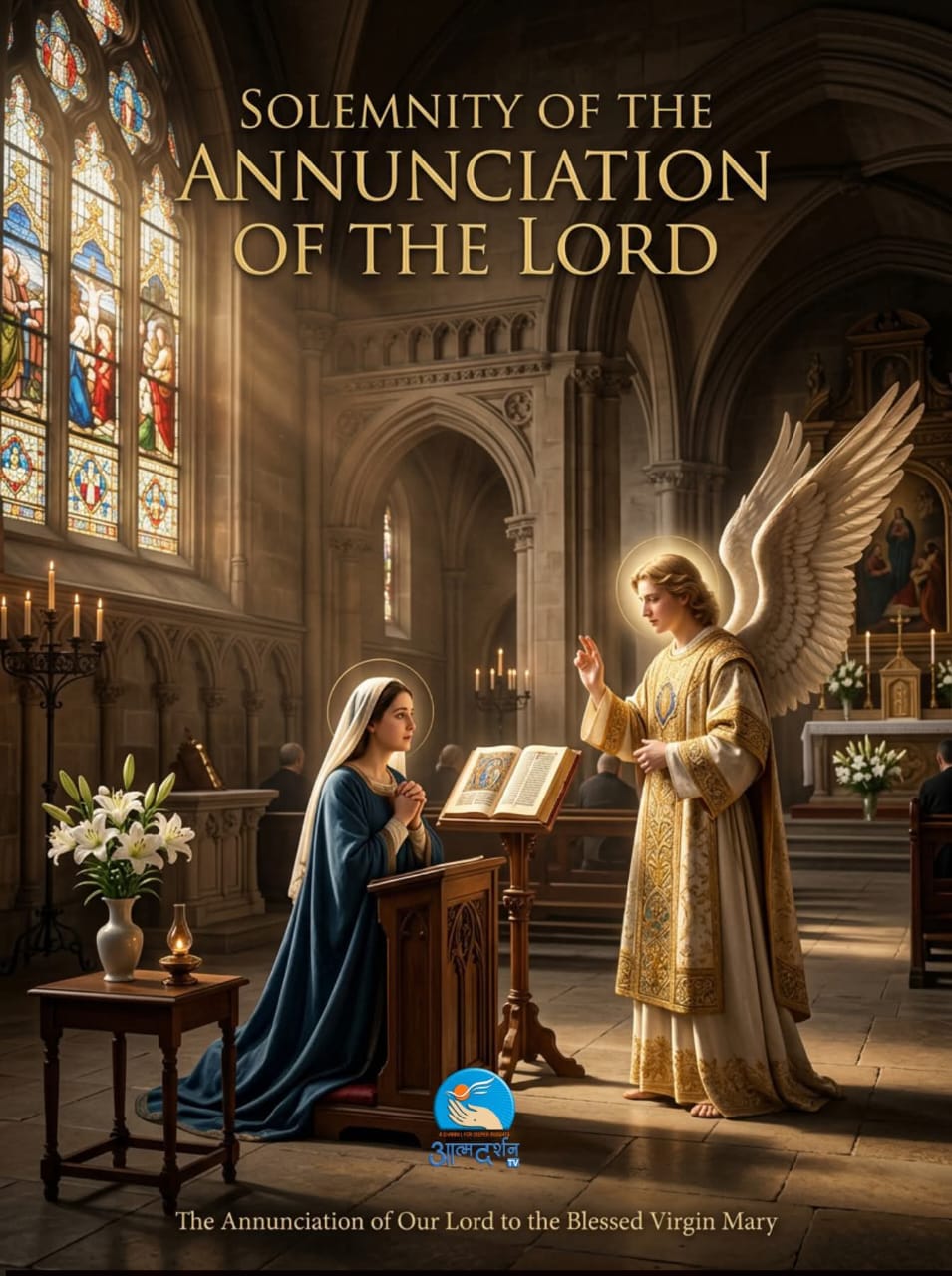
The Virgin Mary, not knowing the magnitude of the Message brought to her by the Angel Gabriel, only trusted. She was young, strikingly beautiful, simple, and obedient.
Heaven and earth stood still in anxiety, humankind looked miserable, trees refused to sway, and the birds were silent. All, waiting for the Woman. Then it came, the Fiat! “Behold, I am the handmaid of the Lord; let it be done to me according to your word.” Everything created by God was instantly stirred by a breath that knew no delay. The cosmos blossomed, whole and radiant!
For by Mary’s “YES” to God came the salvation of man. This singular privilege made her blessed among all women, and from age to age, she will be called BLESSED! She bore a Son, yet suffered no loss of virginity, a Mother never defiled!
Oh, Blessed Virgin Mary, at the Annunciation, you said yes with humble faith. Teach us to trust in God’s will as you did, and help us to welcome His Word into our lives. Pray for us, now and always, especially at the hour of our death, Amen.
The Invitation and the Response
On this day, we remember the moment Heaven spoke, and Mary answered. The Angelus puts us in that scene; the Hail Mary begins with her greeting.
Today’s feast gives us both the first half of the Hail Mary prayer and the Angelus devotion. To say we have “both the Angelus and the first half of the Hail Mary” is to say we’re holding the question and the answer together – heaven’s invitation and humanity’s fiat.
Conclusion
We’re standing at the threshold where Heaven’s ‘yes’ meets our own – announced, received, and still unfolding. The feast isn’t just a memory, it’s a pattern. An offer is made, freedom answers, and the world shifts. We’re invited to notice our own thresholds – the calls we hear and the replies we make – because that’s where things become incarnate!
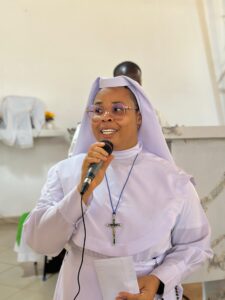
By Sr. Miriam Amabilis, IHM