
“Are you familiar with the Kampala Document?”
I shot a furtive glance at Baafour’s face and beheld his negative response. But then, how was he to know? I reckoned that many Catholics, even colleague clergy, would draw a blank.
“Kampala Document?” Baafour’s hesitant echo disclosed intense befuddlement. I felt the urge to help him since I was vaguely acquainted with the document about which our impertinent co-traveller was quizzing the bewildered gentlemen.
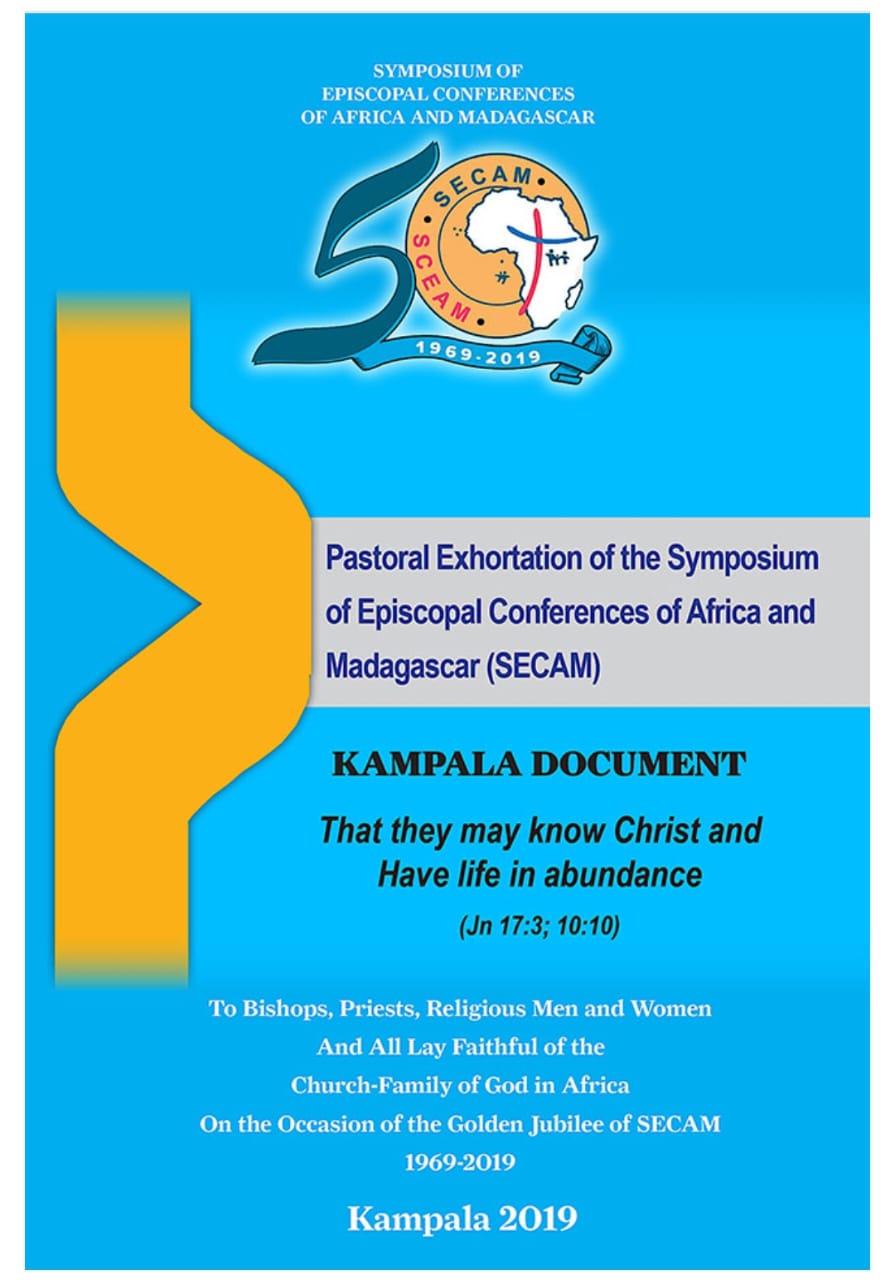
The Kampala Document is a pivotal statement issued in 2019 by the Symposium of Episcopal Conferences of Africa and Madagascar (SECAM). It provides a comprehensive historical account of the church in Africa up to the establishment of the continental body of bishops and outlines crucial pastoral directions for the Catholic Church in Africa. Delivered on the 50th anniversary of SECAM’s founding in Kampala, Uganda, it commemorates the maiden visit of a pope to Africa. On that occasion, Pope Paul VI urged his African audience to be missionaries to themselves, underlining the need for an African Christianity. The Kampala Document probably represents the current policy blueprint of the…
“You don’t know it.” My reverie was cut short as I heard the troublesome interlocutor continue:
“But that’s not surprising. After all, you are not a Catholic. But then, you are no different from many African Catholics, including some priests and religious. No knowledge of the most recent roadmap of the Church in Africa.” He shook his head in undisguised indignation.
Suddenly, Baafour countered, “But what has that got to do with an African Pope?”
Well played, Baafour! I had the same thought about what any of this had to do with the matter of securing an African papacy at the recently concluded conclave. Garrulous Impertinence straightened up. So did I, eager to hear his argument.
“You see, the Kampala Document is comparable to documents that have emerged from the Latin American Conference of bishops known as CELAM. These documents usually bear the names of the places where the bishops gathered for their meetings. In the case of CELAM, we refer to key assemblies held in Medellin, Colombia, in 1968; Puebla, Mexico, in 1979; Santo Domingo, Dominican Republic, in 1992; and the most recent gathering in Aparecida, Brazil, in 2007. Now, while the actual documents issued from these meetings may not be known to all Catholics of Latin America, the core concerns, perspectives, and orientations that informed and emerged from those gatherings have greatly shaped the people of God in Latin America, from bishops to lay faithful. These concerns and perspectives gave rise to issues such as the preferential option for the poor and actions like empowering grassroots movements and nurturing the local church through small, basic communities to promote effective listening and sharing. Looking back now at the papacy of Pope Francis, one realises how much he was a product of and was formed by this experience of being church, in a way that he then initiated for the universal church. His leadership style, his desire to have a poor church for the poor, insistence on reaching out to those at the margins and peripheries, and the defining concluding act of his papacy, synodality, all bear witness to the influence of this ecclesial environment on him.”
We both sat listening, riveted by his reasoning. Of course, I continued the pretence of reading.
“My point, then, is that as much as the election of a pope reflects God’s will for the church regarding the particularity of the cardinal elected and circumstances leading to his election, including decisively the state of the church and the world, it equally underscores the significance of the ecclesial currents and processes that have moulded that cardinal, resulting in his election. Bearing this in mind, the consecutive election of two cardinals from CELAM is not surprising. The vibrancy of that continental episcopal body, its theological and pastoral engagement of issues confronting the Latin American people, and robustness in shaping agenda that capture the attention of the universal church, such as debates on topics like liberation theology, the possibility of ordaining married men of proven virtue, etc., have delivered the papacies of Francis and Leo XIV.”
“So, not SECAM with its unknown Kampala Document,” Baafour muttered, seemingly having caught on.
“The real issue, though, is not just about the unknown Kampala Document. It’s about the impact. How is the Catholic Church in Africa addressing the real issues that Africans face on the continent and beyond? How is the church in Africa shaping and contributing to the global discourse on hot-button concerns such as migration, the environmental crisis, etc., offering theological and pastoral insights drawn from its distinctive Christian witness and experience? I’m sure you’ve understood me now.”
Baafour nodded. I remained silent, refusing every urge to share my viewpoint. Baafour interrupted the silence, asking:
“How about Ghana? How is the church faring? After all, we had a candidate at the conclave? Cardinal Peter Turkson. I’m sure you have some thoughts on that, too.”
There would be no disappointment in obtaining the views of this talkative yet well-informed gentleman who enjoyed sharing his thoughts. He rose to the occasion once again, fishing out his phone from his pocket, briefly typed something and then, smiling, said in reply:
“I’ve found exactly what I was looking for. Let me not say much to respond to your question. Instead, I’ll share the comments of a renowned scholar of African Christianity, written in 1998.”
Rev. Fr. Kpanie Addy, S.J.