
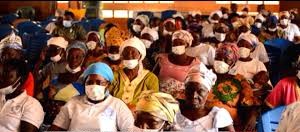

The death of a spouse poses many emotional challenges to the bereaved spouse as they go through a period of grief. The grief cycle differs from person to person, and what the grieving spouse needs is the care, understanding, and support of those around them. The support network of family, friends, church members, neighbours, etc, is very important to the health and well-being of the grieving spouse.
While grieving is common to both widows and widowers, widowers seem to receive more support and care than their female counterparts. Many traditional societies in Ghana and other parts of Africa are more supportive and caring towards surviving husbands, while the same cannot be said about surviving wives.
In several cases, the family of a deceased spouse may become very mean or even unkind to the surviving spouse. Under the guise of traditional widowhood rites, many widows are subjected to abusive and dehumanizing practices. Some of these practices, like shaving of their hair (sometimes including the pubic area), invade their privacy and infringe on their human rights. Some widows suffer isolation, starvation, and may sometimes be forced to sleep on bare floors, along with other unacceptable practices.
It is worth noting that some of these practices are enforced by older women in the society who see themselves as custodians and champions of these dehumanizing practices. Widows are sometimes subjected to long periods of mourning lasting from a few months to about a year. A long period of mourning may compromise their ability to engage in meaningful economic activity that enables them to care for their children. As part of rites to end this period of widowhood, some women are required to sleep with total strangers and engage in other practices that may pose a danger to their emotional health and general well-being.
Mourning a dead spouse is normal, but making a surviving spouse go through a period of emotional and physical discomfort must not be part of the mourning process. It is unacceptable to deliberately add to the grief of widows in the name of tradition. Instead of enforcing such harmful practices, it will be more acceptable to enact and enforce laws that protect widows and safeguard their general health and well-being as they go through the challenging period of grief and mourning following the death of a husband.
Families and custodians of such unhelpful widowhood rites will also need to be sensitized and helped to understand that the law does not accept such harmful practices. Advocacy groups and experts need to be encouraged and supported to come up with more acceptable and simple widowhood rites that do not infringe on the rights of any widow or widower.
Such replacement rites should be based on support for the emotional and general well-being of such individuals.
By Dame Obaapanyin Gloria Kwasie