

INTRODUCTION
I once entered a Diocese in Ghana to look for the Department of Social Communications (DEPSOCOM) Director, only to be told, “The Priest who does Facebook Live?” For me, it seemed like a joke, but that response depicts the receptionist’s understanding of the Office of a DEPSOCOM Director.
WHAT IT IS NOT
Not only does she think that way, but many of the lay faithful do as well. The general understanding of the DEPSOCOM Office is that they cover live diocesan ordinations, burial Masses, and funeral rites. Interestingly, that is just a small aspect of their work.
WHAT IS THE COMMUNICATION OFFICE ABOUT?
The Church, like any other institution or organization that runs and “sells” a “product,” which is the message of salvation, with a well-defined leadership structure that spearheads activities, engagements, and conferences, requires a linguist—one who communicates strategically and timely to the Christian faithful to inform them of day-to-day activities, social and pastoral engagements, and even sometimes commercial engagements, diocesan negotiations, and partnership initiatives.
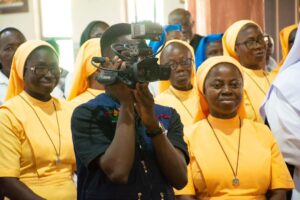
As it happens in a palace, he is the linguist or mouthpiece of the Diocese in the literal sense. He communicates diocesan decrees, diocesan programmes such as diaconate and priestly ordinations, advises the Local Ordinary on when and where to speak on national issues, organizes press conferences when it is appropriate to announce episcopal nominations, articulates the position of the Church on national matters, and serves as the first point of contact when journalists wish to speak to the Bishop.
By Church law, priests are not permitted to speak either on their own or on behalf of the archdiocese or diocese unless authorized by the Competent Ordinary through the DEPSOCOM Director. Their training goes beyond the camera. They are trained to know how, when, and where to present the message of the Bishop, editing all technical and, excuse me to say, theological ambiguity and vagueness using the appropriate tools of communication, whether video, audio, journal, or letter.
DEPSOCOM OFFICE IN THE 21ST CENTURY
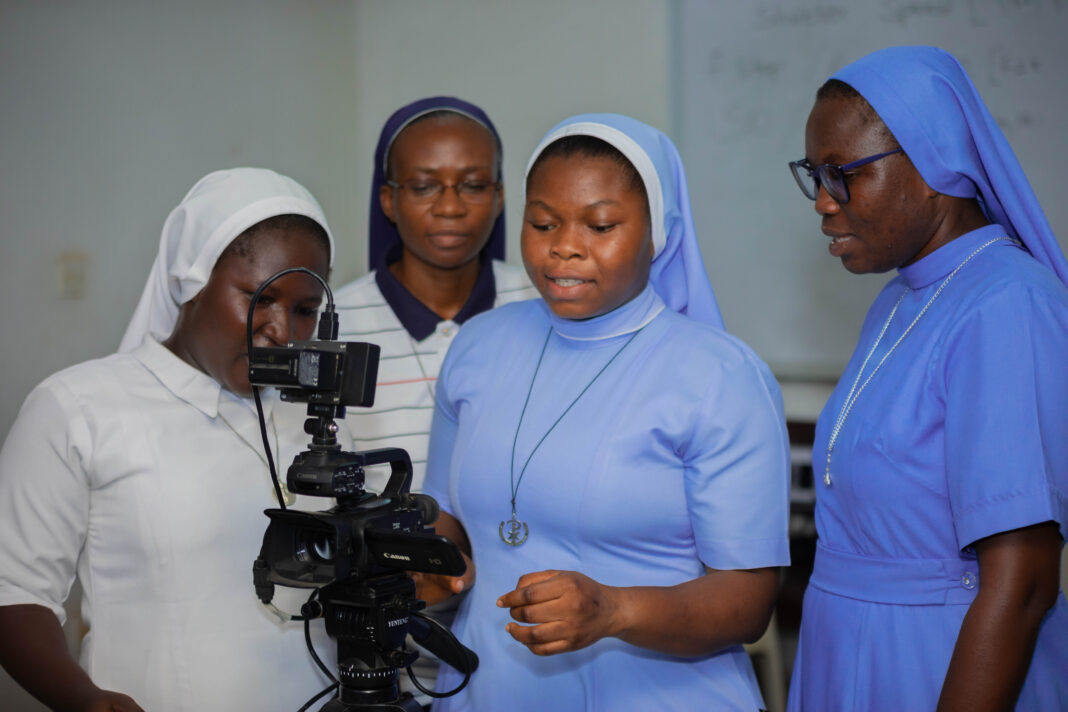
Unlike many years ago, when dioceses communicated their pastoral message mainly through writing, in this twenty-first century, having a strong, well-equipped, and strategically placed DEPSOCOM Office is a pastoral imperative, since the world is now a global village and integral communication—encompassing moral, social, cultural, pastoral, commercial, and even tourism dimensions—is non-negotiable.
In fact, the DEPSOCOM Office is not only an announcer but the pivot of parochial and diocesan pastoral life, since it is the office that “presents” the parishes, deaneries, and dioceses to the wider world to propagate the Word and attract partners, associates, and investors to support the infrastructural and human development of the dioceses.
Therefore, there is a need to invest heavily in modern equipment, build beautiful studios, and make our Catholic presence fully felt on all social media platforms and journals to tell our Catholic story and history ourselves.
THE WIDER ASPECTS OF THE OFFICE
Knowing very well that the DEPSOCOM Office is not only the spokesperson of the Diocese but also a true advertiser and marketer (or, if you like, an agent of evangelization), it behooves Local Ordinaries to constitute a Diocesan Communication Board and expand the scope of operation of the Communication Office. This may include venturing into printing and publishing diocesan, provincial, or national graphics, newsletters, flyers, banners for programmes, and souvenirs; as well as establishing online chaplaincies where, with the support of the Diocesan Catechetical and Pastoral Centre, several programs are broadcast to teach the faith, from Sunday school children to the youth to married couples.
In fact, DEPSOCOM encompasses radio evangelization and television evangelization, where Catholic spiritualities such as Marian, Charismatic, Ignatian, Franciscan, Eucharistic, etc., are highly promoted and used to teach catechism at all levels, pre-marriage and post-marriage instruction, counselling, and related programs.
WHAT IS MAKING IT EXTREMELY DIFFICULT TO GET A NATIONAL CATHOLIC RADIO AND TELEVISION?
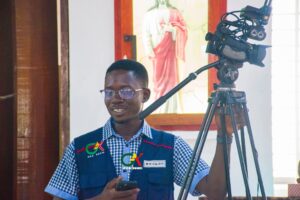
During the perilous COVID-19 pandemic, when churches were locked down, and the only means to evangelize the faithful was through the media, the need for a national radio and television network became very pressing.
Our Bishops have made considerable efforts in launching and mobilizing funds to establish Lumen Christi TV. I humbly ask our leadership to kindly consider these suggestions. Who knows—it may help.
- I respectfully plead that the Ghana Catholic Bishops’ Conference (GCBC), with the support of Catholic Members of Parliament and Ministers, petition the Government of Ghana to grant the necessary permission, since the Church plays a key role in the holistic development of the citizenry and the nation at large.
- I humbly plead that, considering the huge cost involved, the management of Lumen Christi TV opens its doors for partnerships among wealthy Catholic business leaders and sells shares to individual Catholics.
- I humbly suggest that, as was done during the establishment of the Catholic University of Ghana at Fiapre, the GCBC may decree a monthly national TV contribution for several years and levy on all societies as well. I am optimistic that our Catholic faithful would gladly contribute with joy.
WHO QUALIFIES AS A DEPSOCOM DIRECTOR/ESS, AND WHAT ARE THE TERMS?
From observation, the Directors have traditionally been priests. Recently, female religious and the laity have been introduced through the pastoral style of inclusivity promoted by Pope Francis of blessed memory.
The question is: which is the best way to go?
I must confess that the best approach depends on the decision and choice of the Local Ordinary of that particular territory. But the question remains: which option is more effective, pastorally enriching, and economically prudent?
I am tempted to think that, since in the strictest sense the Communication Office is neither clerical nor sacramental, and if not for economic constraints, the Diocese can afford it, adopting a blended approach would be beneficial. A lay person and a priest could both serve—one as Director and the other as Assistant—to ensure balance for a rich pastoral communication ministry.
Let us also understand that DEPSOCOM is a full-time responsibility and combining it with other full-time pastoral engagements could affect performance—either the Office, the Parish, the School, or, worse, both. I would advise that priests who handle this all-important office be relieved of heavy pastoral duties if we truly want the office to operate fully, effectively, and efficiently. The appointment should also be for several years, renewable for two or three terms.
CONCLUSION
As I bring this presentation to a close, I humbly ask that our Local Ordinaries design a diocesan communication policy that addresses priests and social media evangelization, as well as a long-term development plan for our Diocesan DEPSOCOM Offices, focusing on how to use them pastorally and wisely to win the Catholic youth.

By Rev. Fr. Albert Kyei Danso
Chaplain
Holy Family Ghanaian Catholic Community Church
Italy