

Question by Damian Dieu Donne Avevor, Accra:
Your Lordship, I respectfully seek your kind assistance in interpreting Canon 216 of the Code of Canon Law, which states: “Since they participate in the mission of the Church, all the Christian faithful have the right to promote or sustain apostolic action even by their own undertakings, according to their own state and condition. Nevertheless, no undertaking is to claim the name ‘Catholic’ without the consent of competent ecclesiastical authority.” In this regard, I wish to ask whether there could be situations in which individual Catholics or Catholic-led private media institutions might, perhaps unknowingly, adopt the name “Catholic” as a prefix to their initiatives without having obtained the proper ecclesiastical approval. What, then, are the canonical and pastoral implications of using the name “Catholic” without such authorization?
I am reminded of the 2011 decision by the Holy See to revoke the Catholic identity of the International Union of the Catholic Press (UCIP), following a serious management crisis and internal challenges within the organization. Given this precedent, I wish to ask further: can individuals or groups who may have inappropriately or mistakenly adopted the name “Catholic” for their institutions or platforms be formally asked – or required – to cease using that designation if it is determined that they do not have the necessary ecclesiastical endorsement?
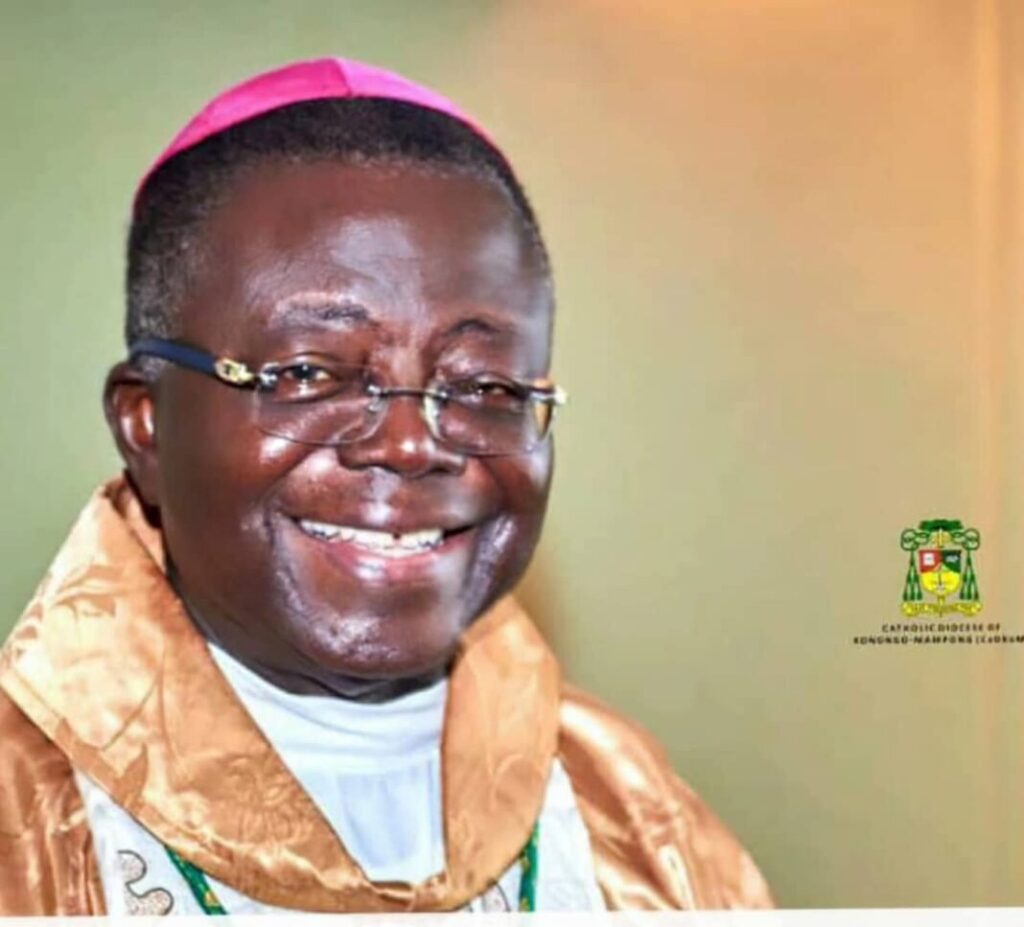
Answer by Most Rev. Joseph Osei-Bonsu:
This question touches upon a critical issue in ecclesial life – namely, the relationship between individual apostolic initiatives and the visible communion and authority structure of the Church. Canon 216 affirms the right and responsibility of all the Christian faithful to engage in apostolic activity in accordance with their vocation and state in life. This reflects the Church’s recognition of the laity’s essential role in evangelization. However, the canon also establishes a crucial limitation: “No undertaking is to claim the name ‘Catholic’ without the consent of competent ecclesiastical authority.” This requirement is not merely a legal formality but a vital safeguard of ecclesial communion, ensuring that what is publicly identified as “Catholic” truly reflects the Church’s teaching, discipline, and pastoral care.
In response to your first question, yes, it is entirely possible – and indeed not uncommon – for individual Catholics or private Catholic-led media institutions to adopt the name “Catholic” without proper ecclesiastical approval, sometimes unknowingly. Such cases often arise from genuine enthusiasm for the faith and a desire to contribute to the Church’s mission. However, even well-intentioned use of the term without authorization carries significant canonical and pastoral implications. Unauthorized use risks misleading the faithful, who may assume the initiative is officially endorsed by the Church, and could lead to confusion or scandal if the content or operations of the initiative deviate from authentic Catholic teaching or discipline.
The 2011 decision regarding the International Union of the Catholic Press (UCIP) serves as a key precedent. The Holy See’s revocation of UCIP’s Catholic identity demonstrated that the Church retains the authority to withdraw the “Catholic” designation when an organization no longer meets canonical or doctrinal standards. This underscores that ecclesiastical approval is not merely a one-time formality but requires ongoing fidelity and accountability to the Church’s mission.
To your final question: yes, individuals or groups that have inappropriately – even if unintentionally – adopted the name “Catholic” can indeed be formally required to cease using it if they lack proper authorization. The competent ecclesiastical authority (typically the local bishop or, for broader initiatives, the Holy See) may first issue a pastoral request for compliance. If necessary, a formal canonical directive can follow, and in cases of persistent refusal, further measures may be taken to prevent misuse of the Church’s name.
In conclusion, while the Church deeply values and encourages the apostolic zeal of the laity, such initiatives must always operate in communion with the Church’s hierarchical structure. The name “Catholic” is not a generic label but a mark of ecclesial unity and fidelity to the Magisterium. Your concern reflects a commendable awareness of this important balance, and I appreciate your commitment to upholding the integrity of the Church’s witness.
For further explanations or enquiries, you may contact the author, Most Rev. Joseph Osei-Bonsu, Emeritus Bishop of Konongo-Mampong, on this number: 0244488904, or on WhatsApp (with the same number).