
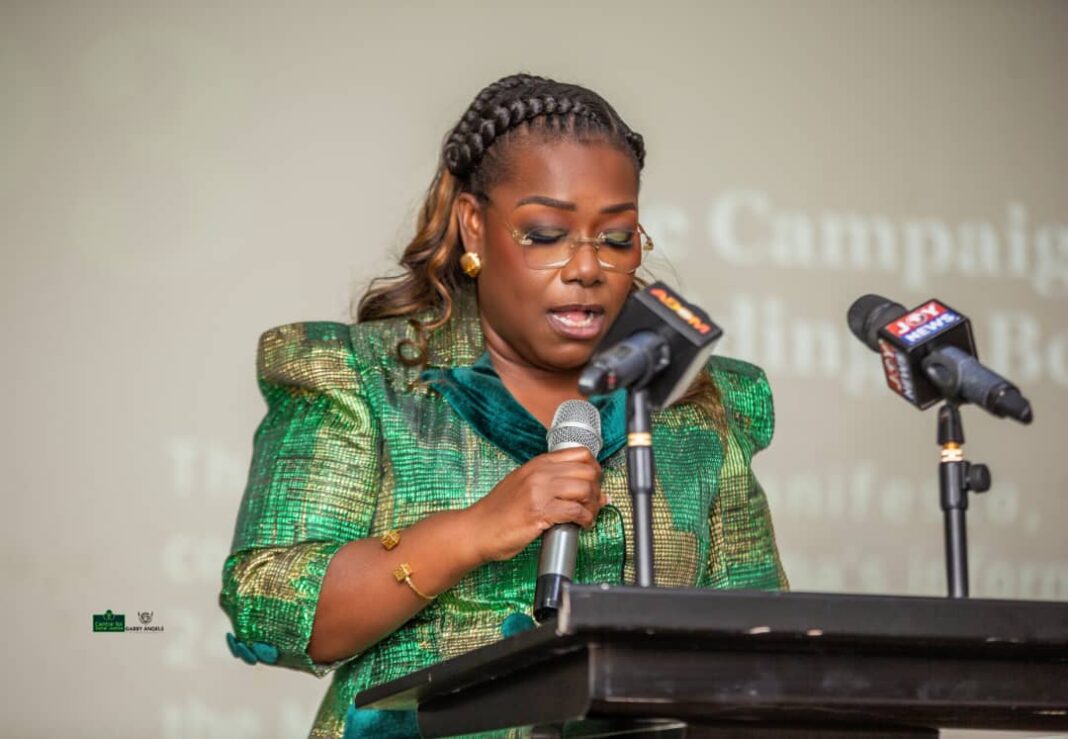

The Government of Ghana is taking decisive steps to transform the informal sector, with major policy interventions already underway, according to Deputy Chief of Staff, Nana Oye Bampoe Addo.
Addressing stakeholders at a policy dialogue in Accra, on financial inclusion and social security for informal sector workers (traders and female peasant farmers), on Thursday, April 16, 2026, she outlined key initiatives under the government’s reset agenda, including the 24-hour economy policy, Women’s Development Bank, and a new pension scheme for informal workers.
“These are concrete, documented actions… working towards an inclusive economy in Ghana,” she stated, signalling a shift from policy promises to implementation.
Central to the reforms is the 24-hour economy initiative, which aims to boost productivity and job creation. “Same job, three shifts, three people,” she explained, noting that the policy targets 500,000 new jobs between 2025 and 2027.
The Women’s Development Bank, backed by a GHS 500 million seed fund, is set to empower female entrepreneurs with flexible financing. Nana Oye described it as a game-changer for women-led businesses, saying it is “aimed at the economic empowerment of millions of Ghanaian women.”
She also highlighted progress in formalizing previously unregulated sectors. The legalization of commercial motorbike operations (Okada), she said, has brought over 500,000 riders into the formal economy.
“Riders are now formally recognized as workers and taxpayers,” she noted.
On pensions, the government has launched a targeted initiative for informal workers, with early results showing promise.
“12,000 market women have already been enrolled in voluntary pension schemes,” she revealed.
Despite the progress, Nana Oye emphasized that the government cannot do it alone.
“Inclusion is everybody’s work,” she stressed, calling for collaboration between civil society, the private sector, and development partners.
She concluded with a rallying call for collective action, “Let’s extend partnerships… to reach every informal worker in our markets, farms, and communities.”
By Theresa Kpordzo//Celestine Gbologah