
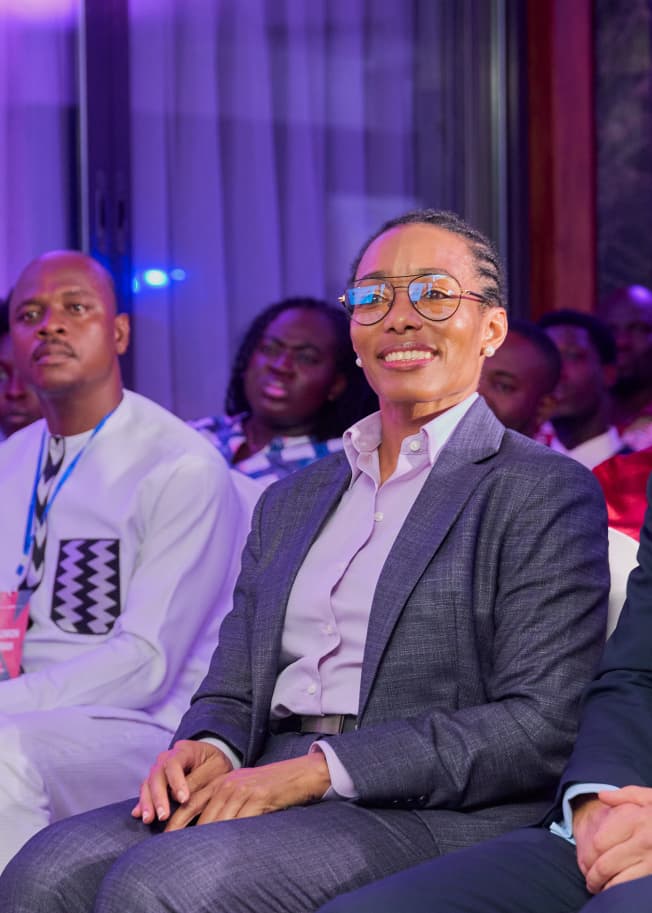

The Minister for Environment, Science and Technology, Hon. Dr. Zanetor Agyeman-Rawlings has challenged Ghanaian journalists to make scientific research and technological innovations more accessible to the public, warning that discoveries cannot achieve their full potential if people do not understand their relevance.
She made the call at the closing ceremony of the 2026 UK Media Excellence for Emerging Technologies (MEET) Fellowship, held at the British High Commissioner’s residence, Accra on Friday, 16th October, 2026.
Addressing journalists, researchers, academics and development partners, Dr. Agyeman-Rawlings said science communication was essential to ensuring that scientific progress translated into practical solutions for Ghanaian communities.
“Science and technology cannot achieve their full potential if the people who rely on it to impact and improve do not understand or appreciate their relevance,” she said.

She identified artificial intelligence, AI, biomedical research and the circular economy as areas offering significant opportunities for Ghana, while raising concerns about safety, ethics, accessibility, affordability and fairness.
According to her, journalists have a critical responsibility to explain these developments in language that ordinary people can understand, while ensuring that scientific reporting remains accurate and evidence-based.
Dr Zanetor urged journalists to go beyond reporting announcements about new discoveries and instead investigate the evidence, ask difficult questions and establish how innovations affect people’s daily lives.
She also encouraged journalists to pay greater attention to research conducted in Ghana, noting that many researchers were not sufficiently equipped to promote their work to the public and potential investors.
“The bridge is you,” she told the journalists, emphasising their role in connecting research, innovation, industry and society.
Using the planned restrictions on Styrofoam products as an example, the minister challenged journalists to familiarise themselves with the policy and explain how the public could safely dispose of existing products.
She cited research into transforming Styrofoam waste into building tiles as an example of how scientific innovation could support waste management and create economic opportunities.
The minister further raised concerns about the implications of artificial intelligence for journalism, calling for sustained public discussion on safeguards and human oversight as the technology becomes increasingly influential.

She warned that the profession must protect its integrity and human contribution while adapting to technological advances.
Dr Zanetor also encouraged journalists to investigate public health and environmental issues that receive limited attention, including radon gas exposure, and to provide audiences with practical information and possible solutions.
The ceremony marked the completion of a week-long fellowship involving 29 journalists, ten of whom were selected for a UK knowledge exchange visit.

The programme was implemented by Imperial Global Ghana with support from the British High Commission and other partners to strengthen science, technology and innovation reporting.
Dr Agyeman-Rawlings congratulated the fellows and called for stronger collaboration among government, research institutions, universities, industry and the media to ensure that scientific knowledge improves lives and supports national development.
By Theresa Kpordzo//Newswatchgh.com