
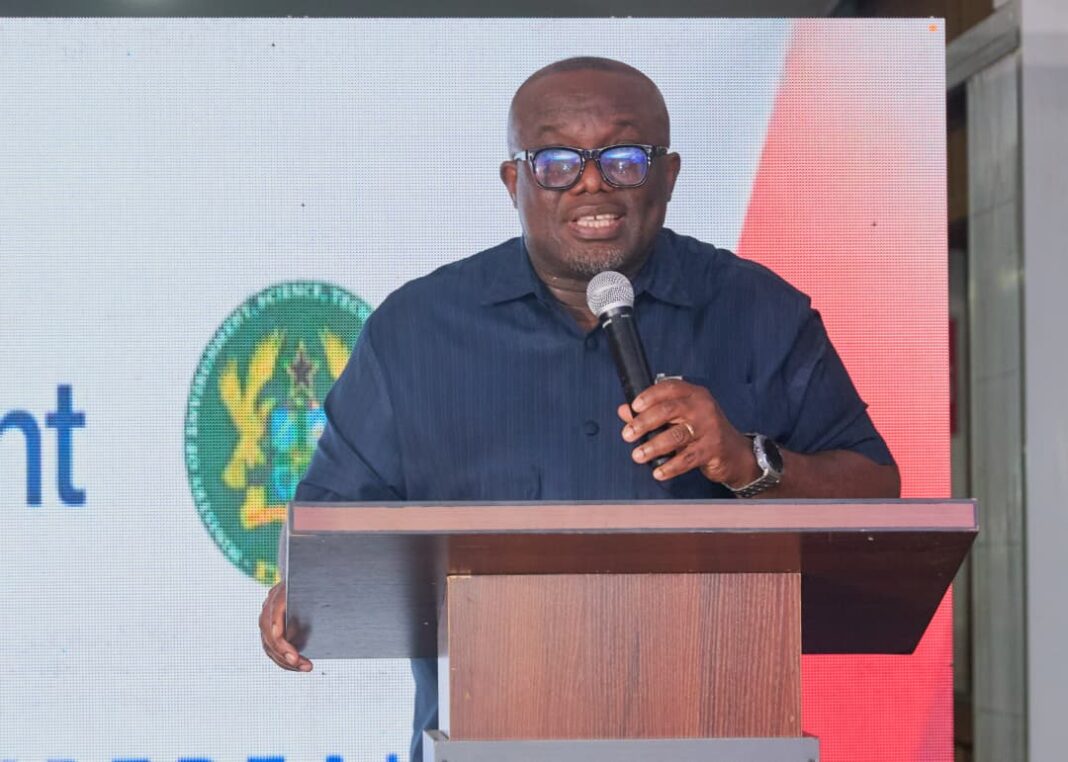

The Vice-Chancellor of the University of Media, Arts and Communication (UniMAC), Professor Eric Opoku Mensah, has urged journalists to prioritise evidence, accuracy and public understanding in their coverage of science, technology and innovation.
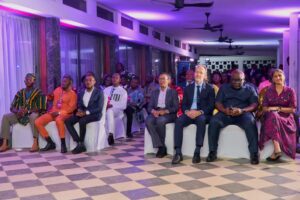
He made the call while delivering a keynote address at the closing ceremony of the 2026 UK Media Excellence for Emerging Technology (UK MEET) Fellowship at the British High Commissioner’s residence, Accra, on Friday, October 15, 2026.
Professor Opoku Mensah said journalists have a responsibility to help the public understand scientific discoveries and emerging technologies that could significantly affect their health, livelihoods, environment and future opportunities.

“A discovery can remain within a laboratory. A research paper can remain within a university. An innovation can be announced without the public understanding what it means. Your reporting can bring that knowledge into everyday conversations and help people examine it,” he said.
He explained that journalists did not necessarily need to be scientists to report on scientific developments but must understand enough to ask meaningful questions, recognise the limits of their knowledge and seek reliable expertise.
“A good place to begin is with the evidence,” he said, urging journalists to scrutinise claims presented as breakthroughs, establish how research findings were tested and determine whether other researchers had examined the results.
He cautioned against presenting preliminary findings as established facts or describing promising medical treatments as cures before sufficient evidence was available.
“Sometimes, the most useful thing you can tell your audience is just to believe that we do not yet know enough,” Professor Opoku Mensah said, highlighting the importance of acknowledging uncertainty in science reporting.
He also encouraged journalists to use simple language and, where possible, local languages to make scientific information accessible to wider audiences.
The Vice-Chancellor stressed the importance of maintaining professional independence when engaging researchers and innovators. He urged journalists to investigate research funding, potential conflicts of interest, the beneficiaries of new technologies and the risks they might pose.
Beyond interviews with experts, he encouraged journalists to incorporate the experiences of farmers, patients, business owners and other community members into their reporting to establish how scientific developments work in real-life situations.
He further called for follow-up reporting to determine whether announced projects and services had been delivered and whether communities had benefited from them.
“Follow-up reporting takes time, but it helps the public distinguish between a promise and a result,” he said.
Professor Opoku Mensah called for stronger collaboration among universities, research institutions, media organisations and editors to improve the quality of science journalism.
He said UniMAC recognised that the quality of public communication influenced the quality of public decision-making, adding that preparing media and communication professionals to serve society responsibly was a duty the university took seriously.
He urged the UK MEET fellows to sustain the professional relationships established during the programme and use them to strengthen their reporting while safeguarding their independence.
“Your work can help answer it by making knowledge accessible and giving people the information they need to question, decide, and participate,” he said.
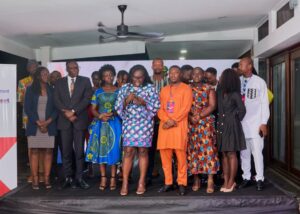
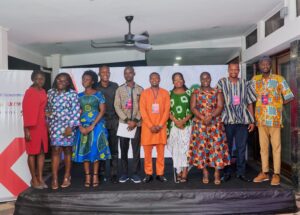
The ceremony marked the conclusion of a five-day fellowship involving 29 journalists from across Ghana. Ten participants were selected for a knowledge-exchange visit to the United Kingdom.
The programme was implemented by Imperial Global Ghana with support from the British High Commission to strengthen journalists’ capacity to report on science, technology and innovation and improve public engagement with research.
By Theresa Kpordzo//Newswatchgh.com