
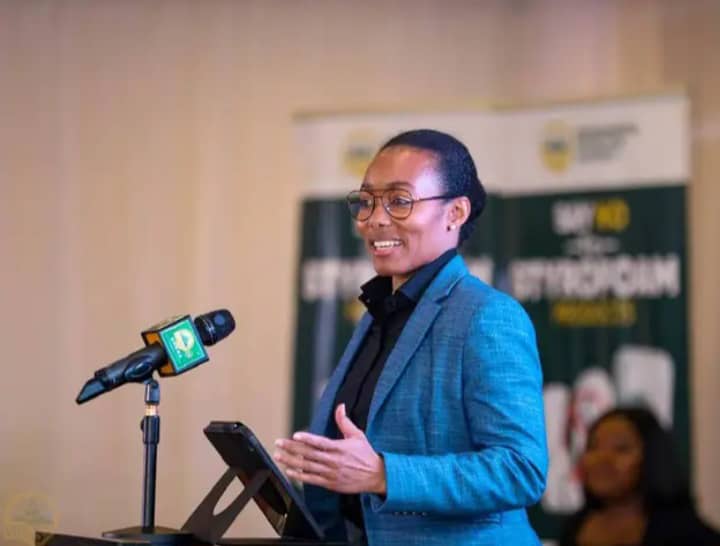

The Government of Ghana has declared 2027 the Year of Pollution Control, with plans to intensify efforts to restore degraded water bodies, strengthen air quality regulations and enforce restrictions on environmentally harmful products and activities.
The Minister for Environment, Science and Technology, Dr. Zanetor Agyeman-Rawlings, announced this during the launch of the National Water Restoration and Rehabilitation Framework in Ho, Volta Region.
She outlined four key areas of focus for 2027: river and land restoration, implementation of air quality regulations, enforcement of the Styrofoam ban and restrictions on certain pesticides.
According to the Minister, the measures form part of government’s broader efforts to protect the environment and safeguard public health.
She disclosed that the implementation of air quality regulations would be enforced from January 2027, warning individuals who engage in backyard fish-smoking that the activity would no longer be permitted under the new measures.
She also announced that the Styrofoam ban would come into force in January 2027, citing the environmental and health concerns associated with its use.
The Minister further indicated that certain pesticides would be banned as part of efforts to strengthen environmental protection.
On water restoration, Dr. Agyeman-Rawlings said government would prioritise stopping pollution at its source while ensuring that degraded rivers and other water bodies are restored through scientifically guided interventions.
She directed the Environmental Protection Authority (EPA) to work with the Water Resources Commission, relevant ministries, security agencies, local assemblies and traditional authorities to identify and protect water bodies and their designated riparian buffer zones.
She also called for the establishment of reliable baseline water quality data, assessment of pollution sources and measurable restoration targets to guide interventions.
The Minister emphasised that restoration efforts must be informed by scientific evidence and that the success of such interventions should be measured by improvements in water quality and the recovery of aquatic ecosystems.
She further announced plans to encourage research institutions to open their facilities to young people, particularly girls, to expose them to practical opportunities in science and technology.
She said students should be given opportunities to interact with scientists, visit laboratories and participate in supervised field activities to develop interest in disciplines such as hydrology, environmental engineering, toxicology, analytical chemistry and remote sensing.
Dr. Agyeman-Rawlings stressed that environmental protection is a shared responsibility between government and citizens, urging traditional authorities, communities, private sector actors and local authorities to actively support the national agenda.
She particularly cautioned against individuals and influential persons intervening on behalf of those arrested for engaging in illegal activities that pollute water bodies.
The Minister said government intends to demonstrate leadership through concrete environmental measures and position Ghana as an example for other African countries.
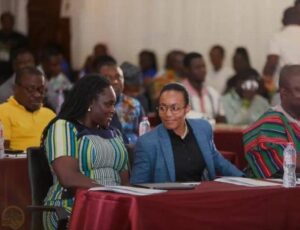
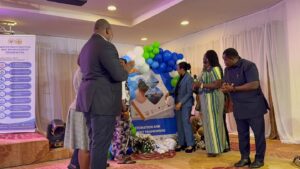
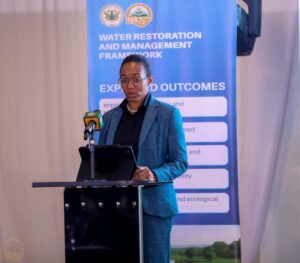
She made the announcement during the stakeholder engagement and official launch of the National Water Restoration and Rehabilitation Framework in Ho, which seeks to establish a coordinated, science-driven approach to restoring and protecting the country’s water resources.
By Robert Dela Mawuenyegah and Celestine Edem Gbologah // Newswatchgh.com