

Politicians must be circumspect in their activities, utterances, and conduct, especially in the media space. There is a saying that “if you think peace is expensive, try war”. This simple statement should remind us that peace is not something to be taken for granted.
What is happening on social media these days, particularly among some members and supporters of the major political parties, is very worrying. It is not only unpleasant to watch; it is also dangerous for the country’s democratic culture.
Many Ghanaians, including politicians, are quick to quote “freedom of speech” without giving equal attention to the responsibility that comes with that freedom. Freedom of speech does not mean freedom to insult, threaten, provoke, misinform, or incite others. A democratic society must allow criticism, but criticism must be guided by truth, respect, and responsibility.
At this point, it does not matter which political party started attacking the other first. The blame game will not take us anywhere. What matters now is that this behaviour must stop. It is a shame for the individuals involved, a shame for the political parties that tolerate it, and a shame for the country when our public discourse descends into insults, threats, and personal attacks.
Behind all political parties, every Ghanaian must first belong to the “party of peace.” Political parties may differ in ideology, policy, and leadership style, but Ghana is the common home we all share. No party’s interest should be placed above the peace and stability of the nation.
The causes of war in any country are often not taken seriously at the beginning. They may appear small, ordinary, or even harmless. Yet the warning signs are usually clear. The politics of “you do me, I do you,” “I will teach you a lesson when I come to power,” or “I will deal with you when you are out of power” are dangerous signs. When political disagreement becomes personal hatred, and when public debate becomes a platform for threats and revenge, we must all be concerned.
We must learn to distinguish between campaign periods and periods of governance. During elections, political parties naturally compete for power. But after elections, the responsibility of governance begins. The party in opposition has every right to hold the government accountable, but that right must be exercised through constructive criticism, not reckless attacks in the name of free speech.
Political parties must also call their members and supporters to order when they make derogatory remarks. Party loyalty should not mean defending everything a party member says or does. A responsible political party must be bold enough to condemn wrong behaviour, even when it comes from its own side.
No sitting government, in the name of accountability, will usually go after ordinary Ghanaians first. In most cases, attention is placed on ministers, officials, and persons who held public responsibility in previous governments. This should not be treated as political persecution if it is done lawfully and fairly. Rather, proper accountability strengthens public trust in our democratic system and assures both Ghanaians and foreigners that the rule of law still works.
As much as Ghanaians want every sitting government to perform well for the good of the country, constructive criticism remains necessary. It helps government correct mistakes, improve policies, and remain accountable to the people. But criticism that is rooted in insults, propaganda, fear, or personal hatred does not build the nation.
We must also be careful about the things we say on social media. There are people who may take reckless statements seriously and act on them. There are also children and young people, who are listening to the insults, threats, and derogatory exchanges online. What kind of political culture are we teaching them? What kind of Ghana are we preparing for the next generation?
Civil war does not usually announce itself before it comes. It often begins gradually, through careless words, growing hatred, political intolerance, lawlessness, and the normalisation of violence. By the time people realise the danger, it may already be too late.
Ghana has laws. Let us allow the laws to work. We must stop twisting the law to suit our personal, political, or partisan interests. If we truly seek peace and justice, we must not condone corruption, lawlessness, irresponsible speech, fear-mongering, or any action that threatens national unity.
All Ghanaians must stand up for peace. Every political party must act in the interest of peace. Anything that undermines peace should not be encouraged, defended, or excused.
No political party, no politician, and no individual with ulterior motives is bigger than the peace we seek as a country. Ghana belongs to all of us, and protecting its peace must remain our highest national duty.
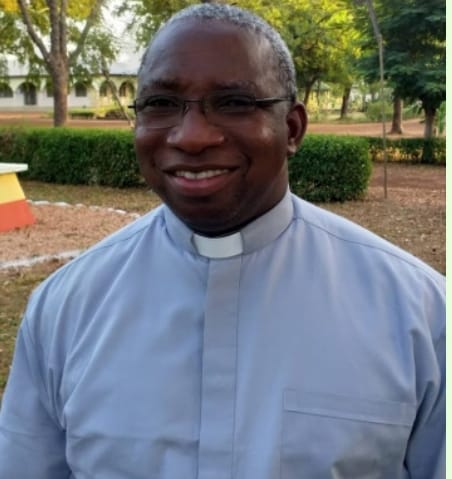
By Nicholas Nibetol Aazine, SVD
Coordinator for Justice, Peace and Integrity of Creation (JPIC) and VIVAT-GHANA
Society of the Divine Word Missionaries (SVD) Ghana Province
A Catholic Missionary and Religious Congregation, serving God through Humanity