
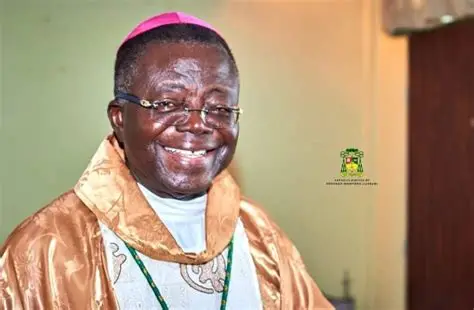

Question by Patrick Amiah Sarfo:
My Lord, does the Catholic Church recognise the title “Apostle”? I ask because, in recent times, some members of the Catholic Charismatic Renewal (CCR) have begun to confer and use this title for certain individuals. Could you kindly clarify whether this practice is appropriate within the Church?
Answer by Most Rev. Joseph Osei-Bonsu:
Let us start by looking at who an apostle is.
- The Meaning of “Apostle” in Sacred Scripture and Tradition
The word “Apostle” comes from the Greek apostolos, meaning “one who is sent.” In the New Testament, the term appears about eighty times. Its primary and most solemn meaning refers to the twelve disciples whom Jesus Christ chose and appointed to a special mission. As the Catechism of the Catholic Church teaches (no. 857), these Twelve were chosen to be Christ’s closest collaborators, to be with him, and to be sent out to preach the Kingdom and to heal (cf. Mark 3:14-15). They were the foundational witnesses of his Resurrection (Acts 1:21-22) and the recipients of his authority to teach, govern, and sanctify. The Church Fathers, from St Irenaeus to St Augustine, consistently upheld this unique dignity of the Twelve.
Saint Paul occupies a special place. Although not among the Twelve who walked with Jesus, he received a direct and extraordinary vocation from the Risen Christ (Acts 9:1-19). He insisted that he was called not by men but by Jesus Christ himself (Galatians 1:1). The Church has always honoured Saint Paul as an Apostle because of this direct, heavenly commissioning and because he was an eyewitness to the Resurrection (1 Corinthians 15:8-9). Together, the Twelve and Saint Paul form the foundational apostolic college upon which the Church is built.
However, the New Testament also uses “apostle” in a broader sense. Barnabas is called an apostle (Acts 14:4, 14), as are Andronicus and Junias (Romans 16:7), and Epaphroditus (Philippians 2:25). These were not among the Twelve, nor did they receive the same foundational authority. Rather, they were missionaries and delegates sent by the Church or by the Apostles themselves. This secondary, functional usage is a source of confusion today, for it suggests the term might be applied to others beyond the foundational Twelve.
- What the Church Teaches Strictly Regarding the Title Today
The Church’s teaching must be understood in two distinct senses: the foundational sense and the derived sense. Confusion arises when these are collapsed into one another.
First, the foundational Apostles. The Twelve (with Matthias replacing Judas, and later Saint Paul) hold a unique and unrepeatable office. They were personally chosen and commissioned by the Lord Jesus during his earthly ministry (or, in Paul’s case, by a direct heavenly vision). They were eyewitnesses of his Resurrection, and they received the charge to found the Church. With the death of the last Apostle, Saint John, this foundational apostolic office closed. No one living today can be an Apostle in this sense. The Church does not recognise any modern “apostles” as equal to the Twelve or to Saint Paul. To do so would claim a new public revelation of the same order, which the Church firmly rejects. The Catechism (no. 860) states: “The college of bishops, as the successor of the college of the Apostles, shares in this apostolic office and mission.” It does not say new apostles are created.
By extension, bishops are successors of the Apostles, inheriting their apostolic ministry through apostolic succession. However, no canon law or liturgical book grants “Apostle” as a formal title for laypeople, priests, or deacons. Even the Pope, successor of St Peter, is not formally titled “Apostle.” He is called Bishop of Rome, Vicar of Christ, and Successor of St Peter, but not “Apostle.” This restraint shows how carefully the Church guards the unique dignity of the original Twelve.
Second, the apostolic mission of the whole Church. The Church is called “apostolic” in the Creed because she is built upon the foundation of the Apostles (Ephesians 2:20) and because she continues their mission through the bishops. However, the Second Vatican Council and the Catechism (no. 863) also teach that every baptised Christian shares in this mission. As the Decree on the Apostolate of the Laity (Apostolicam actuositatem, no. 2) states, “the Christian vocation by its very nature is also a vocation to the apostolate.” Every member of the faithful, by virtue of Baptism, is called to be a “missionary disciple.” In this broad, spiritual sense, every Christian is called to be an “apostle”—one who is “sent” into the world to live and proclaim the Gospel.
Popes such as Pius XII and Francis have spoken of “lay apostles” metaphorically for evangelisers. Pope Paul VI, in Evangelii Nuntiandi (no. 73), spoke of the laity as “evangelisers” and “witnesses,” though he did not grant them the formal title “Apostle.” Pope Francis, in Evangelii Gaudium (no. 120), calls every baptised person to be a “missionary disciple.” However, this describes a vocation, not a formal title—like saying “all are priests” by baptism but reserving “priest” for the ordained. The Vatican Council’s decree makes clear that the lay apostolate is a participation in the Church’s saving mission, exercised through evangelisation, charity, and sanctifying temporal affairs. It does not establish a new order or title of “apostle.”
- Addressing the Practice in the Catholic Charismatic Renewal
Patrick, you have observed that some members of the CCR give the title “Apostle” to certain individuals, often those exercising leadership, evangelisation, or spiritual direction. This practice is not formally approved by the universal Church and must be understood with great caution. The CCR is a valuable movement of grace, approved by the Holy See and encouraged by many Popes, including Pope St Paul VI and Pope St John Paul II. It has brought renewal to countless souls. However, like any movement, it must remain within the boundaries of Catholic teaching.
The CCR is a Vatican-approved “current of grace” that emphasises baptism in the Holy Spirit and the exercise of charisms. But it operates under the oversight of local bishops and is not authorised to create new titles or offices. The Pontifical Council for the Laity (now the Dicastery for Laity, Family and Life) has issued guidelines for ecclesial movements, and none recognises an office or title of “Apostle” for lay members. The informal use of “Apostle” in some CCR circles appears to echo the Pentecostal concept of “fivefold ministries” (Ephesians 4:11: apostles, prophets, evangelists, pastors, teachers). This framework, common in some Protestant communities, is not part of Catholic teaching on the hierarchy or lay apostolate.
There is no official, universal recognition of a separate order of “apostles” alongside bishops, priests, and deacons. The Church’s hierarchy is strictly composed of the episcopate, presbyterate, and diaconate. The Catechism (nos. 1536-1600) treats these three degrees of holy orders. There is no fourth degree called “apostle.”
If the title is used in the CCR, it is likely being employed in the broader New Testament sense of a missionary or one who is “sent” to preach the Gospel. In this sense, it is not a claim to be equal to the original Twelve, but rather an attempt to recognise a particular charism. However, even this usage is problematic for several reasons:
First, there is potential for confusion. The term “Apostle” in Catholic teaching is so closely associated with the foundational Twelve that its casual use can easily mislead the faithful. It can create the impression that such individuals possess an authority equal to or derived directly from Christ in the same manner as the original Apostles. This is not the case. The faithful may begin to treat such persons as if they were bishops or even higher, leading to disorder.
Second, there is lack of magisterial approval. The Church has not formally authorised the use of “Apostle” as an office or charism within the CCR or any other movement. The Directory on Popular Piety and other documents regulating lay movements do not recognise such a title. When a movement invents its own titles, it risks separating itself from the wider communion of the Church.
Third, there is the risk of spiritual pride and division. Our Lord warned against the desire for titles of honour: “You are not to be called rabbi… And call no man your father on earth… Neither be called masters” (Matthew 23:8-10). While the Church legitimately uses titles such as “father” for priests, the principle remains: we must be cautious about assuming grandiose titles that belong properly to Christ or to the foundational Apostles.
Fourth, there is the danger of mirroring Protestant practices. The fivefold ministry model, including “apostle,” is common in some Pentecostal and charismatic Protestant circles. Its uncritical adoption by Catholic groups can lead to syncretism and a departure from authentic Catholic ecclesiology. Bishops in Ghana and elsewhere have urged fidelity to liturgical and canonical titles to avoid this danger.
- Pastoral Guidance and Conclusion
Therefore, I offer the following clear guidance, drawn from the Church’s law and teaching.
First, the title “Apostle” in its strict, foundational sense belongs exclusively to the Twelve and to Saint Paul. No living person can be an Apostle in this sense. Bishops are successors of the Apostles, but they do not bear the title “Apostle” as a personal honorific.
Second, every baptised Christian is called to share in the apostolic mission of the Church through witness, evangelisation, and service. In this broad, spiritual sense, we are all called to be “apostles”—missionary disciples. However, this describes a vocation, not a formal title.
Third, the practice of calling particular individuals “Apostles” within the CCR is not formally approved by the universal Church and should be discouraged. It is a source of potential confusion, spiritual pride, and division. Canon 230 §3 and the Dicastery for Laity, Family and Life prohibit lay titles that blur the hierarchy; “Apostle” fits within this caution.
Fourth, if members of the CCR use the title, they should be gently instructed that the preferred terminology for those exercising leadership or evangelisation is “missionary,” “evangelist,” “catechist,” “pastoral leader,” or “coordinator.” These titles are clear, humble, and in keeping with the Church’s tradition.
Fifth, all authentic apostolic work flows from and leads back to the sacramental life of the Church, especially the Eucharist, and is exercised in communion with the local bishop. No one exercises a truly “apostolic” ministry apart from this communion.
Sixth, and finally, remember the example of the true Apostles. They did not seek titles or honours. They were fishermen, tax collectors, and ordinary men transformed by grace. They suffered persecution, martyrdom, and exile. They did not call attention to themselves but to Christ. As St Paul wrote, “We have this treasure in earthen vessels, to show that the transcendent power belongs to God and not to us” (2 Corinthians 4:7). Anyone who insists on being called an “Apostle” should ask whether he is imitating the humility of the original Apostles.
| For further explanations or enquiries, you may contact the author, Most Rev. Joseph Osei-Bonsu, Emeritus Catholic Bishop of Konongo-Mampong, on this number: 0244488904, or on WhatsApp (with the same number). |