

More Than 9,000 Ghanaian Children Have Been Treated for Clubfoot; Yet Many More Are Still Being Left Behind.
As Ghana joins the global community to commemorate World Clubfoot Day on June 3, there is an important story that deserves national attention.
It is the story of thousands of Ghanaian children who have been given the opportunity to walk, run, play, attend school, and pursue their dreams because they received treatment for clubfoot.
It is also the story of many other children who continue to miss that opportunity because of delayed diagnosis, stigma, misinformation, and lack of awareness.
Clubfoot is one of the most common congenital disabilities affecting children worldwide. It is a condition present at birth in which one or both feet are twisted inward and downward. If left untreated, a child may face lifelong challenges with walking, education, employment, and social inclusion.
Yet clubfoot is also one of the most treatable childhood disabilities.
When identified early and treated correctly, children born with clubfoot can live healthy, active, and productive lives.
A Hidden Challenge Affecting Hundreds of Ghanaian Families
In Ghana, an estimated 1,000 babies are born with clubfoot every year.
Many of these children are born into families who have never heard of the condition. Others are born in communities where myths, misconceptions, and stigma still surround childhood disabilities.
Some parents are told their child will eventually “grow out of it.”
Others are encouraged to seek traditional remedies before medical care.
In some cases, families hide affected children for fear of judgment and discrimination.
Unfortunately, these delays come at a cost.
Clubfoot treatment is most effective when started soon after birth. Every week and month of delay can make treatment more difficult and increase the risk of long-term disability.
The Cases We Meet Every Day
Across our clubfoot clinics in Ghana, we meet families whose stories reveal the challenges that still exist.
We meet mothers who travel long distances after hearing about treatment through a friend, church member, radio programme, or social media post.
We meet caregivers who have spent months searching for answers because they did not know where to go for help.
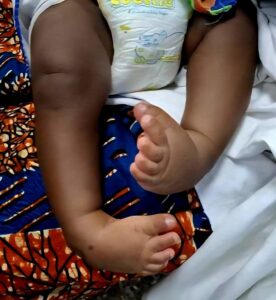
We meet children who arrive years after birth because no one identified the condition early enough.
Most concerning, we continue to encounter situations where clubfoot was not recognised at birth or families were not informed that treatment was available.
Many parents tell us they were never referred. Others say they were unaware clubfoot could be treated at all.
These experiences remind us that awareness remains one of the greatest barriers to eliminating disability caused by clubfoot.
The Good News: Treatment Works; And It Is Free
Despite these challenges, there is tremendous reason for hope.
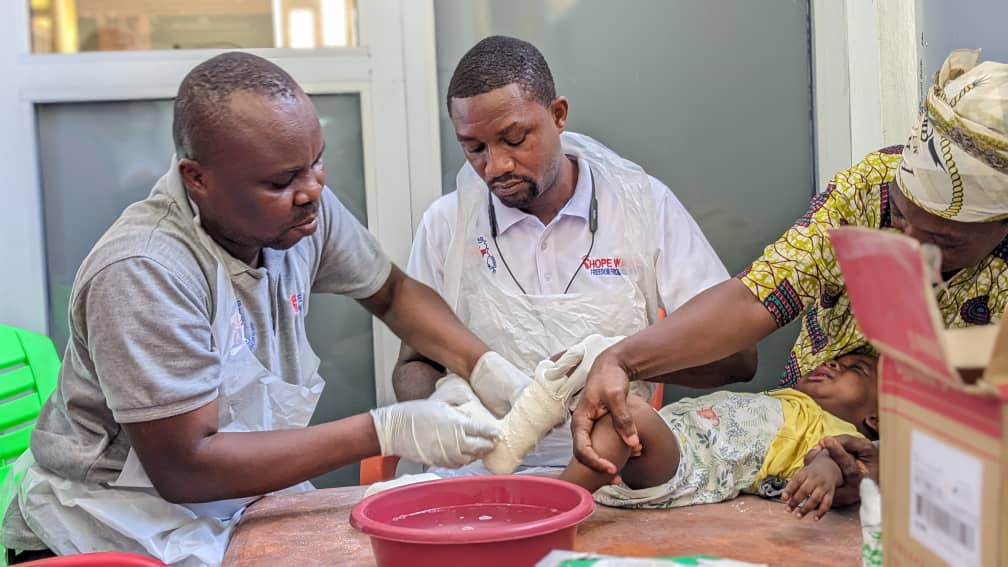
The Ghana Clubfoot Program, implemented by the Christian Health Association of Ghana (CHAG) in partnership with Hope Walks, has been transforming lives since 2008.
Most importantly, treatment is provided completely free of charge for children under five years of age at CHAG–Hope Walks partner clinics across Ghana.
No child should be denied the opportunity to walk because of a family’s inability to pay.
Over the past 18 years, more than 9,000 children born with clubfoot have received treatment and care through the programme.
That means more than 9,000 children now have the opportunity to walk with confidence, attend school, participate in sports, and live productive lives.
Behind every number is a story:
A child who can now run with friends.
A student who can walk to school.
A parent whose fears have been replaced with hope.
A family whose future has been transformed.
The treatment follows the internationally recognised Ponseti Method, which uses a series of gentle casts to gradually correct the position of the foot, followed by a brace to maintain correction and prevent relapse.
When treatment begins early, success rates are extremely high.
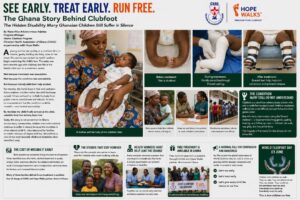
These successes demonstrate a simple but powerful truth:
Clubfoot is treatable. Treatment is available. And treatment is free.
The Critical Role of Health Professionals
World Clubfoot Day is also an opportunity to celebrate the dedication of health professionals who change lives every day.
Midwives, nurses, doctors, physiotherapists, orthopaedic specialists, community health nurses, and Parent Advisors all play a vital role in ensuring children receive treatment early.
For many children, the journey begins with a health worker who identifies clubfoot at birth and makes a referral.
A few moments of observation can change the course of a child’s life forever.
We therefore encourage all healthcare professionals to make clubfoot screening part of every newborn assessment and to ensure every identified child is referred promptly for treatment.
Breaking the Stigma
As a nation, we must confront the stigma that continues to surround disability.
Clubfoot is not a curse.
It is not caused by wrongdoing.
It is not a punishment.
It is a medical condition that can be treated successfully.
Families should never feel ashamed to seek help.
Communities should support parents rather than judge them.
Children born with clubfoot deserve the same opportunities, dignity, and inclusion as every other child.
A National Call to Action
As we commemorate World Clubfoot Day 2026, we call on all Ghanaians to become part of the solution.
We call on health workers to identify and refer clubfoot cases immediately after birth.
We call on parents and caregivers to seek treatment as early as possible.
We call on religious leaders, traditional leaders, and community influencers to help raise awareness and eliminate stigma.
We call on media organisations to continue educating the public about clubfoot and the availability of free treatment.
We call on policymakers and health stakeholders to strengthen support for early detection, disability inclusion, and child health services.
Many families are still unaware that clubfoot treatment is available free of charge in Ghana. This lack of awareness continues to delay treatment for children who could otherwise receive life-changing care at no cost.
Over the past 18 years, the Ghana Clubfoot Program has demonstrated that clubfoot can be treated successfully.
Our challenge now is to ensure every child born with clubfoot is identified early enough to benefit from that treatment.
No child should be denied the opportunity to walk because of lack of information.
No family should suffer in silence because they do not know help is available.
This World Clubfoot Day, let us commit to one simple but powerful message:
SEE EARLY. TREAT EARLY. WALK FREELY.
For information on free clubfoot treatment in Ghana:
Ghana Clubfoot Program (CHAG–Hope Walks Ghana)
📞 024 487 9948
“Over 9,000 children have already been given the chance to walk through treatment. Our challenge now is to ensure that no child is left behind because of late detection, stigma, or lack of information.”
By Mrs. Nana Afua Adutwumwaa Adjetey, Program Manager, Ghana Clubfoot Program (CHAG–Hope Walks Ghana)