
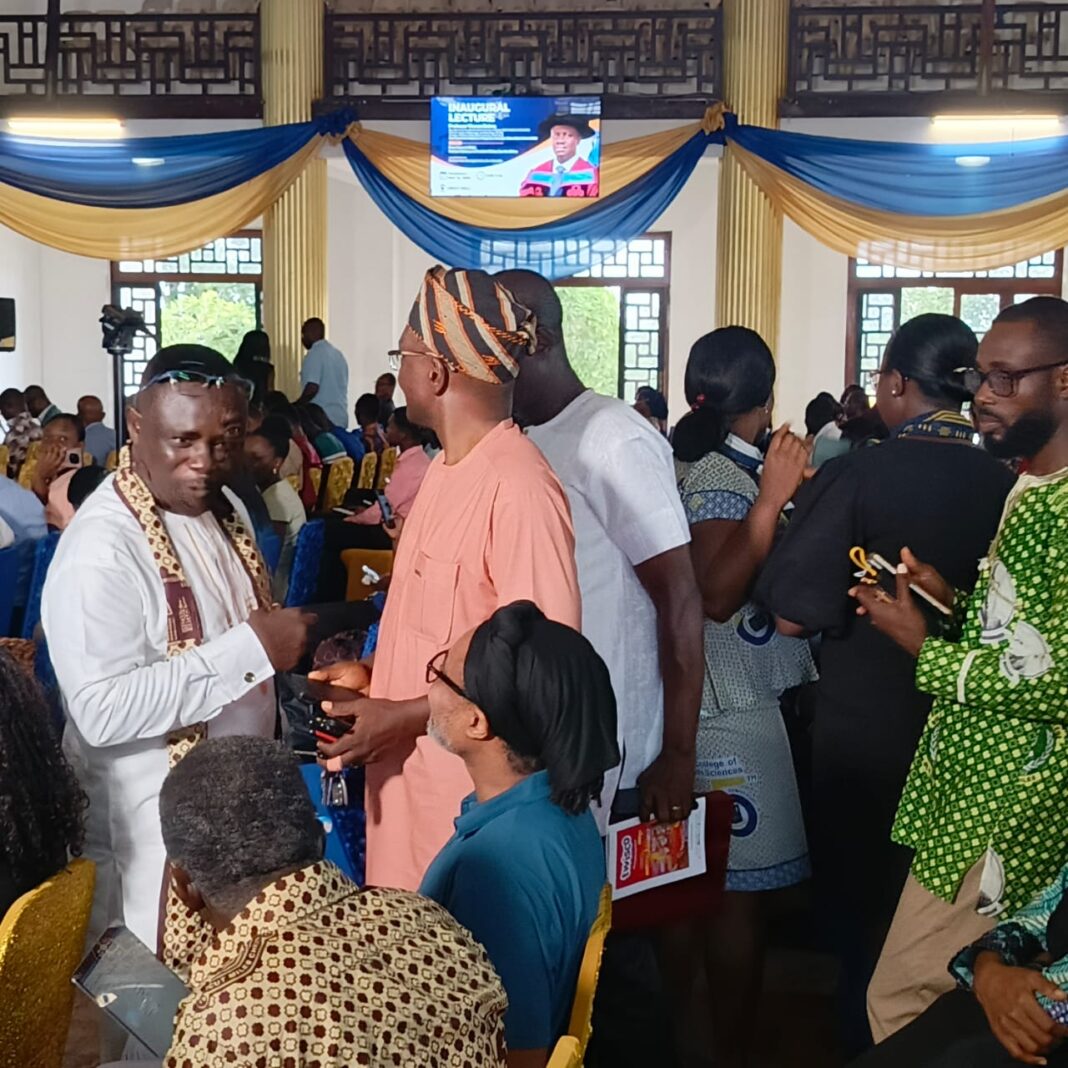

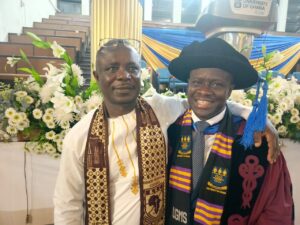
Members of the Bishop Herman College Old Boys Union (BHOBU), together with academics, medical professionals, and students, gathered at the University of Ghana Great Hall on Thursday, 14th May, 2026, to witness Professor Vincent Boima deliver his professorial inaugural lecture on kidney care and precision medicine in Africa.
Professor Boima, an old boy of Bishop Herman College and Head of the Department of Medicine and Therapeutics at the University of Ghana Medical School, delivered the lecture titled “From Genes to Mind: Holistic Pathways to Precision Kidney Care for Africa.”
The lecture formed part of a week-long Exhibition of Scholarly Works showcasing his extensive contributions to nephrology, medical research, genomics, chronic kidney disease management, and healthcare policy.
The event attracted professors, provosts, heads of departments, medical and research students from the School of Health Sciences, members of the medical fraternity, and a strong representation from the BIHECO community.
Chairperson for the event, Professor Nana Aba Appiah Amfo, Vice Chancellor of the University of Ghana, commended Professor Boima for his contributions to medical research and healthcare delivery in Ghana and beyond.
She reminded participants that healthcare must focus not only on diseases but on people and their lived experiences.
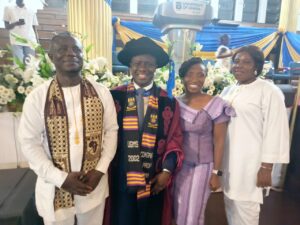
“At the heart of medicine is not only disease but people,” she stated, adding that “prevention is not optional” and that “the mind is not separate from the body; how we feel shapes how we heal.”
In his lecture, Professor Boima addressed the growing burden of Chronic Kidney Disease (CKD) in Africa, particularly among younger populations in Ghana.
He explained that hypertension and diabetes continue to drive kidney disease, while access to dialysis and transplantation remains limited and expensive for many patients.
Professor Boima proposed a “Genes–Mind–Community” framework, which combines genomic research, psychological support, and community-based prevention strategies to improve kidney care outcomes across Africa.
He highlighted ongoing African-led genomic studies on APOL1 risk variants associated with kidney disease and stressed the need for ethical and equitable precision medicine tailored to African realities.
He also emphasized the importance of mental health support for patients living with chronic illnesses and advocated for stronger community-based interventions, including hypertension screening, decentralised healthcare services, and continuity of care.
In his closing charge, Professor Boima called on Africa to lead innovations in precision medicine rather than relying solely on imported models of healthcare delivery.
“Let us move beyond dialysis-centred nephrology; let us treat people, not just kidneys. Let Africa lead, not follow, in precision medicine,” he stated.
He further encouraged the public to take regular medical examinations seriously to enable early detection and slow the progression of kidney disease.
Professor Boima’s inaugural lecture and exhibition have been widely celebrated as a proud moment for the Bishop Herman College community and the wider medical fraternity, reflecting the impact of Ghanaian scholarship and leadership in global health research.
By Celestine Edem Gbologah and Robert Dela Mawuenyegah (BHOBU 2003)