
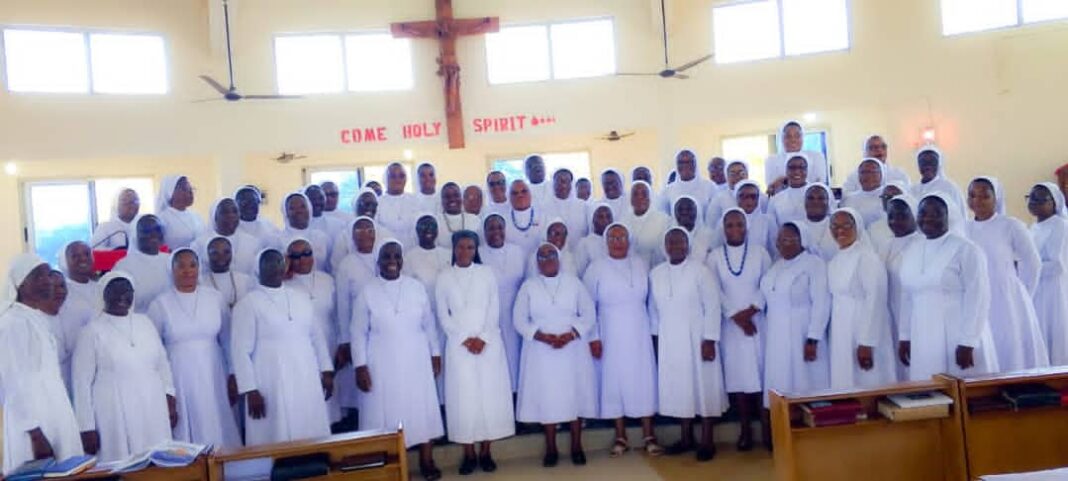

In a culture that measure success by financial accumulation, absolute personal autonomy, and romantic self-fulfillment, the sight of a Consecrated Person, living a life stripped of these worldly securities often stops people in their tracks.
To the ordinary observer, Vows of Poverty, Chastity, and Obedience often look like an archaic renunciation, a subtracting of life’s greatest goods. Yet, for those living this vocation and the faithful who witness it, these very evangelical counsels are not a retreat from the world, but the ultimate empowerment for it. They are the spiritual engines that power the consecrated mission.
Consecrated Life is fundamentally dedicated to God and His work through the Church. Far from being an isolated or marginal choice, those who profess the evangelical Counsels of Poverty, Chastity and Obedience are set apart at the very heart of the Church, acting as decisive element for her mission. Rooted deeply in the words and examples of the Lord Jesus Christ and anchored in the grace of baptism, the Consecrated Life reminds every Catholic; lay and Religious alike that our ultimate citizenship is elsewhere.
Building upon this foundation and guided by “Vita Consecrata”, we can understand how the Counsels enhance the missionary apostolate in a threefold way: by rooting mission in the Pascal Mystery and the life of the Trinity, by purifying and freeing the person for total availability to God and neighbor, and by rendering visible, through the very shape of a life rather than through words alone, the greatness of the kingdom that is being proclaimed.
Primarily, it is noteworthy that mission is not an external task subsequently added to Consecrated Life, but belongs to its very interior structure. As Pope John Paul II reminds us in “Vitae Consecrata”, the universal presence of Consecrated Life and the evangelical nature of its witness are clear evidence, if any were needed, that the Consecrated Life is not something isolated and marginal, but a reality which affects the whole Church.
In effect, the Consecrated Life is at the very heart of the Church as a decisive element for her mission, since it “manifests the inner nature of the Christian calling” and the striving of the whole Church as Bride toward union with her one Spouse. Far from being an isolated or marginal reality, the consecrated life sits right at the core of the church. It is a vital force for her mission because it mirrors the very nature of the Christian calling and reflects the deep yearning of the entire Church, like a bride longing to be united with her only spouse.
Consecrated Persons, in other words, do not first live the Counsels for their own sanctification and only secondarily ‘add on’ an apostolic dimension; their configuration to the poor, chaste, and obedient Christ is itself already a participation in his mission, since to live as Christ lived is already to continue what Christ came to do.
Throughout the Church’s history, many of the baptized have received the call to conform their lives to Christ in this particular way. Yet such a path opens only where a special vocation exists, granted through a distinct gift of the Holy Spirit. Within this vocation, the consecration already received in baptism matures into a radical following of Christ, expressed through the embrace of the evangelical counsels, foremost among them the sacred bond of chastity, undertaken for the sake of the Kingdom of Heaven as taught by “Vitae Consecrata”.
The Evangelical Counsels are thus above all a gift of the Holy Trinity. The consecrated life proclaims what the Father, through the Son and in the Spirit, brings about by his love, his goodness and his beauty. In fact, “the religious state reveals the greatness of the Kingdom of God and its requirements over all earthly things.
To all people it shows wonderfully at work within the Church the surpassing greatness of the force of Christ the King and the boundless power of the Holy Spirit. “Vita Consecrata” points out that the first duty of the Consecrated Life is to make visible the marvels wrought by God in the frail humanity of those who are called. They bear witness to these marvels not so much in words as by the eloquent language of a transfigured life, capable of amazing the world.
By the teachings of “Vita Consecrata”, the first missionary duty of Consecrated Persons is to themselves, and they fulfill it by opening their hearts to the promptings of the Spirit of Christ. Their witness helps the whole Church to remember that the most important thing is to serve God freely, through Christ’s grace, which is communicated to believers through the gift of the Spirit.
Thus, they proclaim to the world the peace which comes from the Father, the dedication witnessed to by the Son and the joy which is the fruit of the Holy Spirit. Consecrated Persons will be missionaries above all by continually deepening their awareness of having been called and chosen by God, to whom they must therefore direct and offer everything that they are and have, freeing themselves from the obstacles which could hinder the totality of their response. In this way they will become true signs of Christ in the world.
The Counsel of chastity, embraced for the sake of the Kingdom of Heaven, is often popularly understood in merely negative terms, as a renunciation of marriage and family.
Theologically, however, its significance for mission is overwhelmingly positive. By freeing the heart from the exclusive claims of a spousal and familial bond, Consecrated Chastity liberates the whole affective and practical energy of the person for a more universal charity and a more unencumbered availability to whatever mission obedience may require, whether that be a distant mission territory, an unpredictable pastoral assignment, or simply constant and demanding I’m presence to the poor and the sick. Because the Consecrated Person’s spousal love is directed to Christ himself, every other person encountered in ministry can be loved with a freedom and a breadth that family obligations, however good in themselves, could not permit. Chastity thus becomes not a subtraction from apostolic capacity but its enlargement: the undivided heart is precisely the heart most available to be sent, says Aringo.
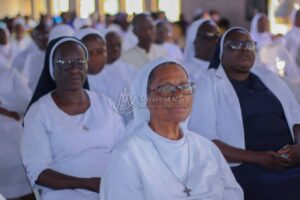
As scholars of the Consecrated Life observe, the counsel of poverty likewise bears directly upon the credibility and effectiveness of the missionary apostolate. By voluntarily embracing dependence upon Providence and detachment from personal possessions, consecrated persons become living signs of contradiction to a world increasingly organised around acquisition and consumption; their poverty preaches, often more persuasively than any homily could, that the Kingdom of God cannot be purchased and does not consist in an abundance of possessions. Practically, too, poverty frees the missionary for mobility and solidarity: the Consecrated Person unencumbered by property or by the securities that property affords can go wherever the mission requires, to live among the poor as one genuinely poor, and to identify with the material and social condition of the people to whom they are sent. In this way, poverty is not an obstacle that the mission must work around but a positive apostolic resource, since it authenticates the proclamation of a Gospel that is, at its root, good news for the poor.
The third Counsel, Obedience, secures for the missionary apostolate a further and indispensable good: the unity and ecclesial coordination without which individual zeal, however generous, risks becoming fragmented or self-directed. As those who study the dynamics of the vows note, by submitting personal judgment and preference to legitimate superiors acting in the place of God and the Church, the consecrated person ensures that mission remains a participation in the mission of the whole Church rather than a private Religious project.
Obedience is, moreover, the counsel that makes consecrated persons sendable in the fullest sense: because they have already surrendered the disposition of their own time, talents, and location to another, they can be missioned, often at short notice and to places or tasks they would not themselves have chosen, with a readiness that self-directed apostolic workers frequently cannot match. In this sense, obedience does not diminish missionary initiative but places it at the service of a wisdom larger than the individual’s own, allowing the Spirit to direct the Church’s apostolic energies where they are most needed.
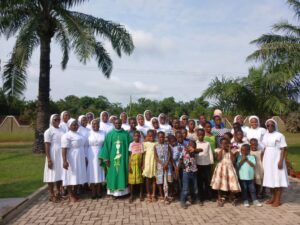
Coming to a conclusion, in the words of contemporary theologians and scholars of the consecrated life, the Paschal Mystery is also the wellspring of the Church’s missionary nature, which is reflected in the whole of the Church’s life. It is expressed distinctively in the consecrated life.
Over and above the charisms proper to those Institutes devoted to the mission “ad gentes” or engaged in ordinary apostolic activity, it can be said that the sense of mission is at the very heart of every form of consecrated life. To the extent that consecrated persons live a life completely devoted to the Father held fast by Christ and animated by the Spirit they cooperate effectively in the mission of the Lord Jesus and contribute in a particularly profound way to the renewal of the world.
Ultimately, because consecrated persons live a life completely devoted to the Father, held fast by Christ, and animated by the Spirit, they do far more than just “do” ministry; they cooperate directly in the mission of the Lord Jesus and become a profound force for the renewal of the world.
By: Sr. Angela Amoatwo, SMMC
Source: Catholic Sister Communicators Network-Ghana (CASCON-GH)