
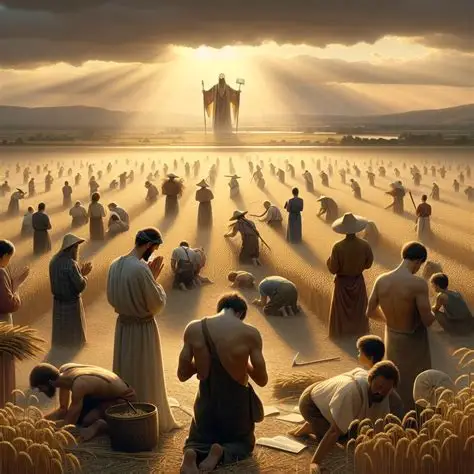

The reality of the scarcity of labourers becomes clear when one assesses the sharp drop in the number of deacons and priests the Church ordains yearly.
The Vocation Reality in Europe
Many years ago, in traditionally Catholic countries, almost every family had a priest or a religious. Consequently, some parishes had as many as nine priests serving in a single large parish. Today, many of these parishes have become outstations. They are merged and administered by an elderly priest who may be approaching retirement.
The lands whose seminaries were once filled with seminarians and which sent missionaries to Africa and Asia now struggle to attract candidates. One can visit an entire Major Seminary and discover that from the Spiritual Year to Theology, the total number of seminarians may be as few as three, with the highest number reaching twelve only when foreign seminarians are included.
The Vocation Reality in Africa
Though it is an indisputable fact that Africa is the hope of the Church, according to St. John Paul II, it appears that vocations are no longer as attractive to many young people as they once were, resulting in a gradual decline in numbers.
Dioceses that used to ordain as many as fifteen candidates annually now ordain perhaps five at most.
What Happened to Catholic Vocations in the Church?
Some are of the belief that when the economy is good, secularism gains ground, and society becomes increasingly materialistic, few people desire their children to become priests or religious.
Some hold that many young men enter the seminary due to economic hardship. The scarcity of employment opportunities also influences this choice. The thinking is that, after formation, there may at least be some assurance of meaningful work and stability. Poor conditions in which some village catechists live may discourage some young people. These conditions may also motivate others to pursue priestly and religious vocations in different ways.
Interestingly, God works mysteriously, and He can use various circumstances to draw souls to Himself. Desire for a better life, meaningful service, security, or a deeper spiritual longing can lead God to purify intentions. He calls individuals to serve Him faithfully. As Sacred Scripture reminds us, “For my thoughts are not your thoughts, nor are your ways my ways” (Isaiah 55:8).
The Reality of Needing More Hands
Reflecting on the situation, it is sad to realize. Many young people have no guarantee they will complete formation. They may not become priests eventually.
More priests and religious are needed worldwide. They should offer pastoral support and accompaniment during this era of artificial intelligence, rapid social change, and moral complexity.
The Church continues to need holy men and women who will proclaim the Gospel. They will administer the Sacraments, defend human dignity, and accompany people in their joys and struggles. As Our Lord Himself declared: “The harvest is plentiful, but the labourers are few” (Matthew 9:37).
Where are Priests and Religious Needed?
The Health and Medical Fields
Hospital chaplains, administrators, and counselors attend to patients undergoing surgeries. They also support patients with terminal illnesses and staff facing marital or workplace challenges. Lecturers in ethics, moral theology, and medical spirituality teach in nursing colleges and medical schools; clinical psychologists contribute in capacities.
Through these ministries, priests and religious become instruments of Christ the Divine Healer. They bring hope, comfort, and spiritual strength to the suffering.
Education
Local and regional managers of Catholic schools include chaplains and teachers of Religious and Moral Education. They also work with school counsellors, mentors, and spiritual directors.
The Church has always recognised education as a vital means of evangelisation and human development. Catholic educators help form not only the intellect but also the conscience of the young.
Security Services
As chaplains to security agencies, we serve the Military. We also serve the Police Service. We also serve the Ghana National Fire Service, Immigration Service, Customs, Maritime Services, and others.
Some also serve as counsellors and members of rehabilitation and welfare teams that accompany offenders and inmates, helping them experience conversion, healing, and reintegration into society.
Strictly Pastoral Ministry
As pastors, rectors, chaplains, chancellors, financial administrators, episcopal vicars, officials of marriage tribunals at both diocesan and metropolitan levels, communication and public relations officers, assistants in the Office of the Vicar General, curates, and coordinators of various diocesan apostolates.
They also serve as members of evangelisation teams, liturgists, seminary professors and formators, retreat directors at diocesan retreat centres, and in many other pastoral capacities.
Some Pastoral Strategies to Increase Vocations
- Let vocation rallies and awareness programmes become diocesan priorities and not be left solely in the hands of seminarians.
Such programmes should receive support and funding from the Diocese or the host parish. Ordinations should also be occasions where invitations are extended to young people who may be discerning a vocation.
- Let us begin organizing diocesan and parish vocation vigils dedicated to praying for more vocations.
This recommendation stems from Christ’s command. It asks the Lord of the harvest to send out labourers into his harvest (Matthew 9:38).
- Let us establish dedicated diocesan vocation funds to support formation programmes and assist seminarians in their various houses of formation.
- Let us continually evaluate the style of formation offered to seminarians to ensure that it is authentic, balanced, and responsive to the pastoral challenges of the modern world.
Formation must remain rooted in the four pillars proposed by the Church: human, spiritual, intellectual, and pastoral formation.
- Let us not regard withdrawn or former seminarians as failures. Rather, let us accompany them, assist them in finding meaningful opportunities, and continue supporting their growth as members of the Church.
Discernment sometimes leads a person away from priesthood or religious life, but never away from God’s love and call to holiness.
The Agents of Formation Working Together
A sound and authentic formation can never be accomplished in isolation.
There is therefore a need for all involved to work together, coordinate effectively, and interact regularly.
The Agents
The Seminarian or Novice Himself/Herself: The candidate remains the primary agent of his or her own formation through openness, prayer, discipline, and cooperation with grace.
The Parents and Family of the Candidate: Families play an indispensable role in nurturing and supporting vocations. The home remains the first seminary and the first school of faith.
The Formators and Professors: Including the Rector and Spiritual Directors.
There is a need for bishops to consider, where resources permit, separating formation responsibilities from academic responsibilities so that neither role suffers due to excessive demands.
The Diocesan Bishop Represented by the Vocation Director: Unfortunately, it sometimes becomes difficult because bishops and vocation directors may not know candidates thoroughly.
Their encounters may be limited to orientations and evaluations of pastoral assignments.
I would strongly encourage more interactive sessions and personal meetings with candidates to assess their progress according to the four pillars of formation.
Delving Briefly into the Text: “The Harvest is Rich, but the Labourers are Few”
Inasmuch as we speak about increasing numbers, we must also speak about quality.
The Church needs priests and religious who are available and willing to devote adequate time to offering pastoral care to the poor, the sick, the needy, the aged, and the vulnerable.
The Church needs shepherds configured to Christ the Good Shepherd, who laid down His life for His flock (John 10:11).
She does not need ministers who are constantly absent or excessively preoccupied with personal security, investments, family interests, or social status. Such attitudes can contradict the spirit of sacrificial charity expected of those called to priestly and religious life.
Let us continue to take very good care of our priests, especially missionaries, so that they may not minister with frustration, discouragement, or depression, but with genuine joy.
When a priest is joyful, that joy radiates throughout every aspect of his ministry and positively influences the people entrusted to his care.
Conclusion
As the Church continues to do her best to identify worthy candidates, form them, ordain them, and send them forth for mission, let all the agents of vocation collaborate in the important task of formation.
Let us protect every vocation because it is a precious gift from God. Let us establish strong support groups such as Seminary Benefactors and Benefactresses Associations to assist in the formation of our seminarians.
Let us also continue to offer pastoral care and accompaniment to those who withdraw from or leave the seminary. They remain beloved members of the Church, and no stigma should be attached to them. After all, vocation discernment is a process guided by prayer, grace, and sincere searching for God’s will.
Finally, let us faithfully obey the command of Christ by praying earnestly to the Lord of the Harvest to send holy, faithful, and zealous labourers into His vineyard. May our families become fertile ground for vocations, our parishes centres of encouragement, and our dioceses places where God’s call is heard, nurtured, and joyfully embraced.
By: Rev. Fr. Albert Kyei Danso
Chaplain, Holy Family Ghanaian Catholic Community Church,
Italy.