
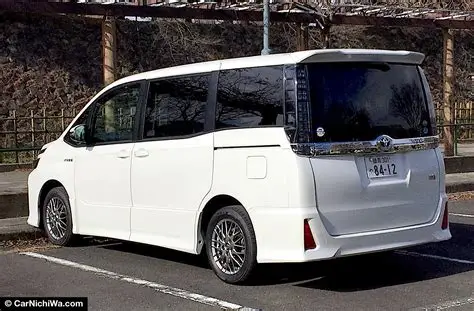

The growing popularity of Voxy vans in Ghana’s transport system is not accidental. It is, in many ways, a direct consequence of poor time management and operational inefficiencies at many bus terminals.
We often say “time is money,” yet this principle appears to have been inverted at several transport stations. A common attitude among some operators seems to be that passengers need the bus more than the bus needs the passengers. The result is a culture of complacency—delays are normalised, and passengers are expected to wait indefinitely until vehicles are filled.
In such an environment, it is hardly surprising that many commuters turn to faster alternatives, even when those options may be unsafe. The rise of Voxy vans reflects not only a willingness among passengers to take risks, but also the broader economic reality: people are under pressure to save time and remain productive. In a slow and demanding economy, time lost at a bus terminal can have real financial consequences.
Consider the typical experience. A passenger purchases a ticket and is instructed to arrive early, only to wait two or even three hours before departure. Faced with such uncertainty, many will understandably choose a quicker albeit riskier mode of transport if it guarantees timely arrival.
Discipline, however, must be mutual. While passengers who arrive late should bear responsibility and be rescheduled for the next available trip, operators must equally commit to strict departure times. Enforcing punctuality on both sides would gradually restore order and reliability within the system.
If bus terminals across the country adopt and enforce time discipline, the demand for Voxy vans will naturally decline. At present, however, these vans continue to thrive, despite widespread concerns about safety and regulatory compliance.
Some Ghanaians justify the persistence of Voxy vans by pointing to economic hardship. While this argument has some merit, it should not be used to excuse indiscipline or unsafe practices. Economic challenges may explain behaviour, but they do not justify it especially when lives are at risk.
Efforts by authorities to restrict Voxy vans to private use are commendable, but regulation alone is insufficient. Without addressing the inefficiencies at bus terminals, such measures may have limited long-term impact. A more sustainable solution lies in reforming terminal operations and enforcing time-conscious practices.
Beyond road transport, there is also a strong case for investing in rail infrastructure. Across the country, many road projects remain incomplete or progress at a frustratingly slow pace. Rather than continuously starting new projects, a strategic shift toward developing a reliable railway system could offer a more efficient and sustainable alternative.
An interconnected rail network linking regions and eventually urban centres, would significantly improve mobility and time management. For instance, individuals working in the southern parts of the country but originating from the north could travel home, attend family engagements, and return within a short timeframe, possibly even within the same day. Such efficiency would reduce travel stress, support productivity, help decongestion in the cities and aligning well with Ghana’s broader vision of a 24-hour economy.
Ultimately, improving time discipline at bus terminals, alongside long-term investments in rail transport, will reduce reliance on unsafe alternatives like Voxy vans. If the system becomes reliable, passengers will naturally gravitate toward safer and more structured transport options.
By Rev. Fr. Nicholas Nibetol Aazine, SVD
(Coordinator for Justice, Peace and Integrity of Creation, Ghana-Liberia Province
Divine Word Missionaries: A Catholic Missionary Society, Serving God through Humanity