
April 10, 2026
Your Graces and My Lords,
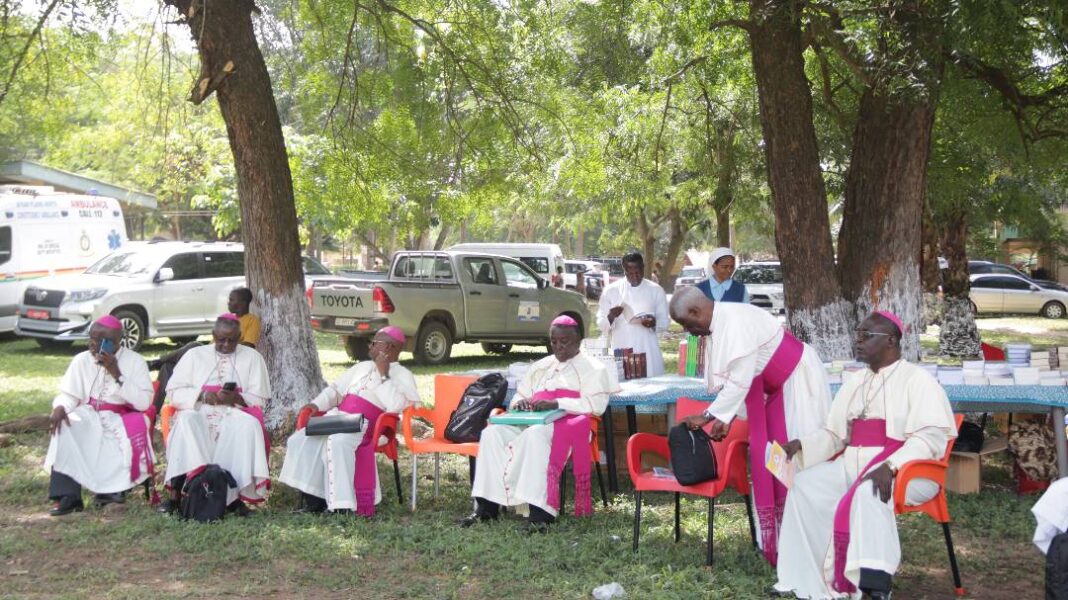
In light of the recent public statement issued by the Ghana Catholic Bishops’ Conference regarding comments made about LGBTQ+ issues, I believe it is important to engage the matter with clarity, respect, and a focus on national priorities. The bishops have raised concerns rooted in moral teaching and cultural preservation, and their voice carries significant influence in shaping public discourse.
However, after reflecting on the substance and timing of your intervention, I respectfully offer a different perspective — one that considers the broader social, economic, and governance realities facing our nation. My intention is not to dismiss your moral authority, but to contribute to a more balanced conversation about what truly demands urgent national attention.
Acknowledging therefore, your invitation for further robust, enlightened, and healthy conversation on this issue, I hereby submit these points to further enrich the dialogue:
—
SECTION A — This is not a national crisis
1. LGBTQ+ prevalence in Ghana is extremely low and not a national‑scale crisis.
While I am not presenting empirical data here, observable national patterns show that LGBTQ+ expression in Ghana is statistically marginal. If we were to conceptualize our society on a scatter diagram, LGBTQ+ behavior would fall near zero deviation from our cultural mean. In practical terms, Ghana does not face a widespread social disruption in this area.
It is therefore not efficient to elevate a low‑prevalence phenomenon to the level of a national emergency.
2. Poverty has caused far more measurable harm this year than LGBTQ+ issues.
Again, while I do not have empirical data at hand, the visible state of hardship across the country suggests that economic suffering has inflicted more damage on Ghanaian families than LGBTQ+ activity in recent months.
3. Hungry citizens do not debate LGBTQ+ rights.
Hunger forces people to focus on survival. LGBTQ+ discourse tends to dominate societies where basic needs are already met. Ghana’s immediate crisis is not sexual‑identity‑based.
4. Existing laws already address deviant behavior.
Our current legal framework provides mechanisms for addressing deviance. When punitive correction fails, such cases may fall under mental or psychological health considerations — requiring diagnosis and support rather than national panic.
—
SECTION B — The President’s strategic posture
5. The President operates under strategic constraints that differ from the Church’s moral framework.
Your excellencies speak from a purely moral and doctrinal standpoint — and that is your rightful domain.
However, the President must navigate:
* international diplomacy
* economic partnerships
* national unity
* constitutional obligations
* diverse moral expectations across society
He cannot engage the issue with the same singular moral lens available to the episcopacy. His role requires strategic balance — the shrewdness of a serpent (Matthew 10:16) — especially when dealing with global actors who operate with different ethical and cultural assumptions.
His posture is therefore a strategic necessity.
6. The President deserves space to solve real problems.
National leadership requires prioritization. Burdening the presidency with low‑impact issues distracts from urgent matters affecting millions.
—
SECTION C — The Church’s role and responsibility
7. The Church’s moral authority is strongest when proactive, not reactive.
Your excellencies are deeply gifted in shaping moral culture. If the Church had consistently and vigorously catechized society on family values, cultural continuity, and the purpose of procreation, LGBTQ+ discourse would not have risen to national prominence.
This is not a criticism of your office, but a reminder that:
* moral formation
* cultural education
* youth engagement
* family strengthening
…are long‑term responsibilities that cannot be replaced by press statements.
A proactive moral culture reduces the need for reactive interventions.
8. The bishops’ intervention appears reactive rather than strategic.
Before issuing such a strong public statement, it would be fair to ask:
What proactive, large‑scale moral interventions on this topic have been undertaken in recent years?
If none match the intensity of this response, then the balance of effort may need re‑evaluation.
9. The Church’s resources should be directed toward spiritual growth and social uplift.
The faithful contribute sacrificially. Those resources should advance evangelization, discipleship, and national moral renewal — not be consumed by reactionary engagements that may not yield proportional benefit.
—
— Closing
10. I remain a loyal son of the Holy Mother, The Catholic Church.
My disagreement flows from love. I honour your office and your apostolic successive mandate. My hope is that our collective energy is directed toward the issues that most threaten the wellbeing of our people.
Respectfully,
Tony Klah