
Question by Fr Kpanie Addy, SJ, Takoradi:
My Lord, I seek clarification regarding Catholic priests who, for various reasons, leave active ministry in the Catholic Church and subsequently join the Anglican Communion, where they continue to function as priests. In some instances – for example, Rev Fr Francis Baffoe of the Cape Coast Archdiocese and Rev Fr Lawrence Amankwaah of the Koforidua Diocese – such priests go on to exercise priestly ministry within the Anglican Church. In these circumstances, what is the status of the Eucharist they celebrate? Specifically, when they pronounce the words of consecration, does transubstantiation take place?
This question arises from the understanding that the sacrament of Holy Orders, once validly conferred, imprints an indelible character (in aeternum secundum ordinem Melchisedech). That is, they have truly received from God the gift of priesthood, and this character is not lost, even though questions may arise regarding the liceity of their ministry. I would be most grateful for your guidance on how the Church understands the validity of the Eucharist celebrated by such individuals in their new ecclesial context.
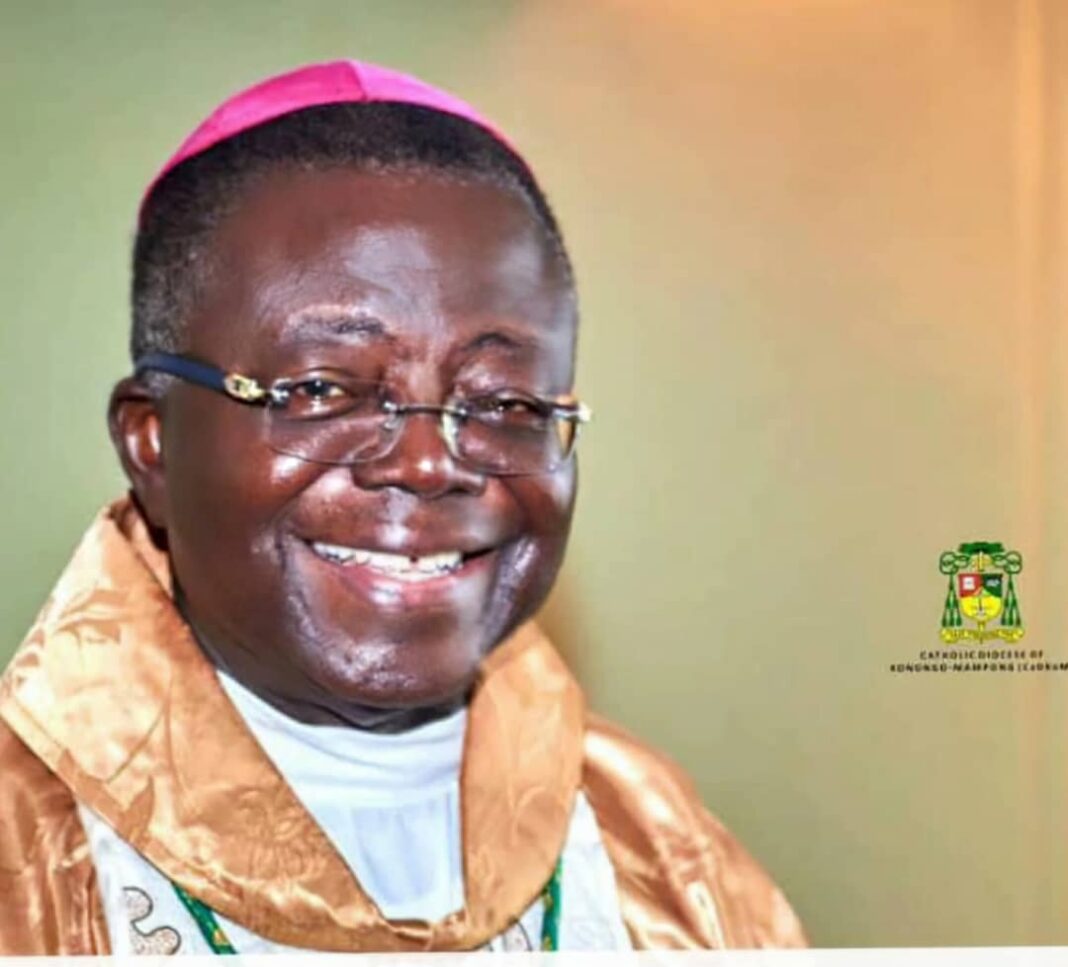
Answer by Most Rev Joseph Osei-Bonsu:
Fr Addy, this is a serious and sensitive question. You have already touched on the key distinction the Church makes: validity versus liceity, and the indelible character of holy orders. In answering your question, I will need to address two issues. First, is the Eucharist celebrated by an ex-Catholic priest (now an Anglican priest) valid? Second, is it lawful for a Catholic to receive Holy Communion in an Anglican Church, even if consecrated by a former Catholic priest?
- The Permanence of Priestly Ordination
It is true that a validly ordained Catholic priest receives an indelible character in aeternum secundum ordinem Melchisedech, that is, “forever according to the order of Melchizedek.” This means that his ordination is forever and cannot be revoked. The Catechism (CCC 1582) teaches that ordination ‘confers an indelible spiritual character and cannot be repeated.’ Canon 845 §1 states: ‘Since the sacraments of baptism, confirmation, and orders imprint a character, they cannot be repeated.’ Canon 290 affirms that once a man has been validly ordained, the sacrament of Holy Orders remains permanently valid. In short, the priesthood confers an indelible character: once a priest, always a priest. Even if he loses the clerical state, is suspended or excommunicated, or departs from the Catholic Church, he does not cease to be a priest. The Church cannot ‘un-ordain’ him.
However, a priest may be released from the duties connected to the clerical state (CCC 1583), either as a penalty for grave offences or by papal decree. Ordinarily, a priest freely petitions to be released from the obligations and responsibilities of the clerical state. Such a priest no longer functions outwardly as a minister. He must not administer the sacraments, is not permitted to preach, and may not bless anyone. The only exception is canon 976: a priest who has lost the clerical state is obliged to hear the confession of a person in danger of death who requests it.
What happens if a priest who has not requested to be released from the duties connected to the clerical state decides to celebrate Mass? He defies his superiors, but does he validly consecrate the bread and wine? The answer is YES. A priest – even one who has lost the clerical state – always retains the power to celebrate the Eucharist validly. The same applies to a Catholic priest who leaves and becomes an Anglican priest.
- Validity Versus Liceity
The Church distinguishes between validity (whether a sacrament truly takes place) and liceity (whether it is lawfully celebrated). A priest who leaves the Catholic Church and ministers elsewhere acts illicitly, but illicit action does not automatically mean invalid action. Thus, even when a priest acts outside the discipline and communion of the Catholic Church, the sacraments he celebrates may still be real, provided the essential elements are present. This distinction safeguards both the objective reality of the sacraments and the Church’s call to order, reminding the faithful that God’s grace is not nullified by human disobedience, even though such actions remain gravely irregular.
- What Is Required for a Valid Eucharist?
For the Eucharist to be valid, the Church requires four essential elements: valid matter (bread made from wheat and wine from grapes), valid form (the words of institution: “This is my Body… This is my Blood”), a valid minister (a priest who has been validly ordained), and the proper intention to do what the Church does. When these elements are present, the sacrament is truly effected. Thus, if a priest, even in irregular circumstances, pronounces the words of consecration with the requisite intention over the proper matter, the consecration genuinely occurs. This teaching underscores the Church’s conviction that the efficacy of the sacraments rests ultimately on Christ’s action, even as it calls ministers to celebrate them worthily and in full communion with the Church.
- The Decisive Issue: Anglican Orders
In the papal bull Apostolicae Curae (1896), Pope Leo XIII declared Anglican orders to be ‘absolutely null and utterly void’ due to historical breaks in apostolic succession and changes in ordination rites during the Reformation. Consequently, the Catholic Church holds that Anglican ministers do not possess a valid priesthood, and Eucharistic celebrations within Anglicanism are generally considered invalid.
- What About a Formerly Catholic Priest?
What if the minister is a validly ordained Catholic priest who later joins the Anglican Church? In strict sacramental theology, because he retains the indelible character of priesthood, he still has the capacity to consecrate the Eucharist validly. If he uses valid matter and form and intends to do what the Church does, the consecration could be valid. Transubstantiation would occur, and the body and blood of Christ would be truly present.
- Grave Qualifications
Several serious qualifications must be made. The priest celebrates illicitly and sinfully because he acts outside communion with the Catholic Church, without faculties, and in formal schism (can. 1331, 1364 CIC). Even if validity is possible, such celebrations are contrary to Church unity. Moreover, the Anglican community does not intend him to act as a Catholic minister; he is received and ministers as an Anglican priest.
- The Problem of Intention
This raises a question about his intention: does he intend to do what the Catholic Church does (to confect the sacrifice of the Mass), or what the Anglican Church does (which does not profess the same sacrificial doctrine)? If he internally intends to do what the Catholic Church does, the sacrament is valid (though illicit). If he has adopted Anglican Eucharistic theology, which denies transubstantiation, then the intention is defective and validity becomes doubtful. The Thirty-Nine Articles of the Anglican Communion explicitly reject transubstantiation. Article XXVIII states that it ‘cannot be proved by Holy Writ.’
- Can a Catholic Receive Communion in an Anglican Church?
Now to the second issue. Does the possibility of validity imply that a Catholic may receive Communion in an Anglican Church? The answer is NO. While the Eucharist may be validly consecrated in theory, it is illicit for a Catholic to receive it. Validity does not guarantee liceity.
Canon 844 §1 states: ‘Catholic ministers administer the sacraments licitly to Catholic members of the Christian faithful alone.’ Canon 844 §2 permits Catholics to receive sacraments from non-Catholic ministers only under strict conditions: (a) necessity or genuine spiritual advantage; (b) avoidance of the danger of error or indifferentism; (c) physical or moral impossibility of approaching a Catholic minister; and (d) a church that has valid sacraments.
Condition (d) eliminates all Reformation churches (Anglican, Episcopalian, Presbyterian, Methodist, Baptist, etc.), none of which – in the eyes of the Catholic Church – possess valid sacred orders and therefore a valid Eucharist. The possibility of receiving from another minister is limited to the Orthodox churches, other Oriental churches, the Polish National Church, and others recognised by the Holy See.
- What the Catholic Church Tells the Faithful
Because of the uncertainty of intention, and because receiving Communion signifies full communion, Catholics may not receive the Eucharist in an Anglican service, even if the celebrant is a former Catholic priest (CCC 1400; can. 844). The Church treats the Anglican Eucharist as lacking assurance of validity. In practice, the Catholic Church does not ordinarily recognise Anglican Eucharists as valid.
- Summary Answer to the Question
To answer directly: in strict sacramental theology, if that priest uses proper matter and form and internally intends to do what the Catholic Church does, then transubstantiation could occur, because his priesthood remains valid and indelible. However, even if the Eucharist is valid from a Catholic perspective, the celebration is illicit, since he has lost the clerical state.
Moreover, a Catholic may not receive Holy Communion from him because the conditions of canon 844 §2 are not met. The Anglican Church is not listed among those churches from which a Catholic may receive Communion. The faithful cannot presume validity, as his intention is now joined to a communion that lacks valid orders. The practical pastoral answer is that the Catholic Church does not recognise such celebrations as valid, and the faithful must not regard them as equivalent to the Catholic Eucharist.
- Final Thought
The deeper issue is ecclesial communion. The Eucharist is the sacrament of unity in the body of Christ. Separation from that unity obscures its full meaning. The priest may have valid orders, but the context in which he exercises them – the Anglican Communion – lacks apostolic succession and a clear Catholic understanding of the Eucharist. The gift is real and irrevocable, but when exercised outside the unity for which Christ prayed, it wounds the body.
| For further explanations or enquiries, you may contact the author, Most Rev. Joseph Osei-Bonsu, Emeritus Catholic Bishop of Konongo-Mampong, on this number: 0244488904, or on WhatsApp (with the same number). |