

An Open Appeal to His Excellency the President of the Republic of Ghana, the Ministry of Transport, the Ministry of Roads and Highways, the Ministry of the Interior, the National Road Safety Authority, DVLA, Ghana Police Service, Transport Unions and All Stakeholders.
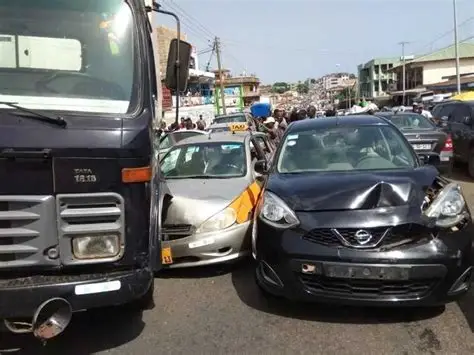
The persistent carnage on our roads should no longer be treated simply as an unfortunate consequence of transportation. Every life lost on our roads represents a family devastated, children deprived of parents, communities weakened and a nation losing valuable human resources.
Many Road Crashes are Preventable
This therefore calls for a national conversation—not only about the behaviour of drivers, but about the entire system responsible for putting vehicles and drivers on our roads.
The Ghana Police Service itself identifies road transportation as a major safety challenge and recognises the need for effective enforcement of road-traffic laws. The Motor Traffic and Transport Department (MTTD) is specifically responsible for accident investigation, traffic enforcement, road-safety education and collaboration with other stakeholders.
The question is: Are all the institutions within this chain doing enough to protect the travelling public?
Are The Vehicles on Our Roads Really Roadworthy?
We must ask a fundamental question: Are the vehicles carrying our mothers, fathers, children, workers and students genuinely roadworthy before they are allowed to operate?
The DVLA’s mandate includes ensuring the use of roadworthy vehicles, and its current roadworthiness process requires vehicles to undergo examination and verification before a roadworthiness sticker is issued.
But roadworthiness should not become merely a certificate obtained once a year.
A vehicle that was roadworthy yesterday can become dangerously defective today.
There should therefore be stronger roadside enforcement and periodic inspection of commercial passenger vehicles, especially buses, taxis, trotros and vehicles carrying heavy loads.
What About Vehicle Conversion and Modification?
Who supervises vehicles that are converted or modified for passenger transportation?
Are modifications properly engineered and inspected?
Are seats securely installed?
Are there adequate spaces between seats?
Are emergency exits accessible?
Are passengers being squeezed into vehicles beyond their designed capacity?
Are materials used for seats and interior fittings appropriate and safe?
A vehicle designed for one purpose should not simply be modified for another purpose without proper technical assessment and certification.
Who Supervises the Inspection Process?
The public deserves confidence that vehicle inspection is transparent, professional and technologically reliable.
Are inspection centres adequately equipped?
Are inspectors sufficiently trained?
Are modern diagnostic tools being used?
Can inspection results be digitally recorded so that a vehicle’s actual condition can be traced?
Can the system prevent fraudulent roadworthiness certification?
The DVLA is already pursuing technological reforms, including RFID-enabled number plates and expansion of its service network. Such technological improvements should also be directed towards stronger vehicle inspection and enforcement.
What Role Should Transport Unions Play?
Transport unions and operators are important stakeholders in road safety.
Before a commercial vehicle leaves a station with passengers, there should be a basic safety culture.
Transport unions should not merely be concerned with loading passengers, collecting dues and organising transport operations.
They should help ensure that:
– drivers possess valid and appropriate licences;
– vehicles are properly maintained;
– passenger capacity is respected;
– dangerous vehicle modifications are not tolerated;
– drivers do not compete recklessly for passengers;
– vehicles with serious defects are not allowed to operate;
– drivers are not pressured to drive when fatigued.
Transport associations should become partners in prevention rather than merely participants after accidents occur.
WHAT HAPPENS WHEN POLICE STOP VEHICLES?
The Ghana Police Service’s MTTD has a statutory enforcement and road-safety role.
But the public deserves to know:
When a vehicle is stopped, are officers checking more than the driver’s licence and vehicle documents?
Are they checking:
tyres, lights, brakes, overloading, passenger capacity, dangerous modifications, visibility, seat belts and other obvious safety defects?
And where there are allegations of money changing hands during roadside enforcement, these allegations must be investigated seriously.
A traffic enforcement system must never create the perception that a dangerous vehicle can continue its journey simply because an officer has been paid.
The safety of passengers cannot be negotiable.
WHAT IS THE PURPOSE OF ROAD SECURITY CAMERAS?
Ghana has already introduced technology for automated traffic enforcement. The Ghana Police Service describes its Traffitech-GH system as using cameras and sensors to identify offences such as speeding and red-light violations.
This raises another important question:
Who monitors these cameras, how continuously are they monitored, and what happens after an offence is detected?
Technology is useful only when there is effective follow-through.
Cameras should not become expensive decorations along our roads. They should form part of an integrated enforcement system capable of identifying dangerous driving, illegal parking, obstruction, reckless overtaking and other violations.
VEHICLES CARRYING GOODS AND BLOCKING VISIBILITY
Another dangerous practice deserves urgent attention.
Some vehicles carry goods in ways that obstruct the driver’s view or interfere with passengers’ ability to enter, exit or sit safely.
This is particularly dangerous when goods are stacked excessively or unsecured.
We must enforce appropriate limits on the size, height and positioning of loads.
WHO REGULATES MECHANICS AND VULCANISERS?
Mechanics and vulcanisers play an important role in road safety.
A poorly repaired steering system, brake system, tyre or suspension can become a weapon on the highway.
There should therefore be stronger professional standards for garages and workshops undertaking safety-critical repairs.
Mechanics who work on brakes, steering, suspension, tyres and other critical components should have appropriate training and accountability.
WHO CHECKS SEATING AND PASSENGER CAPACITY?
Commercial vehicles should not be allowed to carry passengers in ways that compromise their safety.
Who checks the number and alignment of seats?
Who determines the legally permissible passenger capacity after a vehicle has been modified?
Who checks whether passengers have sufficient space?
Who checks emergency exits?
These are not minor issues.
In a serious collision, poor seating arrangements and overcrowding can increase injuries and make evacuation more difficult.
DRIVERS COMPETING FOR PASSENGERS
We cannot ignore the dangerous competition among some commercial drivers for passengers.
Sudden stopping.
Illegal U-turns.
Overtaking at dangerous locations.
Speeding to reach passengers first.
Stopping in the middle of the road.
Blocking traffic.
These behaviours endanger everyone.
Drivers must understand that a passenger is not worth risking another person’s life.
Transport operators must also stop creating economic incentives that encourage dangerous competition among drivers.
WRONGFUL PARKING, LAY-BYS AND BROKEN-DOWN VEHICLES
Another major concern is the use of road shoulders, lay-bys and sections of carriageways for parking, loading, unloading and repairing broken-down vehicles.
A broken-down vehicle on a busy highway can become a death trap.
There must be clearly enforced procedures for:
warning → securing → removing → towing → repairing.
Roads are built for movement, not permanent vehicle repairs.
ARE OUR LAWS BEING ENFORCED?
Ghana already has road-traffic legislation. The Ghana Police Service identifies the Road Traffic Act, 2004 (Act 683), the Road Traffic Regulations, 2012 (L.I. 2180), and the Ghana Highway Code among the key legal instruments governing road traffic.
The question is therefore not simply:
“Do we have laws?”
The more important question is:
“Are we enforcing the laws consistently, professionally and without fear or favour?”
The Ghana Police Service itself has acknowledged enforcement as a major weakness in the road-safety equation and has emphasised the need for properly resourced and professional enforcement.
A CALL TO THE PRESIDENT AND RELEVANT MINISTRIES
I respectfully call on His Excellency the President of the Republic of Ghana and the Ministers responsible for Transport, Roads and Highways, Interior, Local Government and other relevant portfolios to make road safety a national priority.
I further call on:
The National Road Safety Authority
Driver and Vehicle Licensing Authority
Ghana Police Service and MTTD
Ministry of Transport
Ministry of Roads and Highways
Ghana Highway Authority
Transport unions and associations
Vehicle owners and fleet operators
Mechanics and vulcanisers
Road contractors
Metropolitan, Municipal and District Assemblies
to establish a stronger, coordinated national road-safety enforcement programme.
I PROPOSE:
1. Regular independent audits of commercial vehicle roadworthiness inspection centres.
2. Stronger roadside inspection of commercial passenger vehicles.
3. Digital linking of vehicle inspection, registration, insurance and traffic-offence records.
4. Strict enforcement against overloaded and dangerously modified vehicles.
5. Professional certification and regulation of mechanics and safety-critical vehicle repairers.
6. Greater use of cameras and technology for traffic enforcement.
7. Independent monitoring of traffic-camera operations and enforcement outcomes.
8. Strict action against bribery and interference in traffic enforcement.
9. Greater accountability for transport unions and commercial vehicle owners.
10. Mandatory safety checks before commercial vehicles commence daily operations where appropriate.
11. Effective towing arrangements for broken-down vehicles on major roads.
12. Strict enforcement against dangerous parking, loading and unloading.
13. Stronger enforcement against reckless competition for passengers.
14. Public reporting of road-crash data and identification of accident black spots.
15. Periodic parliamentary and ministerial review of road-safety performance.
LET US STOP COUNTING THE DEAD
The ultimate measure of a road-safety policy should not be the number of meetings held, seminars organised or vehicles inspected.
It should be:
How many lives have we saved?
Every road user has a right to return home safely.
Every parent has a right to expect that a child who boards a commercial vehicle will arrive safely.
Every passenger has a right to expect that the vehicle carrying them has been properly maintained.
Every driver has a right to work in a system that does not force him or her to choose between safety and economic survival.
And every government has a responsibility to protect life.
ROAD SAFETY IS NOT ONLY ABOUT DRIVERS.
It is about the entire system.
Vehicle owners must be responsible.
Drivers must be responsible.
Transport unions must be responsible.
Mechanics must be responsible.
Regulators must be responsible.
Police officers must be responsible.
Road contractors must be responsible.
Government must provide the resources and leadership necessary for enforcement.
And citizens must also play their part.
Let us therefore move from reacting to road crashes to preventing them.
Let us move from counting bodies after accidents to identifying the dangers before accidents happen.
Let us build a culture where no defective vehicle is considered fit simply because it has passengers to carry.
A FINAL APPEAL
I call upon the National Road Safety Authority, DVLA, transport unions, security agencies, vehicle owners, drivers, mechanics, road contractors and all government institutions involved in transportation and road infrastructure:
PLEASE PUT THE SAFETY OF HUMAN LIFE FIRST.
We cannot continue to accept preventable deaths as though they were inevitable.
A SAFE ROAD IS NOT A LUXURY.
A ROADWORTHY VEHICLE IS NOT A PRIVILEGE.
ROAD SAFETY IS A NATIONAL RESPONSIBILITY.
May God bless our homeland Ghana and make our nation bold and strong, free and just, and may He give all those entrusted with public responsibility the courage, integrity and wisdom to protect the lives of the people they serve.
GOD BLESS OUR HOMELAND GHANA.
By Godfried Kudzo Akpanya