


Ghana’s 24-Hour Economy was presented to Ghanaians as more than an extension of trading hours. It was introduced as a bold economic transformation agenda—one designed to expand production, create sustainable employment, revitalise industry, and ensure that the nation’s productive capacity operates continuously.
This naturally raises an important question: Are we building a 24-hour economy, or are we gradually reducing the concept to a 24-hour market programme?
The distinction is critical
A genuine 24-hour economy should mean factories operating day and night, farms supplying processing plants, efficient transport systems moving goods seamlessly, essential services functioning continuously, and workers earning decent incomes from productive economic activity.
The Government’s own description of 24H+ reflects this broader vision. It emphasises industrialisation, export development, production, processing, logistics, and job creation. The 2026 Budget similarly outlines an integrated value chain spanning production, processing, logistics, and market access.
Therefore, the issue is not whether 24-hour markets are useful—they are. The key question is whether markets are becoming the dominant expression of the 24-Hour Economy while production remains insufficiently developed and visible.
What Happened To “One Job, Three Shifts”?
One of the most compelling ideas associated with the original 24-Hour Economy proposal was continuous production through shift systems—popularly described as “one job, three shifts.”
The principle is straightforward
Instead of a factory operating for eight hours and remaining idle for the rest of the day, it could run three eight-hour shifts. This would maximise the use of machinery, infrastructure, and energy while creating additional employment opportunities.
Indeed, Ghana’s current national development framework still recognises the implementation of three-shift systems as part of the 24-Hour Economy strategy.
This is why Ghanaians are justified in asking: Where are the factories operating three shifts? How many additional jobs have been created through this system? Which public and private institutions have adopted it at scale?
These are not partisan questions. They are legitimate concerns about implementation, progress, and accountability.
Government has recently indicated that 33 manufacturing companies have begun multi-shift operations, which is a positive development. However, the scale must ultimately align with the ambition of the programme.
What About the Factories we Already Have?
Ghana has invested significant public resources over successive administrations in developing industrial and manufacturing infrastructure.
Rather than allowing political transitions to determine the fate of these investments, Ghana requires a consistent national industrial policy that protects and sustains productive assets regardless of which government is in power.
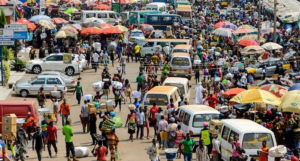
The One District, One Factory initiative was designed to expand local production capacity. Despite its challenges, its core principle—producing closer to raw material sources and creating district-level employment—remains relevant.
The solution, therefore, should not simply be to abandon existing industrial investments.
Where a factory is viable, it should be completed and supported. Where restructuring is required, it should be undertaken. Where private-sector participation is needed, it should be encouraged. Where reliable power is lacking, it should be provided. Where raw materials are insufficient, the agricultural supply chain should be strengthened.
Ghana cannot afford a cycle of initiating new industrial projects while existing ones remain incomplete or deteriorate.
Where are the Processing Factories?
This is perhaps the most critical question.
If Ghana produces cocoa, why do we continue to export it largely in raw form?
If we produce cassava, maize, tomatoes, fruits, and oil palm, why do farmers still face post-harvest losses while the country imports significant volumes of processed food?
A credible 24-Hour Economy must integrate the full value chain:
farmer → processor → manufacturer → transporter → warehouse → market → exporter.
That is the essence of value addition.
The Government’s 24H+ framework rightly emphasises the need to transition Ghana from raw-material dependence to value addition and industrial processing.
This requires expanded investment in agro-processing plants, cold storage systems, warehouses, packaging industries, and food manufacturing facilities—not merely expanded retail spaces.
WHAT ABOUT UNEMPLOYED PROFESSIONALS?
Another urgent dimension is the large number of trained but unemployed professionals, particularly in education and health.
If Ghana is serious about a functioning 24-hour economy, then human capital must be central to its design.
A 24-hour economy requires people at every level of the value chain.
Hospitals require continuous staffing. Schools and training institutions require teachers. Factories require technicians and engineers. Agricultural systems require extension officers. Processing plants require quality-control specialists, accountants, mechanics, electricians, and managers.
Employment policy must therefore be deliberately aligned with the 24-Hour Economy framework.
The key question should not only be:
“How many markets have been constructed?”
It should also be:
“How many sustainable, productive jobs have been created, and what economic activities support them?”
WHY LOCATE 24-HOUR MARKETS IN CONGESTED CITY CENTRES?
Another important consideration is spatial planning.
If the objective is to stimulate nationwide economic activity, why concentrate new 24-hour markets in already congested urban centres?
A more strategic approach would be the development of planned 24-hour economic zones outside congested cities, connected to major transport corridors, agricultural production areas, and industrial parks.
Such zones could integrate:
– wholesale and retail markets
– agro-processing facilities
– cold storage infrastructure
– warehousing systems
– transport terminals and truck parks
– accommodation facilities
– banking and digital payment services
– security and emergency response systems
– waste management services
This would transform markets into fully functional economic production and distribution hubs.
GHANA MUST PRODUCE BEFORE IT TRADES
There is nothing inherently wrong with trade. Commerce is a vital component of every economy.
However, if the 24-Hour Economy becomes primarily focused on extended trading hours, Ghana risks increasing consumption and trade activity while continuing to import a significant share of the goods being traded.
That outcome would fall short of the programme’s intent.
Ghana must produce what it consumes, process what it produces, add value to its raw materials, and export competitive finished products.
The Government has consistently stated that the programme aims to build a productive, self-reliant, and export-oriented economy. That objective must remain central to implementation.
A HUMBLE SUGGESTION TO GOVERNMENT
It is respectfully suggested that Government ensures the 24-Hour Economy is not perceived primarily as a market expansion initiative.
Markets should form part of the system—but as the final link in a broader production and industrial value chain.
Priority should be given to:
– reviving viable factories
– completing abandoned industrial projects
– establishing processing plants near production zones
– linking unemployed professionals to productive sectors
– expanding three-shift manufacturing where feasible
– developing industrial and market hubs outside congested cities
Success should be measured not only by the number of markets constructed, but by the number of functioning factories, volume of production, level of value addition, export performance, and quality of sustainable employment created.
Ghana does not need an economy that merely trades for 24 hours.
Ghana needs an economy that produces for 24 hours.
That is the fundamental difference between a 24-hour market system and a true 24-hour economy.
The original vision was ambitious—and it should remain so.
Let us therefore ask, constructively and in the national interest:
What happened to “one job, three shifts”?
What is the status of inherited and ongoing industrial projects?
Where are the processing facilities?
How many unemployed professionals are being absorbed into productive sectors?
What proportion of goods sold in 24-hour markets are locally produced?
And most importantly:
Will the 24-Hour Economy transform Ghana into a nation that produces more, processes more, employs more, and exports more?
These are not questions against Government.
They are questions for national reflection.
May the 24-Hour Economy evolve into the transformative industrial and employment agenda that Ghanaians were promised—not merely an expanded marketplace.
God bless our homeland Ghana, and make it a true land of opportunity, dignity, and shared prosperity for all its citizens.
By Godfried Kudzo Akpanya
Social Worker in Community and Youth Development