
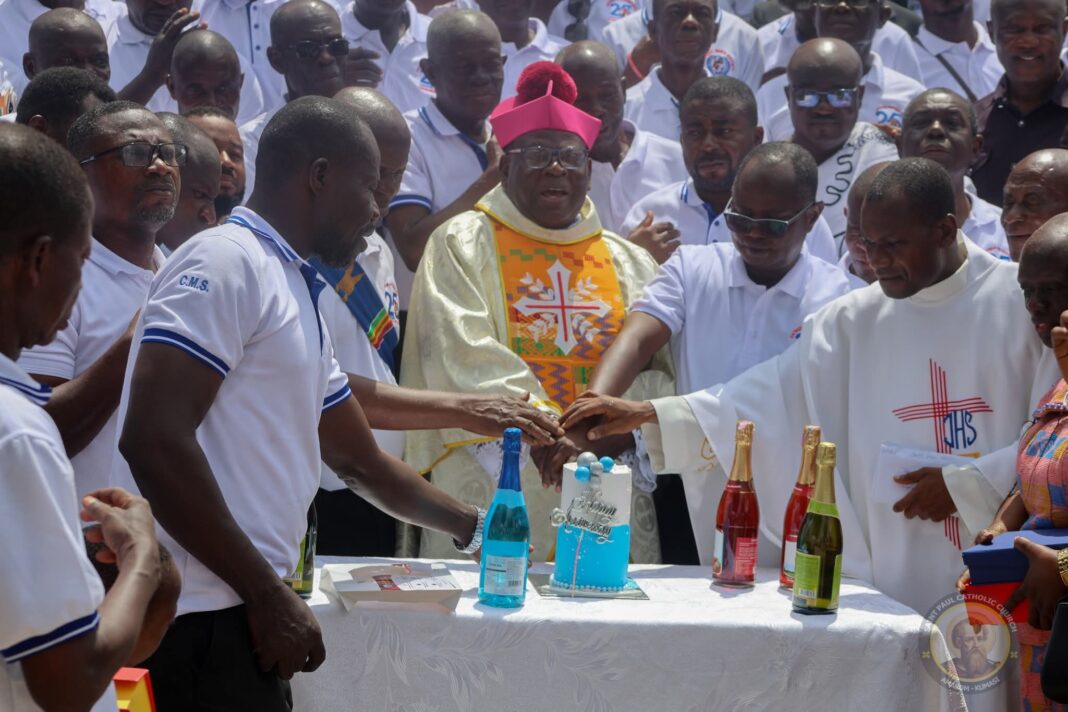

Permit me first of all to highly praise, thank, and honour you all for the great sacrifices and commitment you make towards your families.
The Silent Wounds and Pains of Fathers
I must confess that, due to the cultural system of our people, it becomes extremely difficult, and sometimes almost impossible, for fathers to voice their pain, frustrations, disappointments, and bitterness.
Unfortunately, many fathers go to their graves carrying deep wounds and unresolved pain, with only a few being able to express themselves and seek redress, inner healing, and reconciliation.
Let our society hear the fathers’ side of the family-life story a little.
What Happens at the Male Ward?
Since we appreciate responsible, diligent, and committed fathers, let us cast our gaze on what happens at the male wards of our various government hospitals in Ghana.
It is really sad how most aged fathers on admission virtually have no relatives to cater for them. For some, the hospital becomes a telecommunications centre for the nurses, who spend their time reaching out to relatives, yet no one responds positively.

The common responses are often:
“My dad never took care of me.”
“He left my mother for another woman, so call that woman.”
Worst among such statements is:
“I do not want to have anything to do with my father!”
These responses reveal deep wounds that have remained unhealed over the years and remind us that fatherhood is not merely about bringing children into the world but also about loving, nurturing, guiding, and remaining present in their lives.
The Generosity of Nurses to Irresponsible Fathers
In situations like these, the nurses often have no option but to organise a collection at the ward, raising funds from health workers in order to cater for the patients’ laboratory investigations, medicines, food, and sometimes even towels and bedsheets.
Even more distressing is how some of these fathers struggle to pay their hospital bills after being discharged. Not to talk about who will take them home, care for them, and bring them back for reviews and periodic check-ups.
One cannot help but admire the generosity and compassion of many healthcare workers who become the Good Samaritans in such circumstances, showing mercy to those who may have no one else to turn to. Their actions remind us of Christ’s call to care for the sick and abandoned (cf. Matthew 25:36).
Why this Unfortunate Incident?
Anytime this question is raised, a particular Latin phrase I was taught by the late Philip Damoe comes to mind: Carpe Diem — “make hay while the sun shines,” or simply, make good use of every opportunity.
Opportunity, they say, probably comes just once, as the musician puts it.
A lot of fathers never envisage the future, nor do they think about unforeseen eventualities or old age in order to plan adequately, invest wisely in their children and wives, and prepare for retirement.
How many times have we not seen Catholic fathers who retired without proper planning and with virtually nothing to fall back on? No pension policy in their youthful years, no building project completed, no proper documentation, yet a greater part of their resources was spent on side relationships, purchasing the latest automobiles, and living beyond their means simply to impress the world.
Until when would you continue to do so?
Life is not about pleasing others; rather, it is about living according to sound policies, principles, and strategies that will enable you to smile in your old age.
The Book of Proverbs reminds us that prudence and foresight are virtues. A wise person prepares for the future and manages resources responsibly. Likewise, Catholic fathers are called to be faithful stewards of the blessings God has entrusted to them, ensuring that their families are protected and cared for both in the present and in the future.
Fathers, Shift from the Traditional Mindset
Unfortunately, in this twenty-first century, many African fathers think of and regard their children as security for old age; they invest in them with the expectation that they will take care of them in their later years.
Gradually, the paradigm is shifting because, as individuals move away from the extended family system and focus more on the nuclear family, many children today easily forget their responsibilities towards their aged parents.
In the case of African children living abroad, the situation can sometimes be even more challenging. Like many people in Western societies, once they leave home at eighteen, marry, and begin their own lives, they may have very little involvement with their parents.
The best some do for their African parents abroad is to send Christmas cards and birthday cards occasionally because they view parental care as a duty already fulfilled, with nothing further to reciprocate.
Gradually, this attitude is creeping into African society, where some children prefer sending their parents to old-age homes rather than keeping them within the family and caring for them personally.
This raises an alarm that, as fathers, one must manage scarce resources wisely and tactfully, doing something for oneself while also investing in one’s wife and family.
At the same time, it must be emphasised that caring for aged parents remains both a moral and biblical responsibility. The Fourth Commandment, “Honour your father and your mother” (Exodus 20:12), does not cease when children become adults. Likewise, fathers should prepare responsibly for old age, while children should never neglect their sacred duty towards their parents.
The Reality of Most Catholic Fathers
I really want to believe that if every child were asked to give a truthful testimony about his or her father, there would be much to say: from abusive fathers to irresponsible fathers, and from sober, humble fathers to responsible and exemplary fathers.
Most often, many of our Catholic fathers have two selves: the Church personality (the public self) and the home personality (the real self). They appear like angels in church but become completely different at home; polite and well-composed in church, yet proud and autocratic at home.
This contradiction remains one of the greatest challenges facing Christian witness today. A father’s faith must not be visible only in church but also in the home, where his wife and children experience him daily.
The true measure of Christian discipleship is not merely how one behaves in public worship but how one treats those closest to him. As Our Lord teaches, “By their fruits you shall know them” (Matthew 7:16).
The Question I Have Always Asked Myself
The question is simple: Why are a good number of our Catholic men irresponsible even when they have good jobs?
The sad thing is that some sponsor nephews, nieces, and women outside their homes while neglecting their innocent children and wives.
For some, paying rent and providing food for the family is never in their dictionary.
Even when they are highly educated and understand the importance of being moral compasses to their families, they engage in all kinds of lottery activities, gambling, alcoholism, moving from one nightclub to another, and embarking on expensive trips that bring nothing beneficial home.
Such behaviour contradicts the vocation of fatherhood. A father is called to be a provider, protector, teacher, and spiritual leader of his family. His first responsibility after God is towards his wife and children.
Saint Paul teaches clearly: “If anyone does not provide for his relatives, and especially for members of his household, he has denied the faith and is worse than an unbeliever” (1 Timothy 5:8).
The Catholic father must therefore strive to be a model of responsibility, sacrifice, integrity, and faithful stewardship.
Fathers: Imitators of St. Joseph and the Way Forward!
- As fathers, let our families be our priority. Stay chaste and focus on your wife and children.
When you play your role excellently, the children see it and learn from it, and vice versa.
St. Joseph, the foster father of Jesus, devoted himself entirely to the care of Jesus and Mary. He protected them, provided for them, and remained faithful to his vocation despite many difficulties. Catholic fathers are likewise called to make their families their first earthly responsibility after God.
- Joseph, despite all that happened surrounding the birth of Jesus, remained silent and obedient to God’s will.
Let us not complain too much. Let us learn how to handle issues at home without always sending family matters to relatives and friends.
Often, they have little help to offer and may end up laughing at you later because of your immaturity or inability to handle family matters prudently.
One should not sacrifice the reputation of one’s family on the altar of seeking pity merely to save face before people.
This does not mean that one should never seek advice or counselling. Rather, fathers must exercise wisdom in choosing trustworthy people who can genuinely help promote healing, reconciliation, and growth within the family.
- It is unfortunate how many Catholic men do not love to pray.
How many of our Catholic fathers attend the Rosary, Faith Rally, Crusades, retreats, recollections, and other spiritual programmes?
Most of our men’s societies sometimes appear to be more social than spiritual.
There are often not enough formation programmes, but rather more socialisation programmes such as parties, drink-ups, cocktails, and similar activities.
A Catholic father who does not pray will find it difficult to lead his family spiritually. The father must be the first catechist in the home, leading family prayer, encouraging participation in the Sacraments, and fostering a relationship with God among his wife and children.
As St. John Chrysostom taught, the family is a “domestic church,” and fathers have a vital role in ensuring that Christ remains at the centre of family life.
- Joseph was a moral pillar and a virtuous example to his wife and Child.
Sometimes, I am tempted to say that many of the testimonies wives and children give about their deceased fathers during Burial Masses are not always entirely accurate.
At times, some may simply wish to preserve the reputation of the deceased.
Whether this is true or not, the important question every father must ask himself is this: If I should die today, what genuine testimony would my wife and children give about me?
Would they speak of a loving father, a responsible provider, a man of prayer, a faithful husband, and a true Catholic gentleman?
St. Joseph challenges every father to become a moral compass and virtuous example whose life speaks even after death.
- As a Church, I humbly propose that a Men’s Week be instituted and celebrated annually by the National Laity Council, with well-designed formation booklets dedicated to the formation of our fathers and serving as pastoral support for them.
How many of our fathers are eager to approach the Sacraments if they are not encouraged or pushed by their wives?
Such a celebration could help deepen the spiritual lives of Catholic men and encourage them to embrace their vocation as husbands, fathers, and leaders within the Church.
- As a Church, since our missionary mandate is holistic and integral, encompassing every aspect of the human person, I would suggest that the Church intensify health talks on serious male-related diseases such as stroke, prostate cancer, and other health conditions.
There should also be talks on investments, retirement planning, insurance policies, writing wills, and other practical issues that can help men prepare adequately for life after retirement.
Such initiatives would help fathers not merely survive retirement but live fulfilled, dignified, and happy lives as Catholic fathers.
The Church’s concern for the human person embraces both spiritual and temporal well-being. Therefore, helping fathers plan responsibly for their future is also part of authentic pastoral care.
Conclusion
Beloved-In-Christ!
Since we appreciate all responsible fathers out there, let us strive to be true models and authentic witnesses of the faith. Let us avoid becoming “predators” towards the young ladies in the Church who could even be our own children.
Those of you who have children with women whom you have refused to acknowledge, please, for God’s sake, accept your responsibilities and care for your children.
And those who have deliberately neglected their duties, thinking they are outsmarting their “poor” wives, please allow the Word of God to transform your hearts and redirect your focus towards your families.
Let us model our families after the Holy Family of Nazareth—Jesus, Mary, and Joseph—a family characterised by love, sacrifice, obedience, peace, forgiveness, and reconciliation.
May every Catholic father imitate the virtues of St. Joseph: his chastity, humility, diligence, responsibility, silence, faith, obedience, and unwavering commitment to his family.
May our fathers become true spiritual leaders, moral examples, faithful providers, and loving protectors of their homes.
God richly bless you, and
Happy Father’s Day to all Fathers!
By: Rev. Fr. Albert Kyei Danso
Chaplain, Holy Family Ghanaian Catholic Community Church,
Italy.