
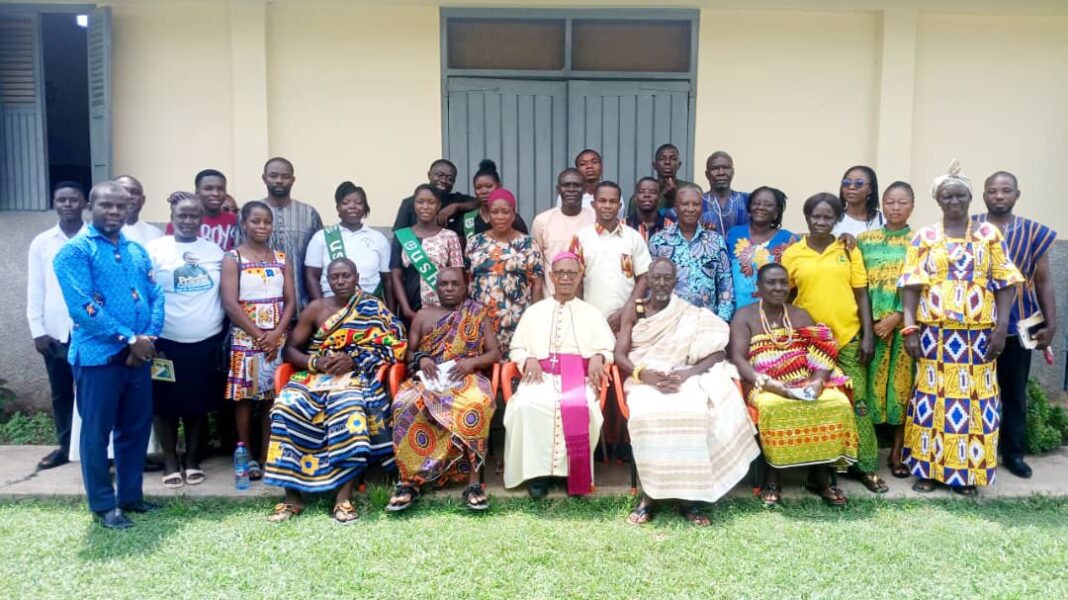

Mr. Michael Djan, National Vice Laity Chairman, has called on the active involvement of the Laity in the Church, as a means of journeying together for the attainment of Justice and Peace within the Diocese, Ghana and the world at large.
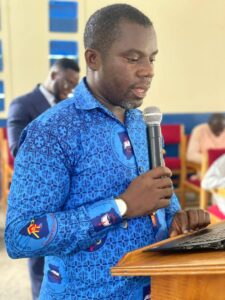
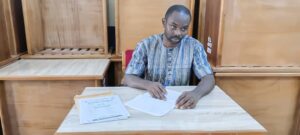
Mr. Djan, who is also the Chair of the Laity Catholic Diocese of Donkorkrom in Ghana’s Eastern Region, made this known in a Keynote address during the May 30, 2026, Opening Ceremony of the Donkorkrom Diocesan Laity Council Leadership Workshop at the Alfons Merten’s Centre, Donkorkrom.
Speaking on the theme: “A Synodal Church at the Service of Justice and Peace in Ghana,” a theme which had guided the Ghana Catholic Bishops’ Conference (GCBC) Annual Plenary Assembly in November 2025, Mr. Djan laid particular emphasis on the role of Catholic Laity as agents of this transformation that will be brought about by journeying together as God’s people, especially in the recently elevated Diocese of Donkorkrom.
According to the Laity Chairman, the Catholic laity are not merely recipients of the Church’s mission but are, by their very baptism, called to be active agents of transformation in the world, through their co-responsibility in a synodal Church.
He traced the word “Synodality” as a concept deeply rooted in the early Christian communities, signifying “a Church that journeys together; listening attentively to the Holy Spirit and to one another in a spirit of prayerful discernment, mutual respect, and shared responsibility for the mission of Christ”.
To Mr. Djan, who also doubles as the Accra Provincial Laity Chairman, Synodality goes beyond just holding meetings or discussions, to a fundamental way of being Church, where every member is called to participate actively in its life and mission, by “intentionally creating spaces for genuine dialogue between clergy and laity, between generations, and between different ethnic and social groups, ensuring that everyone contributes their unique gifts and insights to the building up of the Body of Christ,” as stated in the Ghana Catholic Bishops’ Conference 2025 Communique.
Underscoring that Synodality in Ghana already breathes through various consultative bodies, including Diocesan Presbyteral Councils, Pastoral Councils, Youth Councils, Finance Committees, among other lay Associations, the Laity Chair entreated that such existing structures may not become mere formalities, but vibrant avenues for communal discernment and shared responsibility.
“The call is for a deeper commitment to formation that equips all members – laity, consecrated persons, priests, and bishops, with skills in participatory leadership, discernment, conflict mediation, and social analysis, integrating theology, Catholic Social Teaching, and local governance principles,” he buttressed.
Mr. Djan underlined the two inextricably interconnected concepts of Justice and Peace, as essential pillars for a thriving, harmonious, and dignified human society. He defined Justice as “the foundational structure of a fair and equitable community, which ensures all individuals and groups receive what is rightfully theirs and are treated with inherent dignity and inalienable rights bestowed upon them by their Creator”.
Peace, he explained, goes far beyond the mere absence of conflict, to the positive fruit that blossoms from the fertile ground of justice – “a state of right relationships, security, and holistic well-being that can only exist and endure in a society built upon a just foundation,” he reiterated.
The Laity Chairman quoted the Ghanaian context, where issues such as inequality, corruption, political polarisation, and ethnocentrism threaten the common good, underlining the role of the Church in embodying in her own life the justice and peace she proclaims to the world; demonstrating transparency, accountability, and preferential attention to the poor and marginalised.
He made further reference to the Ghana Catholic Bishops’ Conference Communique, which highlighted the inevitability of proclaiming the Word without an embodiment of justice, noting that it is like “emptying the Gospel of its transformative power”. He maintained that the credibility of Christian witness depends on its capacity to heal divisions, restore dignity, and promote structures that uphold the integral development of every person and community.
Situating the call for Synodality at the service of Justice and Peace within the unique context of the Catholic Diocese of Donkorkrom, the Chairman underlined some Justice and Peace issues prevalent in the area, which demand a synodal response. He highlighted that Agriculture is the backbone of the region, employing 77-80% of the population, yet the area is plagued by persistent farmer-herder conflicts, primarily between migrant farmers and nomadic Fulani herders, over land and water resources. The conflicts, he added, often lead to land insecurity, particularly for migrant farmers, and disrupt livelihoods.
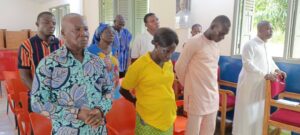
He further bemoaned broader issues of infrastructural development and human capacity building, within the missionary territory, faced chiefly by the laity; however, underpinning their daily lives in farming communities, their engagement in local governance, and their participation in various Church structures position them uniquely to foster justice and peace, which will involve the following:
- Active Participation in Church Structures, ensuring that Parish and Diocesan Pastoral Councils, Justice and Peace Commissions, and other lay associations are truly representative and effective platforms for dialogue and action on local issues.
- Promoting Dialogue and Reconciliation: Taking the lead in mediating and resolving farmer-herder conflicts, advocating for equitable land use policies, and fostering understanding between different community groups.
- Living Catholic Social Teaching: Applying principles of human dignity, the common good, solidarity, and subsidiarity in their workplaces, families, and social interactions, thereby transforming society from within.
- Advocacy and Awareness: Raising awareness about social injustices, advocating for the marginalised, and holding leaders accountable for policies that promote justice and peace.
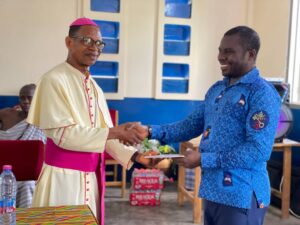
The Laity leader drew further inspiration from the Synod on Synodality’s Final Document (October 2024), which reaffirms the Church’s commitment to walking with all humanity, strongly committed to justice and peace, human dignity, and the common good; a global vision, echoed in Pope Francis’ Laudato Si on care of the Earth and Fratelli Tutti on fraternity and social friendship, which provide a robust framework for the laity’s engagement in ecological justice and building a more inclusive and peaceful world.
He shared the belief that the laity in Donkorkrom, by addressing their local environmental and social challenges, contribute directly to the wider global mission.
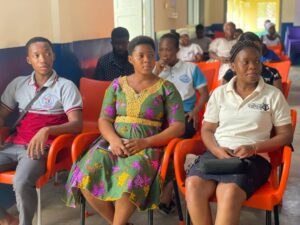
The Church leader urged all Catholics, especially the laity, to embrace their prophetic role, moving beyond mere structures to a living spirit of co-responsibility, dialogue, and action, and actively engaging with the specific realities of their respective areas.
“Let us, therefore, commit ourselves to building a Church where listening leads to understanding, understanding leads to action, and action leads to a society where justice flourishes and peace reigns,” he implored.

By Sr. Sylvie Lum Cho, MSHR (DEPSOCOM – Donkorkrom Diocese)